PITTSFIELD — Mick Callahan, president of CCC Media Group, confirmed yesterday that his family’s 145-year-old business, Callahan Outdoor Advertising, has been sold to Lamar Outdoor Advertising, a Baton Rouge, La., company that operates 152 outdoor advertising companies in 43 states and is one of the nation’s largest.
“There’s a regionalization going on in the media world, and I believe this will be good for our customers and good for our associates,†Callahan said in a telephone interview. “Down the road, a larger company can create better benefits for those folks, and we’re excited about it.â€
All employees will have the opportunity to work for Lamar, a 100-year-old company that is also family-run, Callahan said, adding, “It will be business as usual.†He acknowledged the move had been coming for some time and stressed that the sale, for an undisclosed price, was only of the company’s outdoor advertising branch — primarily billboards.
“People have expressed an interest in our business for a number of years. There’s a time when you have to make the right business decision,†he said.
According to Dan Callahan, Mick Callahan’s brother and co-owner of CCC Media with him, the sale will enhance the family’s other business ventures. “This allows us to expand our other Callahan family-owned businesses more aggressively,†he said in a news release.
Those businesses include the Callahan Sign Co., which manufactures, installs and services on-premise sign systems throughout the Northeast, and M. Callahan Inc., which owns and manages commercial real estate holdings in the region. Both are based in Pittsfield.
“My office will still be in downtown Pittsfield, and we’re going to be exploring other business opportunities,†Mick Callahan said.
He acknowledged, however, that he has always had a soft spot for the billboard business, which had been in the Callahan family for four generations.
“I’ve been president since 1978 and had an association with the company since I was 16 years old,†he said. “When I was off to college, I was still working for my dad. We always knew we had a summer job.â€
Callahan, a well-known civic leader who has been active on numerous committees and Berkshire County development efforts, said he believes Lamar will continue the family tradition of giving back to the community — as part of that tradition Callahan has often donated billboard space to local causes, non-profit organizations and events.
“They’re a hundred-year-old company,†he said of Lamar. “They have a strong history of working with the companies they operate in — I think that’s an important part of anybody’s business plan. It’s not something unique to Callahan. All of the media companies contribute a lot, and I would expect they would continue to do the same thing. I just think this is a very good match that will connect the Berkshires to a larger marketplace.â€
The sale was effective immediately. Calls to the Callahan Outdoors office yesterday were answered by Lamar. Callahan’s 10 associates will continue to be employed “during the transition,†said Lamar spokesman Roger Rosenbaum, who declined to estimate the length of the transition. He referred inquiries to Matt Duddy, Lamar vice president and general manager, who could not be reached for comment. Lamar’s nearest other offices are in West Springfield and in Albany, N.Y.
Duddy said in the news release, “Callahan Outdoor Advertising is a company we are very proud to have in our core group. We can now offer our customers more complete coverage of the Albany–Schenectady–Troy market.â€
Lamar manages billboards and logo-sign displays from California to Rhode Island and is the nation’s leader in the highway logo sign business, with operations in 20 of the 25 states that have privatized their logo programs. Logo signs are located near highway exits to deliver brand-name information on gas, food, lodging and camping services.
Lamar, founded in 1902, operates more than 149,000 billboards and more than 97,500 logo sign displays across the country. In addition, the company has 34 transit advertising franchises that reach motorists in 12 states through displays on bus shelters, benches and buses, according to the news release.
The Callahan Outdoor Advertising Division has an undisclosed number of billboards in Berkshire County and New York State, including Columbia, Greene, Rensselaer, Saratoga, Warren and Washington counties.
Mick Callahan said he did have one regret about the sale: not being able to tell customers and the Pittsfield community about it sooner.
“My style is, I would like to look every single customer and every single public service organization we’ve helped over the years in the eyes and thank them for the business and personal relationships we’ve had,†he said. “In this fast-paced world, it’s not always possible to do that.â€
If you would like to contribute information on this article, contact us at info@iberkshires.com.
Your Comments
iBerkshires.com welcomes critical, respectful dialogue. Name-calling, personal attacks, libel, slander or foul language is not allowed. All comments are reviewed before posting and will be deleted or edited as necessary.
No Comments
Dalton Day Returns This Saturday
By Sabrina DammsiBerkshires Staff
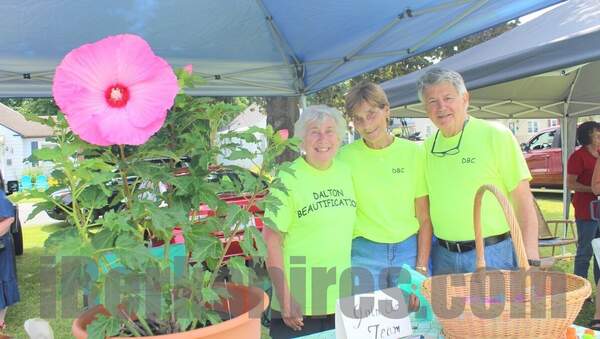
DALTON, Mass. — The town's popular Dalton Day festival is returning this weekend after a year's hiatus.
The event will kick off this Saturday at 11 a.m. and runs until 4 p.m. in the field in front of the Senior Center.
The community celebration was established in 2023 by the Cultural Council in an effort to increase resident participation at town meetings while also showcasing the area's welcoming, diverse, artistic and sporty atmosphere. In 2024, the event brought together 300 residents.
"The primary mission of Dalton Day is to foster a strong sense of community, build civic pride, and bring residents together through a shared celebration of local culture, music, and food," said Jeannie Ingram, Select Board member and cultural council chair, and Lori Venezia, executive assistant to the town manager.
The event provides an accessible and free platform for "civic education, community bonding, and supporting local businesses, artisans, makers, and culture more broadly," they said.
The festival strengthens the fabric of the town both civically and economically by connecting grassroots organizations with residents, fostering a shared sense of belonging, and providing free, family-friendly entertainment.
It also serves as an opportunity for community members to meet with local officials and a couple of state officials. State Sen. Paul Mark and state Rep. Leigh Davis will be coming from Beacon Hill to speak at the event.
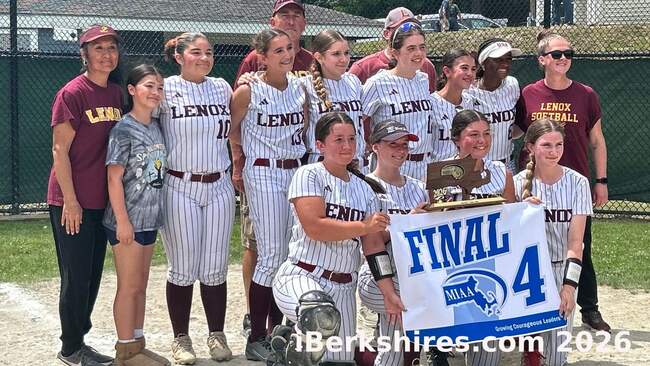
Cassidy Flynn scattered five hits in a complete-game effort in the circle as Lenox upset top-seeded Hoosac Valley, 3-2, in the quarter-finals of the Division 5 State Tournament. click for more
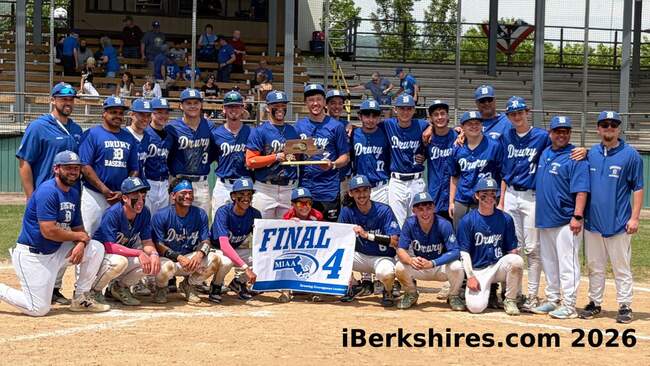
Brayden Durant struck out seven and walked one in a complete-game effort on the mound Saturday to pitch the Drury baseball team to a 6-0 win over Keefe Tech in the quarter-finals of the Division 5 State Tournament at Joe Wolfe Field. click for more
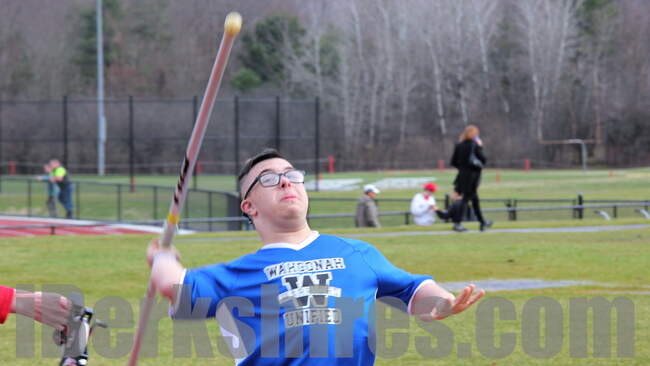
Jason Codey struck out 13, walked two and allowed just an infield single as the Generals earned a 7-1 win over Wahconah to claim their third straight regional title. click for more
Gracelyn Wright struck out eight, and Genevieve Lagess went 3-for-5 with four runs batted in as the Hurricanes beat Monson, 17-3, to claim their first Western Mass title in four years. click for more