Williams College will celebrate the legacy of J. Hodge Markgraf
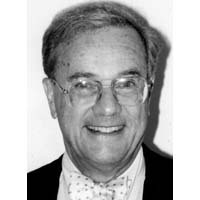 |
| J. Hodge Markgraf |
"As an alumnus, teacher, scientist, mentor, and administrator, he was involved with much of the college's history since he arrived here as a freshman in 1948," Williams President Morton Owen Schapiro said on the occasion of Markgraf's death in 2007. He had also served the local community in many capacities, including as deacon of the First Congregational Church in Williamstown, treasurer of Northern Berkshire Health Systems Inc., and corporator of Williamstown Savings Bank.
He graduated from Williams in 1952 summa cum laude with highest honors in chemistry along with the highest honor for student citizenship. Among many other activities, he served as secretary of his fraternity, Beta Theta Pi. Ten years later Williams President John Sawyer appointed him, as a young professor, to the sensitive position of secretary to the trustee, faculty, alumni, and student committee that ultimately recommended Williams phase out its fraternity system, making it the first college in the country to do so.
After earning a Ph.D. in chemistry at Yale University in 1957, which included study as a Fulbright Fellow at the University of Munich, he worked as a research chemist at Procter & Gamble before joining the chemistry department at Williams in 1959. Students considered him a passionate and gifted teacher at all levels of the chemistry curriculum, and he helped introduce the practice, now widespread at Williams, of involving undergraduates in research.
He published frequently in chemistry journals about his research, which was supported by the National Science Foundation, American Chemical Society, Research Corporation, Pfizer, Inc., and Merck & Co.
In addition to his many years as department chair, he also served the broader college as provost, marshal, and vice president for alumni relations and development. In the last of these roles, President Schapiro said, Markgraf "oversaw the college's Bicentennial Celebrations [in 1993] and led The Third Century Campaign, which raised the most money ever by a liberal arts college and helped establish the ground from which so much of the college's subsequent excellence has grown."
In 1999 he served as secretary to the college's Presidential Search Committee.
He held visiting professorships at Duke University and the University of California at Berkeley, and in the summer of 1960 he worked as a research associate at the Sprague Electric Co., in North Adams.
After officially retiring from Williams in 1998 he continued to teach there and, for a semester, at Massachusetts College of Liberal Arts. He also carried on with his lab research and participated in the Dreyfus Foundation's Senior Scientist Mentor Initiatives for retired faculty who continue to involve undergraduates in research.
"There is no question that Hodge set at Williams the most brilliant combined example of scholarship, teaching, and citizenship within the memory of anyone alive today," said Williams Trustee Paul Neely, Class of 1968, whose gift to the college established the J. Hodge Markgraf Professorship. "That is what should be honored."