Downtown Debuts Solar-Powered Compactor
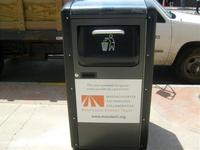 |
NORTH ADAMS - Main Street visitors may have noticed the solar-powered trash compactor that suddenly appeared downtown this week but most probably don't know where it came from or how it works.
Donated by the Massachusetts Technology Collaborative, the compactor - a simple black machine about the size of a mailbox - is a product of Needham-based BigBelly Solar, who specializes in manufacturing the world's only solar-powered cordless compaction system.
_200x150 2(2).jpg) Emily Dahl, a public information officer at MTC, said the state agency offered more than a dozen free compactors to municipalities throughout the state who expressed an interest in trying them out.
Emily Dahl, a public information officer at MTC, said the state agency offered more than a dozen free compactors to municipalities throughout the state who expressed an interest in trying them out.
"They can be used to familiarize the public with how renewable energy, especially solar, can be used," said Dahl.
The compactor, the only one donated to a community in Berkshire County through this pilot program, holds up to five times the volume of ordinary trash receptacles and up to 150 gallons of trash, according to information provided by BigBelly. A solar panel on the compactor’s top powers the machine 100 percent, even without direct sunlight.
There are hundreds of compactors throughout the country, on campuses, in parks and at beaches, on city streets and at Fenway Park. With over 40 distributors nationwide, BigBelly can help significantly cut down on greenhouse gas emissions because fewer trips need to be made to dispose of the waste inside.
The Bigbelly reduces waste collection frequency, lowers costs and can pay for itself in as little as 1.5 years.