St. Raphael's Neighbors Leery of Housing Plan
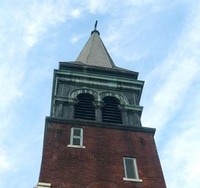 |
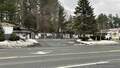
Some three dozen residents of the north end of Cole Avenue gathered in the parking lot at the shuttered church earlier this week to air their concerns with the town's Affordable Housing Committee.
The neighbors wanted answers but the committee is just not in a position provide them, and that created some frustration on both sides.
"We do not have an architect. We do not have site plans. We do not have renderings to show you. We don't own the building yet so we have a ways to go," Charles Bonenti, chairman of the committee, told them on Monday. The panel wanted to meet to let neighbors know where the project stood.
Many of the residents said they had only learned of the housing proposal at town meeting last month, when the town voted to award $800,000 in Community Preservation Act funds to the project.
"There was no advance notice ... normally if something is happening in your neighborhood you get a notice," said Nancy Mathews, who lives across the street.
 Affordable Housing Committee Chairman Charles Bonenti speaks to neighbors of St. Raphael's Church. Committee members Cathy Yamamoto and Anita Barker are to his left; and Leslie Reed-Evans to his right. Affordable Housing Committee Chairman Charles Bonenti speaks to neighbors of St. Raphael's Church. Committee members Cathy Yamamoto and Anita Barker are to his left; and Leslie Reed-Evans to his right. |
They couldn't answer questions about who would live there, how they would be chosen, what the apartments would look like, if condominiums would be better or how it would affect traffic. And they couldn't predict its impact on the neighborhood.
"I know there are many questions you would love to have answered right now," said Bonenti. "I wish we could give them to you."
Several neighbors questioned the need for rental housing, and the possibility of Section 8 housing.
"My impression of Williamstown is there's not a strong demand for rental properties," said Mathews, adding, "What kind of eyesore will we have in our community" if the project doesn't work out?
They pointed to the delays of the Cable Mill project, a mixed residential housing development, in moving forward and wondered if the church property would sit vacant for years.
Others questioned the appropriateness of the "density" of creating eight apartments on the corner lot. Cole Avenue is a "highway to Vermont," said Mary MacDonald.
Committee members said no Section 8 housing was being contemplated. Rather, they were looking at creating affordable housing with one- and two-bedroom apartments for people with incomes from $30,000 to about $50,000. The rents would be about $600 to $800. Current rentals are going for an average of $925.
 |
Bonenti said the figures were based on the input of David Carver of Scarafoni Realty who, along with architect Ann McCallum and attorneys Beth Goodman and Steven Pagnotta, has been offering advice and services. Goodman and Pagnotta, who were both in attendance, are overseeing the creation of a limited nonprofit corporation that would buy and maintain the property.
Committee member Cathy Yamamoto, also a parishioner at the former church, said the town had experience in developing subsidized housing, like Proprietor's Field. This would be the first time the town attempted affordable housing.
"You hear voiced all the time, 'our children can't afford to live here anymore,' 'I'm getting old, I can't afford to live here,'" said Bonenti, adding "It's an opportunity to preserve these buildings."
Some of the costs could be defrayed through preservation grants, said Bonenti. The exterior of the property would have to be kept much the same and the town would have a lien on the facade, not unlike that on Botsford House, to prevent it from being changed.
The Affordable Housing Committee had been searching for a suitable piece of land for five years but "people were always snatching them away from us," he said. When the church and rectory were put up for sale, the committee began negotiations with the Roman Catholic Diocese of Springfield, which approved of the social aspect of the committee's endeavors. It has an agreement in principle to buy the church for $480,000.
Bonenti said the committee and the overseeing nonprofit, Church Corner LLC, is hoping that more professionals would provide services, at least at a reduced rate, or become involved in the planning to make the project a success.
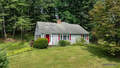
.JPG) St. Raphael's rectory would have four apartments in it. St. Raphael's rectory would have four apartments in it. |
As the gathering broke up so the Affordable Housing Committee could meet formally to create the Church Corner board, there was still a sense of dissatisfaction with the process and the project. But at least they were talking.
"People feel a little more informed," said MacDonald. "It sounds like communication will improve."