Gathering of U.S. Reps to Talk on Race, Congress
 |
More than a dozen members of Congress will gather at Williams College next week for a discussion of "Race and the New Congress."
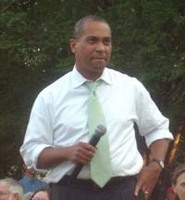
The roundtable of members of the Congressional Black Caucus and Gov. Deval Patrick was spearheaded by Bernard Moore, a visiting lecturer in political science and policy adviser of caucus member Danny K. Davis, D-Ill., chairman of the House Subcommittee on the District of Columbia.
"I thought it would be very interesting [to have] after the election," said Moore on Tuesday, adding that with Congress on recess during this period, it was a good time to get the caucus members together for a public discussion.
The forum was planned prior to the election of Illinois Sen. Barack Obama as the nation's first black president, and Moore said, "regardless of whoever won it was going to be an interesting topic."
The forum will take place Monday, Nov. 17, at 8 p.m. in Chapin Hall. It will be moderated by "60 Minutes" correspondent Lesley Stahl and is free and open to the public. Seating is on a first-come, first-served basis.
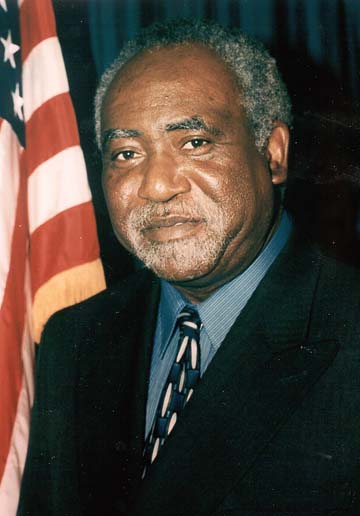 U.S. Rep. Danny K. Davis, D-Ill
|
Moore said he had broached the subject with Stahl, who thought it was good idea and wanted to participate.
"I'm excited to take part in such an important discussion at a particularly auspicious time for Congress and the country to advance issues of race," Stahl said in a statement. "It's especially newsworthy to assemble so many of the CBC members who hold leadership positions."
The gathering will be the first of CBC members since Congress recessed for the November election.
In January 1969, newly elected African-American representatives of the 77th Congress joined six incumbents to form the Democratic Select Committee to address legislative concerns of black and minority citizens. The committee was renamed the Congressional Black Caucus in 1971.
The vision of the founding members of the CBC, to "promote the public welfare through legislation designed to meet the needs of millions of neglected citizens," continues today. Its members have been at the forefront of legislative campaigns for human and civil rights for all citizens.
"What an enormous honor it is for Williams to host the largest number of Congress members ever to gather on our campus," college President Morton Owen Schapiro said in a press statement, "and what a great privilege for students, faculty, staff, and local residents to hear firsthand from caucus members so soon after the historic presidential election."
In addition to Davis, caucus members expecting to take part include:
- James E. Clyburn of South Carolina, Democratic Leadership Majority Whip
- John Conyers Jr. of Michigan, chairman of the House Committee on Judiciary
- Robert. C. Scott of Virginia, chairman of the Subcommittee on Crime, Terrorism, and Homeland Security
- Bennie G. Thompson of Mississippi, chairman of the House Committee on Homeland Security
- Shelia Jackson Lee of Texas, chairman of the House Subcommittee on Transportation and Infrastructure Protection
- John Lewis of Georgia, member of the House Committee on Ways and Means
- Chaka Fattah of Pennsylvania, member of the House Committee on Appropriations
- Diane E. Watson of California, member of the House Committee on Foreign Affairs
- Hank Johnson of Georgia, member of the House Committee on Armed Services
- Donna M. Christensen of the Virgin Islands, member of the House Homeland Security
- Yvette Clarke of New York, member of the House Committee on Education and Labor
Still, corralling 15 or so representatives, a senator and a governor, even during a recess, wasn't a piece of cake.
"It wasn't easy but we made it happen," said Moore. "I would like to give special tribute to Congressman Danny Davis and Congresswoman Diane Watson for being so instrumental in putting this together, as well as to Morty [Schapiro] — a special thinks for hosting it."
The roundtable members will discuss questions presented to them and questions from the public. Students will attend breakout sessions with the congressmen that afternoon, with each member hosting eight to 10 students. A reception in the Paresky Student Center will follow the evening discussion.
"I was hoping that, first and foremeost, the students and local community get a better sense of the operation of the legislative branch of the government," Moore said. "And to address issues and concerns of the constituency overall."
The event is sponsored by the W. Ford Schumann '50 Program in Democratic Studies, the office of the president, Africana Studies Program, the Multicultural Center and the Claiming Williams initiative.