image description

Arbor Day Event Includes Update on LOPA Activities
By Lew CuylerSpecial to iBerkshires
Print Story | Email Story

iBerkshires photos
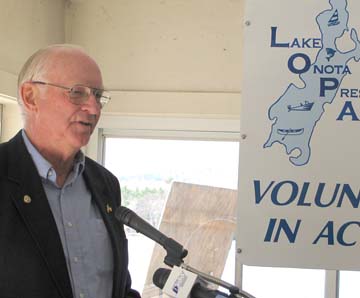
Robert W. Race speaks at the Arbor Day event at Onota Lake.
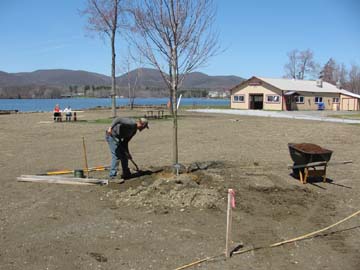
PITTSFIELD, Mass. — Arbor Day, the last Friday in April, was formally celebrated at Burbank Park on Friday, April 24, with speeches and the plantings of five trees along the walkway between the North Beach Parking area and the Controy Pavilion in memory of the late Beverly Mazurkiewicz, a civic activist who died last December.

About 50 attended the ceremonies at the Controy Pavilion to celebrate the contribution of trees to environmental well-being.

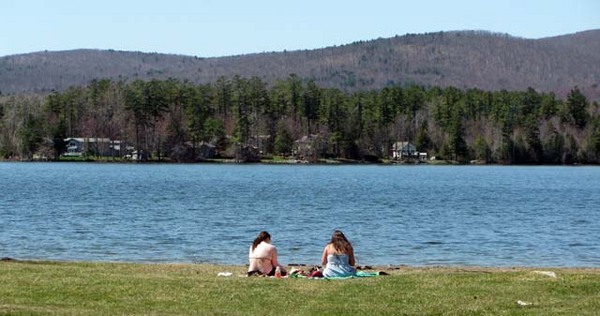
In a keynote speech, Robert W. Race, president of the Lake Onota Preservation Association, a citizen activist group for the betterment of the lake, particularly referred to the heavily forested surroundings on the west and north side of the lake.

"Not only do the trees provide a backdrop of scenic beauty for the lake, they are also serve as filters for the run-off of water into the lake, keeping it clean," he said.

The association, more generally known by its acronym, LOPA, is dedicated to keeping the lake healthy. The trees surrounding the lake, he said, play a major role in making the lake a major natural and recreational resource for the city and surrounding areas.

He used the occasion to spell out some of LOPA's accomplishments as an advocate for the lake. One of its primary jobs, he said, is to keep the lake free of invasive weeds that threaten swimming and boating.

That battle, he said, is being waged on two fronts: the widening of an outflow pipe at the north end of the lake later this summer which will enable deeper and more effective drawdowns at the end of the season and the application of spot herbicides in the spring in areas known to be particularly susceptible to invasive weed growth. The work is financed under a grant awarded to the city.

James McGrath, the city's Park, Open Space and Natural Resource Manager, served as master of ceremonies for the formal part of the program that took place in the Controy Pavilion. McGrath is also harbormaster for Lake Onota.


He, too, stressed the value of trees surrounding the lake as cleansing the run-off, stabilizing erosion concerns and providing a habitat for the Bald Eagle population that is beginning to develop on the west side of the lake.

"We couldn't do the work we do without the support of LOPA," he said.
Mayor James M. Ruberto prefaced the formal program with the reading of his Arbor Day proclamation.

"I have known Lake Onota since I was a young boy," he said. "It's a waterway close to my heart and the city has the authority to keep the lake clean."

Referring to LOPA, he said, "We could not do it without LOPA's advocacy to protect this valuable natural resource."

About 60 people attended the ceremonies. In a prelude to the tree-planting, Arthur Stein paid tribute to the work Beverly Mazurkiewicz had done as a member of RSVP, the group of senior volunteers for community service.

"She loved her work and in particular, the youth literacy program," he said.

Submitted on behalf of Lake Onota Preservation Association.
If you would like to contribute information on this article, contact us at info@iberkshires.com.

Social Service Organizations Highlight Challenges, Successes at Poverty Talk

By Brittany PolitoiBerkshires Staff

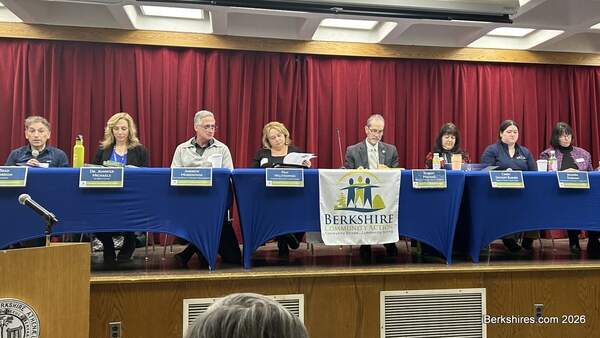
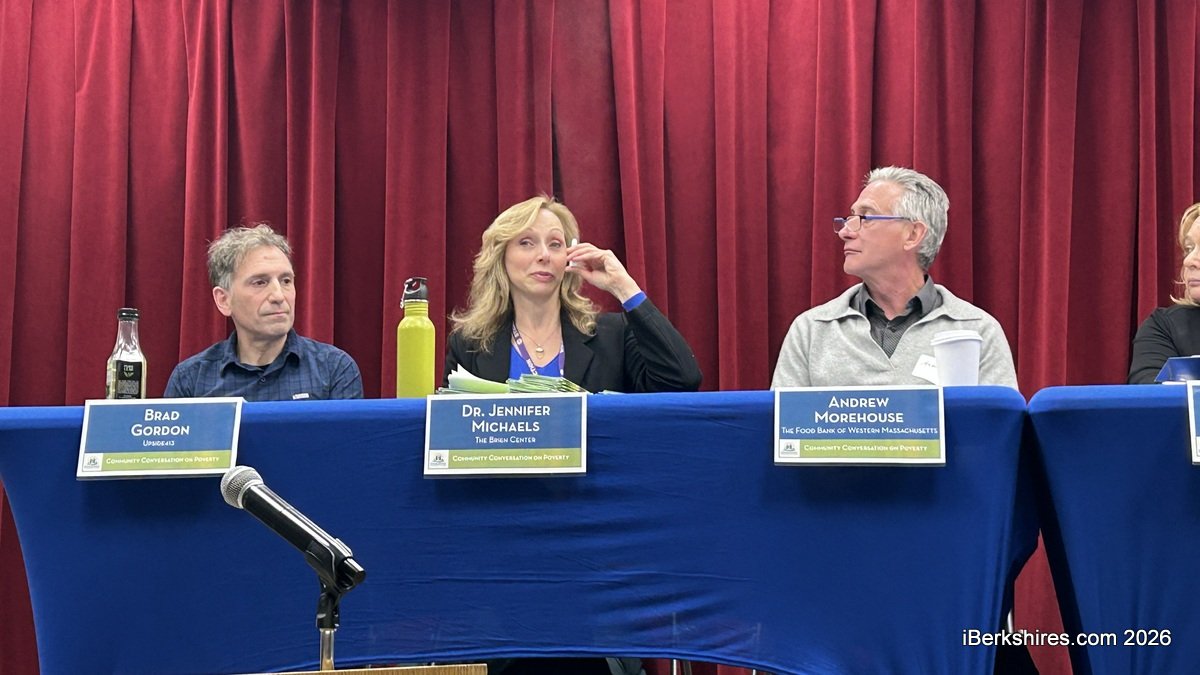
Dr. Jennifer Michaels of the Brien Center demonstrates how to use Narcan. Easy access to the drug has cut overdose deaths in the county by nearly half. 

PITTSFIELD, Mass. — Recent actions at the federal level are making it harder for people to climb out of poverty.

Brad Gordon, executive director of Upside413, said he felt like he was doing a disservice by not recognizing national challenges and how they draw a direct line from choices being made by the Trump administration and the challenges the United States is facing. 

"They more generally impact people's ability to work their way out of poverty, and that's really, that's really the overarching dynamic," he said. 

"Poverty is incredibly corrosive, and it impacts all the topics that we'll talk about today." 

His comments came during a conversation on poverty hosted by Berkshire Community Action Council. Eight local service agency leaders detailed how they are supporting people during the current housing and affordability crisis, and the Berkshire state delegation spoke to their own efforts.

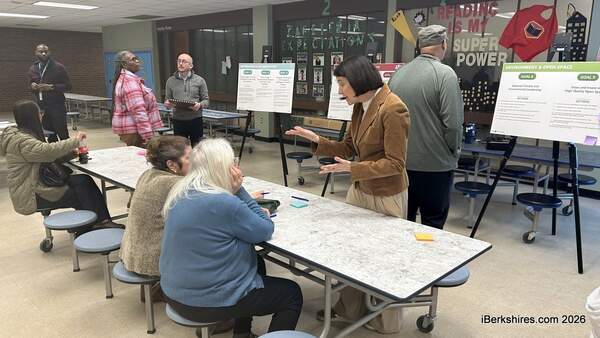
The event held on March 27 at the Berkshire Athenaeum included a working lunch and encouraged public feedback. 

"All of this information that we're going to gather today from both you and the panelists is going to drive our next three-year strategic plan," explained Deborah Leonczyk, BCAC's executive director. 

The conversation ranged from health care and housing production to financial literacy and child care.  Participating agencies included Upside 413, The Brien Center, The Food Bank of Western Massachusetts, MassHire Berkshire Career Center, Berkshire Regional Transit Authority, Greylock Federal Credit Union, Massachusetts College of Liberal Arts, and Child Care of the Berkshires. 

The federal choices Gordon spoke about included allocating $140 billion for the U.S. Immigration and Customs Enforcement, investing $38 billion to convert warehouses into detention centers, cutting $1 trillion from Medicaid over 10 years, a proposed 50 percent increase in the defense budget, and cutting federal funding for supportive housing programs. 

Gordon pointed to past comments about how the region can't build its way out of the housing crisis because of money. He withdrew that statement, explaining, "You know what? That's bullshit, actually."

"I'm going to be honest with you, that is absolute bullshit. I have just observed over the last year or so how we're spending our money and the amount of money that we're spending on the federal side, and I'm no longer saying in good conscience that we can't build our way out of this," he said. 

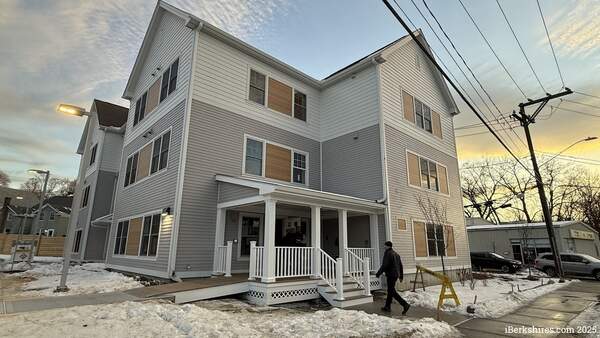
Upside 413 provided a "Housing Demand in Western Massachusetts" report that was done in collaboration with the University of Massachusetts at Amherst's Donahue Institute of Economic and Public Policy Research. It states that around 23,400 units are needed to meet current housing demand in Western Mass; 1,900 in Berkshire County in 2025. 

View Full Story

More Pittsfield Stories