'Everybody's Fine': Relatively Speaking

By Michael S. GoldbergeriBerkshires Film Critic
Print Story | Email Story
Popcorn Column
by Michael S. Goldberger  

Miramax Films
Frank Goode (Robert De Niro) takes to the road to connect with his children, including daughter Rosie, played by Drew Barrymore.
Moments of great truth partially compensate for the plodding predictability of director Kirk Jones' "Everybody's Fine," a remake of Giuseppe Tornatore's "Stanno Tutti Bene" (1990). But if your interest is prompted by the TV ads, beware. While marketed as a dramedy, there's more dram here than edy. The few laughs are those of harsh realization. 

out of 4
Robert De Niro is widower Frank Goode, a variation on the working class hero Billy Joel lionizes in "Allentown." Having spent a lifetime fashioning telephone wire coating to support home, hearth and his take on the American dream, he has damaged his health in the process. PVC, you know. But that's OK, figures Frank. His kids are all successful.

Curious thing, though. About eight months after his wife's passing, he happily preps for an en masse visit by the brood. There's Rosie, the dancer played by Drew Barrymore; Amy, the Chicago advertising wiz portrayed by Kate Beckinsale; symphony conductor Robert, acted by Sam Rockwell; and David, the NYC artist. One by one they cancel.

Now, Frank really shouldn't travel. Doctor's orders are to just putter in his Elmira, N.Y., garden. But the guy is determined to see his kids. And although he opts for mass transit rather than a big RV, his embarking on the road to find out, as Cat Stevens would put it, is similar in ethos to the trip undertaken by Jack Nicholson in "About Schmidt" (2002).

There are places to go and people to see, all of them potential sounding boards for the world according to Frank. Like many folks who've reached a certain age, he needs to impart. There is rationalization to relate. Pointing out the window at the wire he protected from the elements, he regales other passengers with why and how he did it his way.   

All of which gives De Niro, after a spate of mostly box office fluff, an opportunity to show that he still has the stuff of greatness. Not that the lead performance is entirely stellar. But, like the film itself, his evocation of one man's raison d'etre musters patent honesty. We like Frank, and worry both about his health and what he might discover.

The first unannounced stop is the artist David's digs. But a knock brings no answer at the walk-up apartment. Frank slides an envelope under the door. And while despondent that he missed his youngest, he is nonetheless heartened by the prominent window position his son's painting occupies in an art galley downstairs. Oh well, on to the next child. 

Thus, each leg of the journey offers Frank a chance to commune with his fellow man, a device that essentially serves as a chorus to the plot. But the screenplay, which borrows several notions from "Harry and Tonto" (1974), the modern granddad of the genre, shares neither the philosophical commitment nor the great characterizations of that classic.

For those who share with me and my dear departed Yorkie, Muffin, the sheer joy of going for a ride, note that we are teased with that vicarious possibility. But director Jones skimps in the travelogue and sociology departments. There are no breathtaking vistas or personae approximating the wit and fascination of a Chief Dan George to help the cause.

As it stands, the trek is used to perfunctorily move the story along, rather than as an engaging subplot unto itself. Likewise, ancillary personalities are only aboard to hear and react to Frank's musings. Compelling undertones to supplement his travail don't exist. A resulting lack of fluidity makes the film seem longer than 100 minutes.

On the positive side, the dearth of interesting side business chillingly but informingly isolates Frank from the perceptions he has heretofore held as true. For the fact is, things are not exactly the way his heartfelt wishes made them seem. Half-truths pepper some rather unsettling actualities for this blue-collar cousin of Arthur Miller's Willy Loman.

The rub is, Mom knew the skinny all along. So, in mining these divulgences about his children, it is apparent Frank was also clueless about the complete dynamics of his marriage, and therefore, his life in general. With his very being seeking new definition, the question now becomes, how will Frank Goode digest and adjust to his new world? 

Though he is flawed to a fault, we are invested in Frank's humanity. Pity is, the kids are little more than shadows, mere caricatures in service of the protagonist. Without dramatic complement or a script that allows De Niro to forsake the derivative saga and save the day with a show-stealing character study, "Everybody's Fine" is just fair to middlin'.

"Everybody's Fine," rated PG-13, is a Miramax Films release directed by Kirk Jones and stars Robert De Niro, Drew Barrymore and Sam Rockwell. Running time: 100 minutes

If you would like to contribute information on this article, contact us at info@iberkshires.com.

Lanesborough Officials Take Road District Dissolution Off Warrant

By Breanna SteeleiBerkshires Staff

LANESBOROUGH, Mass. — The Select Board has removed a town meeting warrant article regarding the dissolution of the Baker Hill Road District.

JMJ Holdings development consultant Tim Grogan spoke in public comment saying the Berkshire Mall owner is currently has purchase-and-sale agreement for the mall. 

Back in February, the Select Board settled a tax dispute with JMJ Holdings by agreeing to move forward in dissolving the district if the company paid $1.1 million to the town. JMJ Holdings had to provide a signed development-and-purchase agreement 30 days before the town meeting. 

JMJ holdings did not submit a payment to be made by May 9. Because of that, the Select Board voted to take the article of the warrant to be voted at the annual town meeting.

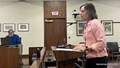
Meanwhile, the Baker Hill Road District presented a slideshow defending the district and explaining what it does.

The district currently provides a non-resident-funded revenue stream of around $500,000 per year. These funds help pay for police cars and officer salaries, dump trucks, fire trucks, and more for the town.

"Dissolution would mean the district's three commercial property owners would no longer have to pay for upkeep of the Route Seven/Eight connector road. As a result, the BHRD annual contribution of more than $500,000 to Lanesborough would disappear permanently, since the services and maintenance costs associated with the Route Seven and Eight connector road would still remain," said Tom Caraccioli, PR consultant with AH&M Inc. "Lanesborough would have to absorb these costs and continue to provide emergency services to the mall and Target. The financial burden for these remaining expenses would then fall on Lanesborough taxpayers through higher taxes or the reduction of other important town services."

The proposal with JMJ would affect the town in a negative way Caraccioli claimed. 

"JMJ is proposing a one-time payment of $1.1 million to Lanesborough in exchange, JMJ would never pay BHRD taxes again. The decision to dissolve the BHRD by accepting this proposed $1.1 million would be a permanent choice that would have irreversible consequences," he said. "There will be no official system in place to cover recurring costs once the money from this single payment is spent. Therefore, the proposed one-time payment is not a long-term solution for the town of Lanesborough."

JMJ's dispute was that the Berkshire Mall no longer exists as a functioning entity and it should not be on the hook for protection and maintenance that had been based on the mall's operation in its heyday. The company is seeking to redevelop the site as senior housing and town officials were asking the state to take over the Connector Road. 

District officials said it's not guaranteed that the state would take over the road linking Routes 7 and 8, built to service the mall back in the '80s, and that the state Department of Transportation had historically discouraged the town from asking. Even if it happened, it could take three to five years, during which no BHRD funds would be collected if the district is dissolved. The state would not replace the revenue they support, and they argued the state is facing its own budget issues making it unlikely they would want to take over.

The road district was created by an act of the Legislature and would require another act to dissolve it. The town meeting article asked for voter support for a home-rule petition to start that process.  

After the presentation, it was asked what the current financial status of the BHRD, given that JMJ hasn’t paid in a long time and if the district actually has the money or if it is dependent on the mall sale.

Mark Siegars, attorney for BHRD, reminded the room that the mall is under a purchase and sale agreement and if the sale closes, the district expects to receive more than a million dollars because of the lawsuit and lien, but does not have that cash yet. If the sale does not go through, BHRD will take the mall and sell it. The district still gets payments from Target, which is separate from the mall. 

There were also some questions on the district's history, with Select Board member Jason Breault asking if the mall did not have a high tax rate from the district, would it still be solvent. The exchange became heated between Siegars and BHRD Chair Bill Prendergast.

View Full Story

More Stories