Beaver Wood Delays Pownal Biomass Plant
 |
"We've decided to focus our development efforts on Fair Haven (Vt.)," Thomas Emero, a partner with Beaver Wood, said on Thursday. "There is tremendous amount of support for the Fair Haven project and Vermont does not have the demand for two biomass plants."
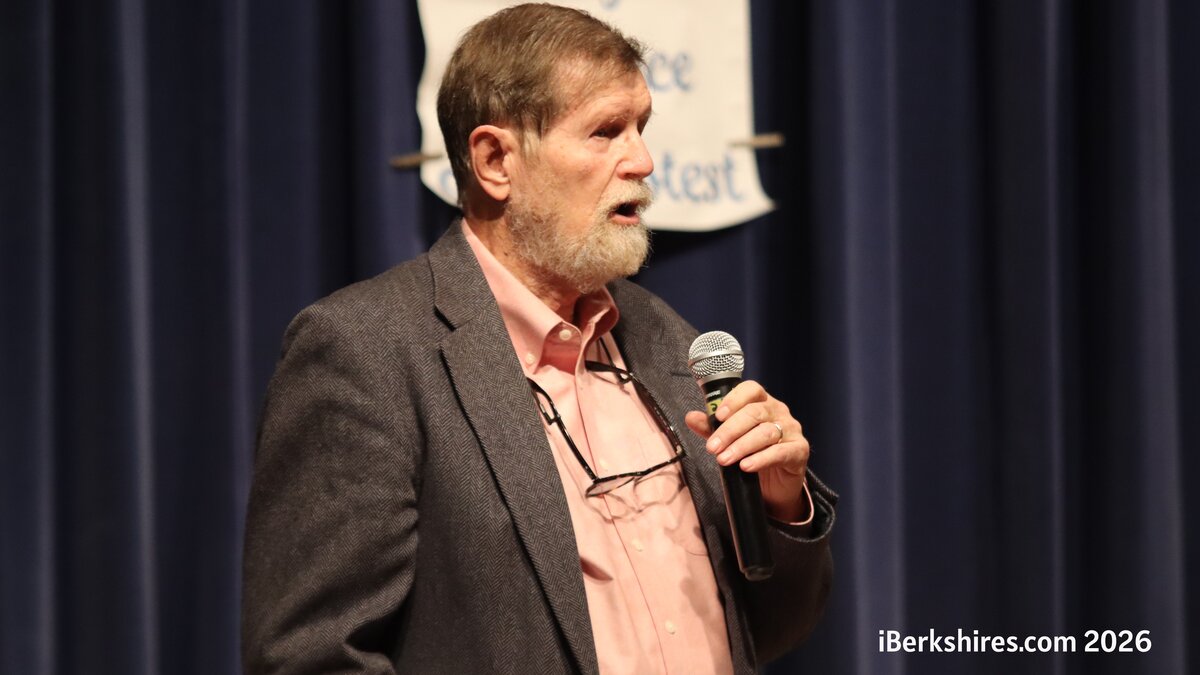
William Bousquet, a partner in Beaver Wood with Emero, announced the delay at a panel forum on biomass energy at Bennington (Vt.) College on Wednesday night, saying local opposition led to the temporary halt to the permitting and development of a 29.5-megawatt plant proposed for the former Green Mountain Race Track. The company will instead focus all of its attention at building an identical plant in Fair Haven.
"Because the people in Fair Haven are 100 percent towards this plant, and the people of Pownal have mixed feelings about the plant," Bousquet told Vermont Public Radio. "So it's much easier to go ahead with Fair Haven this year and then we'll have to see what the legislation does with the energy plan for next year or the year after."
Panelists at Bennington College discussed a new study from the Cary Institute of Ecosystem Studies in Millford, N.Y., that found biomass could replace up to a quarter of the liquid fossil fuel used in the Northeast. However, it noted that resources varied sharply by region and forestlands would have to carefully monitored.
The Pownal project sparked opposition on both sides of the border as residents expressed concern over pollution, truck traffic and deforestation. Both the town, Williams College and the Berkshire Regional Planning Commission were granted intervenor status for the Vermont Public Service Board's permitting process. Those south-of-the-border entities all cited a lack of information and advocated for a longer review.
The Bennington-Berkshire Citizens' Coalition has fiercely opposed the construction. Emero said that opposition was a factor in the delay and the company will use that time to provide answers to the questions.
"We're always willing to get together to discuss with people who are interested in learning more," Emero said. "We have a meeting set up to meet with the President of Williams College."
Pownal has exhibited mixed feelings, with some advocating for the jobs and industry the plant would spark. Yet, the recent town election saw an incumbent Select Board member seen as a proponent of the plant ousted in favor of a member who has criticized the proposal.
That newly elected Select Board member, Stephen Kauppi, said the company knows what questions need to be answered and hopes this delay will clear up issues.
"I am pleased that it is on hold for a while," Kauppi said. "It needed to be put on hold. There were too many questions that weren't answered."
The Pownal board was also divided on whether Massachusetts entities should be allowed to participate. Kauppi and Select Board member Ronald Bisson opposed sending a letter asking the Vermont Public Service Board to ban out-of-state groups from participating but they were outvoted. In response, the two sent their own letter advocating for those entities to be included.
"That was a bad move on the board's part," Kauppi said. "Why would you give them a slap in the face like that?"
Though the company will attempt to provide additional information, Emero said some of the extreme opposition will not listen. He would like to point to the Fair Haven project, once completed, but does not expect that to calm the hostile groups.
"The Fair Haven project will be the most advanced, most efficient and the cleanest biomass plant ever built," Emero claimed.
Another reason the company suspended the project was because of the lack of places to sell the energy. Beaver Wood has not found a demand for two plants in Vermont but Emero hopes that will change while the Pownal plant's on hold. He expects that demand will increase because Vermont Yankee nuclear plant is in line to be decommissioned and closed. Additionally, legislators in Vermont are preparing to do a comprehensive energy review that may show a greater need for locally produced energy.
"Right now Vermont does not make a whole lot of its energy," Emero said.
That increase in demand could lead to legislative changes that would make development easier.
Financially though, Emero said the delay could jeopardize $50 million in tax incentives. Federal tax incentives paid up-front for the development of renewable energy was in the financial plans and there is a fear that the program could be changed, he said.
"They changed the program where they would give you tax incentives or a direct grant for development... It loads it up front. It was a reaction to the economy," Emero said. "There is always the risk that the government will not extend it."
Updated March, 10 2011 at 5:15 p.m.