Bennington Writer Looks at Commune Movement in 'Buy the Farm'
|
|
|
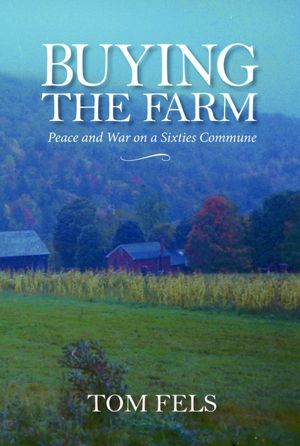 |
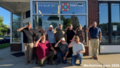
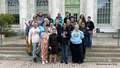
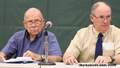
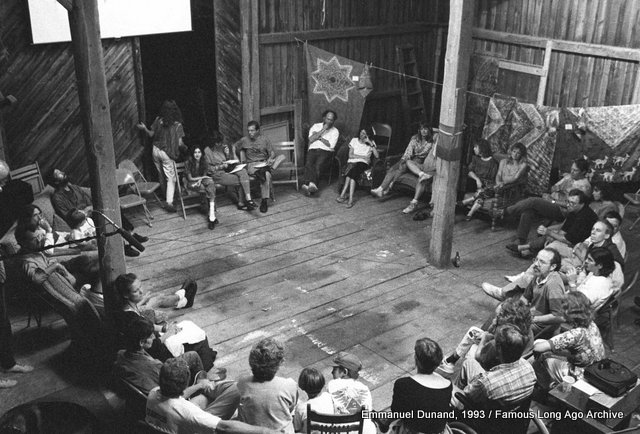
Above, Montague Farm's current and past residents joined for a 25th reunion in 1993. Left, Tom Fels of Bennington, Vt., continues his exploration of the commune, its residents and its impact on them in his second book, 'Buying the Farm,' published by the University of Massachusetts Press. Fels, who spent four years at Montague and founded the Famous Long Ago Archive on the counterculture movement, will speak at Water Street Books this Thursday. |
WILLIAMSTOWN, Mass. — More than 40 years ago, Tom Fels took up an invitation to try a more idealistic way of living.
"I was in my last term at Amherst College when Marshall [Bloom], who had been a year ahead of me in college, asked me to join a commune," the Bennington, Vt., resident said, speaking of a lively activist with whom he became acquainted at college through a mutual interest in the Civil Rights and anti-war movements.
Bloom was a journalist and a founder of the Liberation News Service, a collective that fed news to underground newspapers for more than a dozen years.
Fels' mother and stepfather (his father died when he was very young) were taken aback when he announced that he was going to live in a commune.
"They would have preferred that I went to graduate school," said Fels, adding that they should not have been too surprised by his decision as he had grown up in a liberal atmosphere at Bennington College and attending the Putnam School.
"When I was in my 20s," he said. "We had all kinds of pressure that we would not have at the commune. It was a chance to explore what you would want to be, what kind of life you should have."
His newly released book "Buying The Farm" is an absorbing reflection on communal living at Montague Farm, also known as Virtuous Caucus commune, on the other side of the Greenfield in Franklin County. "Buying The Farm" follows Fels' critically acclaimed "Farm Friends: From the Late Sixties to the West Seventies and Beyond," published in 2008.
Fels lived on the commune for four years but followed up with Montague participants over the years. The first part of "Buying the Farm" is about the farm up to 1993, the 25th year of its 35-year life; the second part is about the residents not being able to figure out how to keep it going, Fels said in a recent interview.
At the commune, there were more people in the warm weather than in the winter, sometimes there would be only three and sometimes there would be 10 or more. "We did everything together," said Fels.
As a group, they wanted to be self-sufficient but still needed money to buy certain things. They worked in the library, delivered newspapers and raised crops.
"I had always wanted to be an architect, and while at the commune, I worked in that field. Later, I worked in a sawmill to earn money and wood for a small house I built on the farm," said Fels. "It was a hard life." "
And as it turned out, the commune was not really a safe place to escape from harsh realities.
"Today it is well known that our government spent large amounts of time and money monitoring those it considered dissidents. At the time of the Civil Rights Movement and the Liberation News Service, we felt that we were being watched," Fels said. "When you're living an alternative life on a farm in the country and men in suits and well-polished shoes emerge from a new model car, it's assumed that they represent either the government or the bank."
Fels said he followed Blooms' work, but was not part of the News Service. Within a year or so of establishing the commune, Bloom killed himself. "We were shocked," said Fels.
|
New House of One People in the farm's converted barn, 2006 |
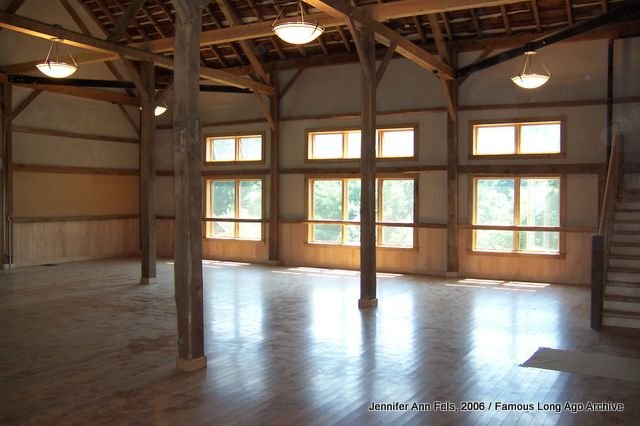
"He was our mentor, our leader, and after he died, leadership at the farm was an ongoing challenge."
Fels continued writing and drawing, fell in love and become part of a couple. He said he discovered that what many writers said about communes was true: It is best for creative people and couples to make a life for themselves rather than try to do everything with others.
"Life on the farm became too difficult for us," Fels said.
"People point out that it's great to have a lot of idealism, but you need to be part of something larger that you contribute to when you go back to the real world," said Fels. And when the real world "called out" to Fels and he returned to Bennington, he needed a job.
"By the time I left the farm, I realized I would not be an architect," he recalled. "So I did farming and carpentry a couple of years and then I worked in the admissions office at Bennington College for five years."
But he did not find that satisfying, and went back to academics, studying art history at Williams College.
Over the years, Fels has kept in touch with his friends from the commune. And when he became an independent curator, traveling far and wide to museums, he contacted those friends. Much of his research is now at the Famous Long Ago Archive founded by Fels at the University of Massachusetts.
In 2005, he began his work on "Farm Family" and now Montague Farm lives again in "Buying the Farm."
But as Fels writes, "As I point out to literate friends who ask why I left a place considered an Eden some forty years ago: We all like to glean important cultural lessons from Thoreau, but Thoreau chose to live by himself at Walden, not with his friends at Brook Farm."
Fels will read to the public from "Buying The Farm" at 6 p.m. Thursday, Dec. 13, at Water Street Books, 26 Water St.
Tags: books, commune, counterculture, farming,