Expert Driving Tips For Icy Roads

By Andy McKeeveriBerkshires Staff
Print Story | Email Story

Berkshire County residents are dealing with slick and icy roads.

PITTSFIELD, Mass. — With temperatures on the increase this week, the roads are just going to get more dangerous.

According to Bridgestone Tires' Winter Driving School Director Mark Cox, the colder the temperatures are in the winter, the better traction vehicles have. It is when the temperature hovers near 32 degrees that the "free water" creates slick conditions.

"Over the course of a trip, it is important to keep an eye on the thermometer," Cox said in a phone interview Wednesday morning from the school in Steamboat Springs, Colo.

In his career as a rally and ice car racer, Cox has seen his share of slick conditions and has become a specialist in low-traction conditions. The trick to handling icy roads is to use one of the vehicle's controls — brakes, accelerator and steering wheel — at a time, he said.

"It is amazing how simple it is but a lot of people have difficulty doing it," Cox said.

Don't steer while accelerating and only brake if you are in a straight line, he said. Cox also reminds people that on snow and ice, it takes four to 10 times longer to stop.

While those tips may help drivers avoid losing traction, Cox also has tips for drivers who find themselves skidding.


Step one is to identify which type of skid —  either front wheel or rear wheel. If a front-wheel skid, it is likely caused by a driver trying to turn. Cox said to let off the gas, turn the wheel straight and wait to regain traction before entering the corner.

"That correction is really counterintuitive because if you are turning right to avoid a cliff, you have to turn back toward the cliff to regain traction," Cox said.

A rear-wheel skid has a different type of correction, he said, and those are likely caused by a driver hitting the brakes too hard — Cox uses an example of a driver nearly passing a highway exit.

This correction is the "steer into the skid" mantra driving schools across the country preach but Cox modifies it to say "steer where you want the front of the car to go." Additionally, Cox explains that the best way to get traction is to move weight onto the rear wheel by slightly accelerating.

Even drivers with years of experience in the snow can have trouble on winter roads because "you simply get rusty," Cox said. He advises drivers to "put down the phone, turn down the radio and focus on driving."

"A lot of drivers think of a car as a way to get from point A to point B and don't develop the skills to be a good driver," Cox said.

He also recommends keeping an eye on the condition of the tires because being "unprepared is just as dangerous as going too fast." Worn or out-of-season tires can decrease the vehicle's ability to handle snow and ice.


Tags: driving,   weather conditions,   
If you would like to contribute information on this article, contact us at info@iberkshires.com.

Sheffield Craftsman Offering Workshops on Windsor Chairs

By Breanna SteeleiBerkshires Staff

Andrew Jack uses hand tools in his wood working shop. 

SHEFFIELD, Mass. — A new workshop is bringing woodworking classes and handmade items.

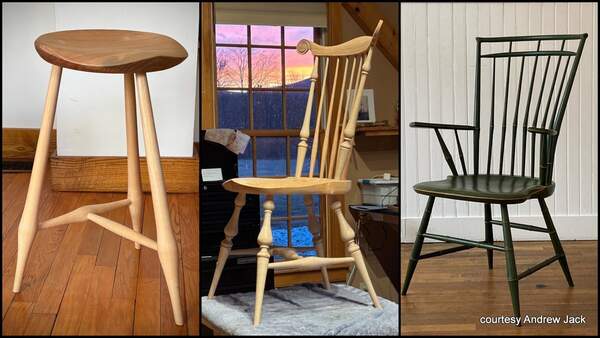
Andrew Jack specializes in Windsor chairs and has been making them for almost 20 years.

He recently opened a workshop at 292 South Main St. as a space for people to see his work and learn how to do it.

"This is sort of the next, or latest iteration of a business that I've kind of been limping along for a little while," he said. "I make Windsor chairs from scratch, and this is an effort to have a little bit more of a public-facing space, where people can see the chairs, talk about options, talking about commissions.

"I also am using it as a space to teach workshops, which for the last 10 years or so I've been trying to do out of my own personal workshop at home."

Jack graduated in 2008 from State University of New York at Purchase, and later met woodworker Curtis Buchanan, who inspired him.

"Right after I finished there, I was feeling a little lost. I wasn't sure how to make the next steps and afford a workspace. And the machine tooling that I was used to using in school." he said, "Right after I graduated, I crossed paths with a guy named Curtis Buchanan, and he was demonstrating making really refined Windsor chairs with not much more than some some flea market tools, and I saw that as a great, low overhead way to keep working with wood."

Jack moved into his workshop last month with help from his wife. He is renting the space from the owners of Magic Flute, who he says have been wonderful to work with.

"My wife actually noticed the 'for rent' sign out by the road, and she made the initial call to just see if we get some more information," he said. "It wasn't on my radar, because it felt like kind of a big leap, and sometimes that's how it's been in my life, where I just need other people to believe in me more than I do to, you know, really pull the trigger."

Jack does commissions and while most of his work is Windsor chairs, he also builds desks and tables, and does spoon carving. 

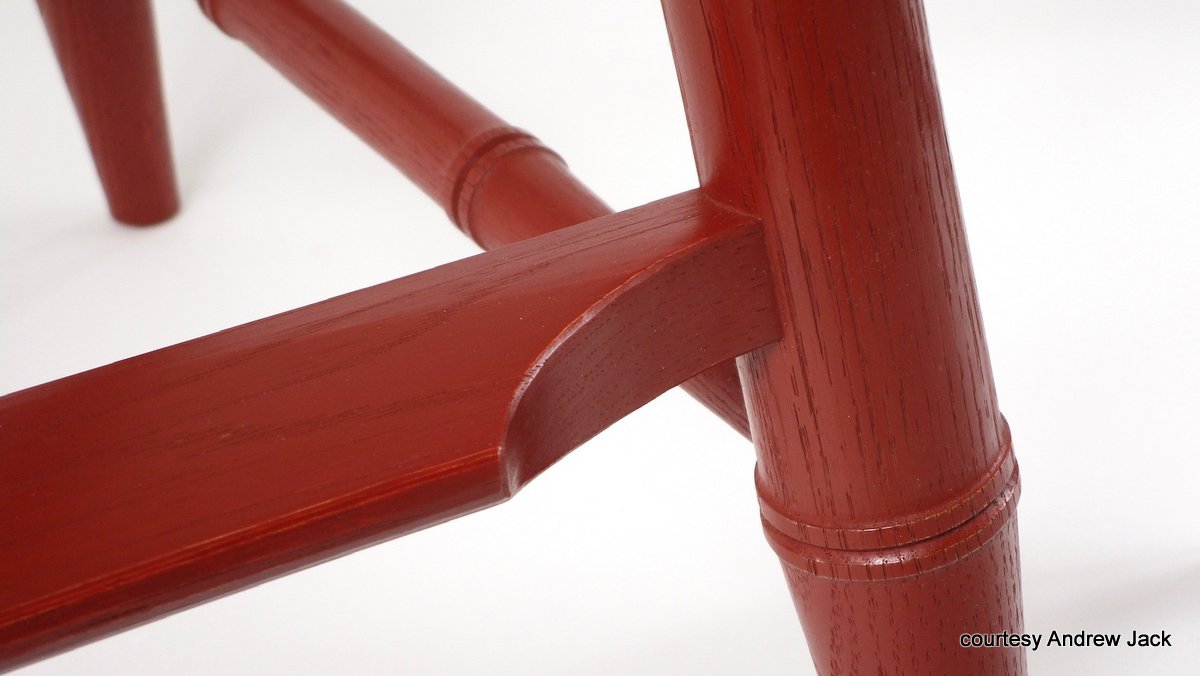
Windsor chairs are different because of the way their backs are attached into the seat instead of being a continuous leg and back frame.

"A lot of the designs that I make are on the traditional side, but I do some contemporary stuff as well. And so usually the legs are turned on a lathe and they have sort of a fancy baluster look to them, or they could be much more simple," he said. "But the solid seat that separates the undercarriage from the backrest and the arms and stuff is sort of one of the defining characteristics of a Windsor."

He hopes to help people learn the craft and says it's rewarding to see the finished product. In the future, he also hopes to host other instructors and add more designs for the workshop.

"The prime impact for the workshops is to give close instruction to people that are interested in working wood with hand tools or developing a new skill. Or seeing what's possible with proper guidance," Jack said. "Chairs are often considered some of the more difficult or complex woodworking endeavors, and maybe less so Windsor chairs, but there is a lot that goes into them, and being able to kind of demystify that, or guide people through the process is quite rewarding."

People can sign up for classes on his website; some classes are over a couple and others a couple of weekends.

"I offer a three-day class for, a much, much more simple, like perch, kind of stool, where most of the parts are kind of pre-made, and students can focus on the joinery that goes into it and the carving of the seat, again, all with hand tools. And then students will leave with their own chair," he said.

"The longer classes run similarly, although there's quite a bit more labor that goes into those. So I provide all the turned parts, legs and stretchers and posts and things, but students will do all the joinery and all the seat carving the assembly. And they'll split and shave and shape their own spindles, and any of the bent parts that go into the chair."

His gallery is open Wednesday through Sunday 10 a.m to 2 p.m., and Monday and Tuesday by appointment.

View Full Story

More South Berkshire Stories