| If you would like to contribute information on this article, contact us at info@iberkshires.com. |
Greenagers Founder Will Conklin Honored as Business Person of the Year
By Breanna Steele
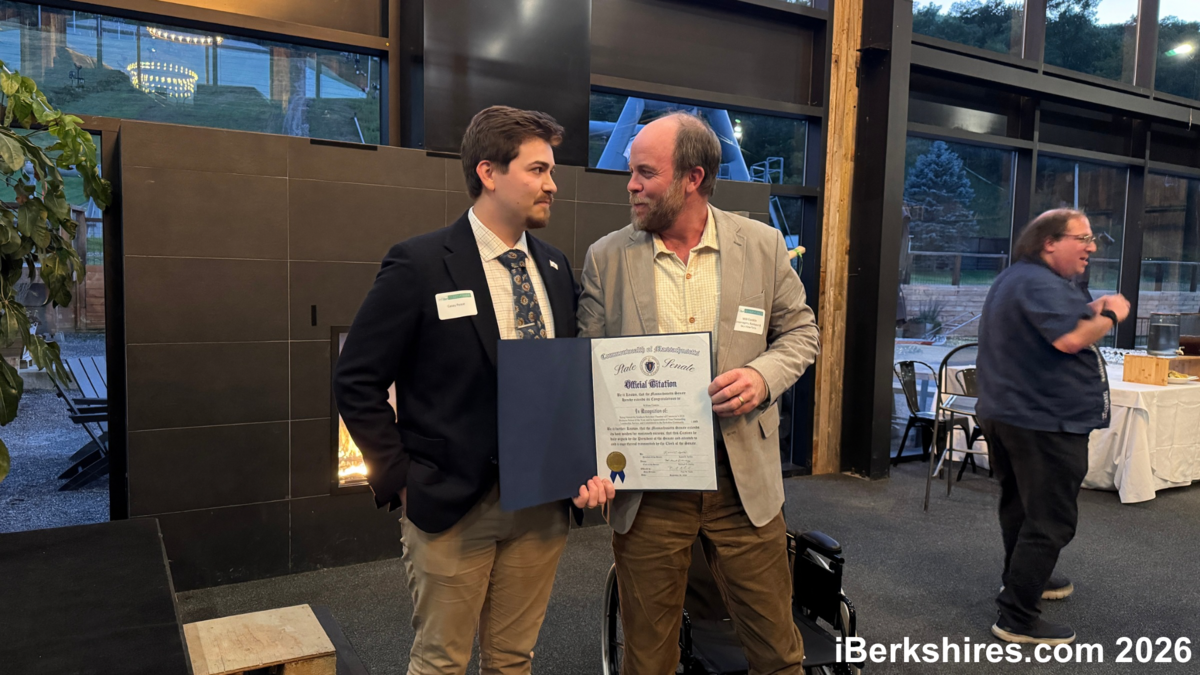
EGREMONT, Mass. — The Southern Berkshire Chamber of Commerce honored a local businessman and nonprofit leader on Sept. 24 at Catamount Mountain Resort.
Casey Pease of state Sen. Paul Mark's office presents William Conklin, right, with a state Senate proclamation.
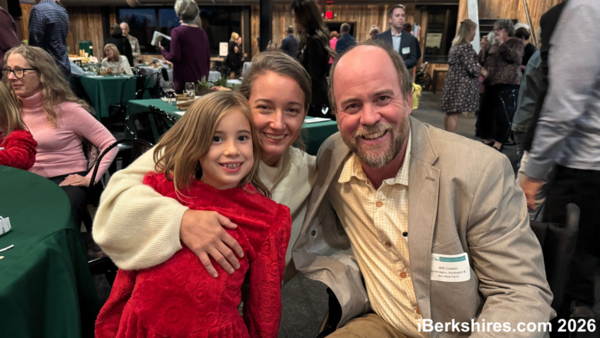
William Conklin was this year's Business Person of the Year, recognizing his work as founder and executive director of Greenagers, a nonprofit that helps youth and children engage in work in environmental conservation, sustainable farming, natural resource management, and vocational skills building.
Conklin and his family also run Sky View Farm and he is a managing partner of Konkapot Tree and Timber, a small-scale forest products business.
"If you spent any amount of time in Southern Berkshire, chances are you've heard his name, whether you realize the connection at the time or not," said board member Sierra King Watson, who emceed the event. "You might be having a conversation about farming, a new barn or structure that was built, students learning hands-on skills in sustainable agriculture, or a family that receives donated firewood to help keep their home warm through a cold Berkshire winter, or maybe you're simply talking about one of those community leaders who somehow manages to show up, support everyone, and seemingly be everywhere all at once.
"Well, one name has a way of continuously popping up, and that is Will Conklin."
Board President Mark Rulison said the region has more than 1,200 nonprofits. One in four jobs in the county is in the nonprofit sector, which ranks 27th nationally for nonprofit employment. He said the economic impact on the community is huge, thanking those who help.
For the event on Thursday, Conklin requested that as much of the food as possible was sourced locally. Most of it came from Greenagers, Sky View Farm, Indian Line Farm and Fancy Feast Supper Club, creative dinner series.
More South Berkshire Stories
- McCann Tech's Thomas Wins Berkshire Classic
- Greenagers Founder Will Conklin Honored as Business Person of the Year
- Hoosac Valley Football Team to Resume Activities
- Hazing Allegation Prompts Pause in Hoosac Football Program
- Great Barrington Unveils 9/11 Memorial Featuring World Trade Center Steel
- New Ninja Playground Opens in Lee