Physician Focus: Physical, Oral Health Are Connected
If you're wondering why a physician and a dentist are writing this column together, the reason is simple: We have an important message for all of our patients.
Research has shown that oral health and physical health are connected, and that problems with oral health are linked to problems with our physical health, such as heart disease, stroke, diabetes, and pneumonia. Recognizing the connection, physicians and dentists are beginning to collaborate for the overall health of their patients.
The problems begin with inflammation around the teeth and gums caused by bacteria.
 While the bacteria contribute to tooth decay and gum disease, the inflammation can move into the rest of the body, where inflammation is associated with conditions such as heart disease and stroke. So what starts off as an oral health problem can become a serious problem in another part of the body.
More than 10 years ago, the U.S. Surgeon General issued a first-ever report on oral health in America and declared that oral diseases remain prevalent across the country. For some groups, the report found, the lack of oral health was a "silent epidemic."
A decade later, poor oral health is still widespread. Tooth decay is one of the most common diseases of children – five times as common as asthma (which affects 1 in 11 children) – according to the Centers for Disease Control. Children, however, are just one of the groups most vulnerable to poor oral health. Individuals with special needs, pregnant women (only one-third go to the dentist), and the elderly (70 percent do not have dental insurance) are also at risk.
Physicians and dentists recognize that improving oral health requires overcoming barriers.
Economic, cultural, and social obstacles, as well as a lack of dental insurance and fear of the dentist, still prevent many people from seeking care. Even transportation issues pose obstacles, especially in rural areas where fewer dentists practice.
The lack of dental coverage, for example, is a primary reason why dental-related visits to emergency rooms reached a record 2.1 million in 2010. Such visits to the emergency room, however, are only a short-term fix, at most able to control pain and infection. A visit doesn't solve the basic dental problem.
Another reason for poor oral care is lack of awareness. Some people have just never been taught the importance of oral health or going to the dentist on a regular basis. Good oral health is an educational process that has to start at a very young age, and that includes instilling good diet and lifestyle habits, such as limiting sugar intake and avoiding tobacco.
Programs such as the Massachusetts Dental Society's Connect the Dots, in which physicians and dentists work together in the community, and the establishment of a Committee on Oral Health by the Massachusetts Medical Society mark the beginning of a growing relationship between physicians and dentists to promote oral health.
Physicians are now being trained to examine the mouth and encourage parents to bring their children to see a dentist within six months of the eruption of their first tooth or by age one. Physicians are also beginning to recognize, because they see children when they're very young before they establish dental care, that it's as important to give the same good advice about oral health as they do about other preventive measures like car seats, seat belts and safety equipment. They can encourage parents to brush their infants' teeth as soon as they erupt with a smear of fluoridated toothpaste and have older children wear mouth guards for sports.
Even as we physicians and dentists increase our cooperative efforts, however, we are aware that our patients – and for the young, their parents - ultimately hold the key to better oral health.
We have two messages that patients should keep in mind. First, dental problems like cavities, plaque, and gum disease can be prevented and prevented in easy ways. And second, the basics are the most important steps in good oral health: brushing and flossing daily and seeing the dentist at least twice a year.
The mouth is the gateway to the body, and it's important that everyone think as much about their oral health as well as their physical health.
For more information on oral health visit the American Dental Association at www.mouthhealthy.org. For a video on this topic, visit www.physicianfocus.org/oralhealth.
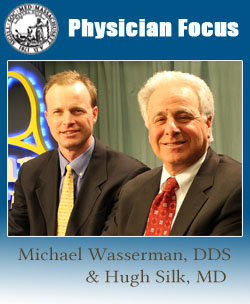
Hugh Silk, MD, is a family physician and chair of the Massachusetts Medical Society's Committee on Oral Health. Michael Wasserman, DDS, a Pittsfield general dentist, is president of the Massachusetts Dental Society and a member of the MMS Committee. Physician Focus is a public service of the Massachusetts Medical Society. Readers should use their own judgment when seeking medical care and consult with their physician for treatment. Send comments to PhysicianFocus@mms.org.
Tags: dental, health & wellness,