Clark Art Receives $118,000 to Digitize Book Collection

Print Story | Email Story

WILLIAMSTOWN, Mass. — The Clark Art Institute has been awarded a $118,737 Museums for America grant from the Institute of Museum and Library Services to digitize significant volumes from the Julius S. Held Collection of Rare Books in the Clark library.

These materials will be made available through the library's digital collections interface; the Internet Archive; the Getty Research Portal; the Massachusetts Digital Commonwealth; and the Digital Public Library of America.

Museums for America grants help museums address their key needs or challenges, enabling them to provide better service to their communities. The Clark will digitize 185 of the collection's 283 volumes and enhance cataloging and metadata for the more than 107,000 images in the collection, including a significant number of rare titles and unique volumes dating from the 16th century through the 19th century. The project fulfills the museum's goal of collections stewardship by allowing access to these exceedingly rare volumes, ensuring their physical preservation while facilitating access and knowledge.

“We are delighted to be able to digitize and share this important scholarly collection, including Dr. Held’s annotations, to the broadest possible community,” said Clark Librarian Susan Roeper. “At the same time, we are able to provide for the preservation of the both the physical volumes and the digitized files.”


Art historian Julius S. Held (1905–2002) was renowned internationally as a distinguished scholar of Rubens and Rembrandt. Educated in Europe, Dr. Held joined the faculty of Columbia University in 1937 and gained international recognition through his writing and frequent calls for his consultation and authentication of 16th- and 17th-century Dutch and Flemish art.

The Julius S. Held Collection of Rare Books encompasses imprints from the 16th, 17th and 18th centuries. Many of the extraordinary volumes in this collection include illustrations by artists such as Peter Paul Rubens, Albrecht Dürer, and Anthony van Dyck. The broad scope of these books include works by Virgil and Ovid, versions of Aesop's fables, and titles on art and art theory, astronomy, religion, natural history, travel, and anatomy in a range of languages. The collection also includes important art histories and early treatises on iconology and emblems. Of note are the approximately 80 books that form the working core of Dr. Held’s scholarly collection. These texts hold Dr. Held’s manuscript annotations and commentary concerning provenance and identification of illustrations present in the texts and appear on the inside of covers, as marginalia, and as end notes on fly leaves.

IMLS received 554 applications for the highly competitive Museums for America grant. Of these, slightly more than one third (196 projects) received funding.

“Millions of Americans visit museums each year,” said IMLS Director Susan H. Hildreth. “These federal investments will ultimately help museums deliver enhanced learning experiences, improve collections care, and address community needs.”

 

If you would like to contribute information on this article, contact us at info@iberkshires.com.

New Daycare and Training Zone for Dogs Opens in Williamstown

By Breanna SteeleiBerkshires Staff

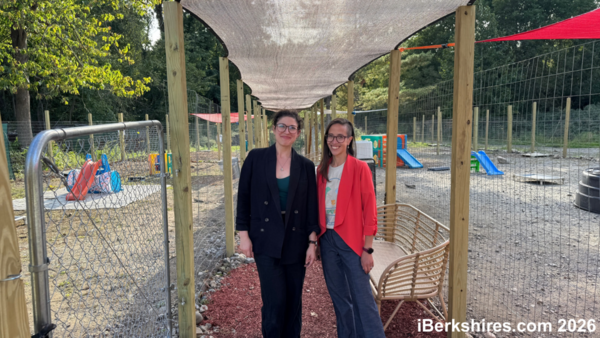
WILLIAMSTOWN, Mass. — You can now bring your dogs to a new daycare and training spot. 

Owners and friends Michelle Marrocco and Tiffany Boyden opened Pup Place last month at 895 Simonds Road, the former location of a martial arts studio.

"We do daycare full days and half days, and then we do what we like to call lifestyle training, which is just worked into our models," Marrocco said. "So generally, people don't want their dogs to jump on them, or counter surf, or steal food, and we don't want those things either. So we just reinforce that all day, every day.

"And then we have additional training options like leash training, so your dog will walk politely. We do reactivity training with dogs who are nervous or scared or have issues with other people or other dogs."

This is not their first venture. The two have been walking and training dogs as Berkshire Pup People and it took about five years to find the right space to open a doggy daycare.

"We started with walking, and then added on training and pet sitting and pet sitting. So we have a team of independent contractors," Boyden said.

Marrocco said a brick and mortar building for their business was always the goal while they built up a customer base.

"The idea was that we would do that to build up trust in the community and get to know the market better, with the goal of opening a dog daycare, because there's a huge amount of people with dogs here in the Berkshires in general, and I think we are able to serve maybe 11 percent of the market, which is like families with one or two dogs, and there's three other dog daycares in the region, or dog day trains sort of places, and there's simply not enough for what people need," she said.

Boyden, who is a dog behaviorist, said she fell in love with dog training during the pandemic through helping a neighbor with their dog.

"There was a hole in the market because the dog daycare that I actually brought my own dog to closed, and my neighbor was like, 'I was working remote this whole time, but now I have to go in the office. What do I do with my dog? What do you do with your dog?' And I was like, 'I have a remote job, so he stays home.' And that's kind of where the idea started. We started walking and training him. Then he started coming to my house for care," Boyden said.

After realizing the gap in the market, Boyden reached out to Marrocco, knowing they are both dog lovers, and asked if she wanted to start a business with her.

Boyden learned training from an online course and hands-on experience. Marrocco has a background in teaching and said humane education is similar to how dogs learn. The also completed the E for All Berkshire County business training program. 

"What sets me apart a little bit from other trainers in our area is that instead of just basic training, I really enjoy the reactivity training, anything that's behavioral. I love to see a dog struggling and find the root cause of why they're struggling, and then figure out how can we work together to help, rather than just say, 'Hey, this is a behavior. We're going to just train you to stop it,'" she said. "It's why are you having that behavior, and how can we help you through that so you no longer feel like you need to do that behavior? So that's a lot of what we do here in general." 

They use positive reinforcement only and avoid aversive methods, which can hide behavior problems. She said all dogs learn a shared set of commands, such as waiting at gates and being comfortable with handling. 

At the daycare, dogs rotate between rest, enrichment activities like ripping cardboard, and play so they learn to settle down.

View Full Story

More Williamstown Stories