Developer Proposes Scaled Down Solar Project On Churchill Street
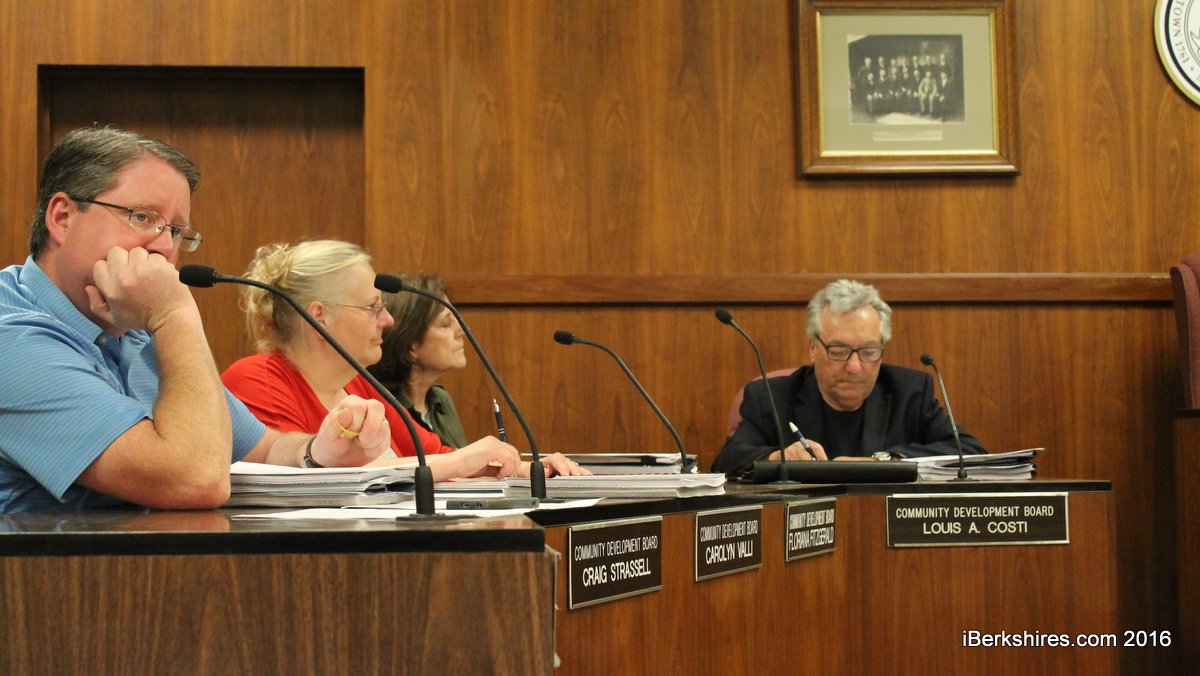
The Community Development Board added conditions to each solar project on Tuesday should each be approved by the Zoning Board of Appeals.
Aegis Renewable Energy had proposed a 2.6 megawatt array on a portion of the 60-plus acre property on Churchill Street early this year.
But neighbors fought it, claiming such a commercial use would be detrimental to the residential area. The Zoning Board of Appeals agreed and denied the plan in a 3-2 vote.
Now Aegis has returned with a second application, which went before the Community Development Board on Tuesday and will go before the Zoning Board of Appeals on Wednesday. The new plan calls for 1.82 megawatts, reducing the amount of tree clearing from 7.5 aces to 5.5 acre, as well as unveiling a master plan to construct eight homes over time to block the view.
"The special permit, we are only talking about the solar but I think it is important to understand about the housing," said James Scalise of SK Design, who worked on the project on behalf of Aegis and property owner Todd Driscoll.
The project is proposed to be set back 300-400 feet from the road and landscaped to limit visibility Along the road, eventually homes are eventually planned. Scalise said some of the neighbors had said they would rather see homes being built than a commercial use.
"We're not going to build eight houses in one year," Scalise said, adding that the homes being built will be able to use the electricity generated from the array. "These will probably built slowly as the market demands so we will have time for this to be filled in."
In the meantime, there will be a 20-feet wooded area between the yet-to-be-built homes and the project to ensure screening.
The panels themselves stand 9.4-feet tall but the ground is being leveled, so Scalise says the heights won't be that noticeable. The array will be surrounded by a 8-foot fence, which was moved closer to the array to avoid visibility from the neighbors.
"This is not going to be some tall structure in the meadow," he said.
While many neighbors opposed the project, not all had. Blythewood Stables owner Robert Collins spoke on Tuesday urging city officials to move the project along and promote the use of solar energy.
The Community Development Board approved the site plan during its review, adding only a few minor conditions, and now it will be up to the Zoning Board of Appeals. The ZBA will make or break the new proposal with the ability to issue a special permit for the work or not.
The Churchill Street solar array was just one of two planned for the city. BVD LLC is proposing a 1.9 megawatt project on Cloverdale Street. A total of 7.5 acres of the property located at 220 Cloverdale is planned. The power will be sold back into the grid and will be enough to power some 311 homes, according to Scalise.
"The proposal is to have a 15-foot wide gravel driveway. At most we would have two vehicles on property at the same time," Scalise said.
This project is taking place in a meadow which right now is undeveloped and would not need any grading work. This array would be fenced off by an 8-foot fence. The driveway is planned to to bend to restrict anyone from seeing the array while looking up from the street and new trees will be planted on either side to restrict views.
However, the trees on the property now are large with few low hanging branches so in the winter there would be visibility. The Community Development Board agreed with Scalise in using a slat fence, which would be low and green, as well as planning some new evergreens on the edges would restrict the visibility in the winter. The board issued that as a condition in the site plan review.
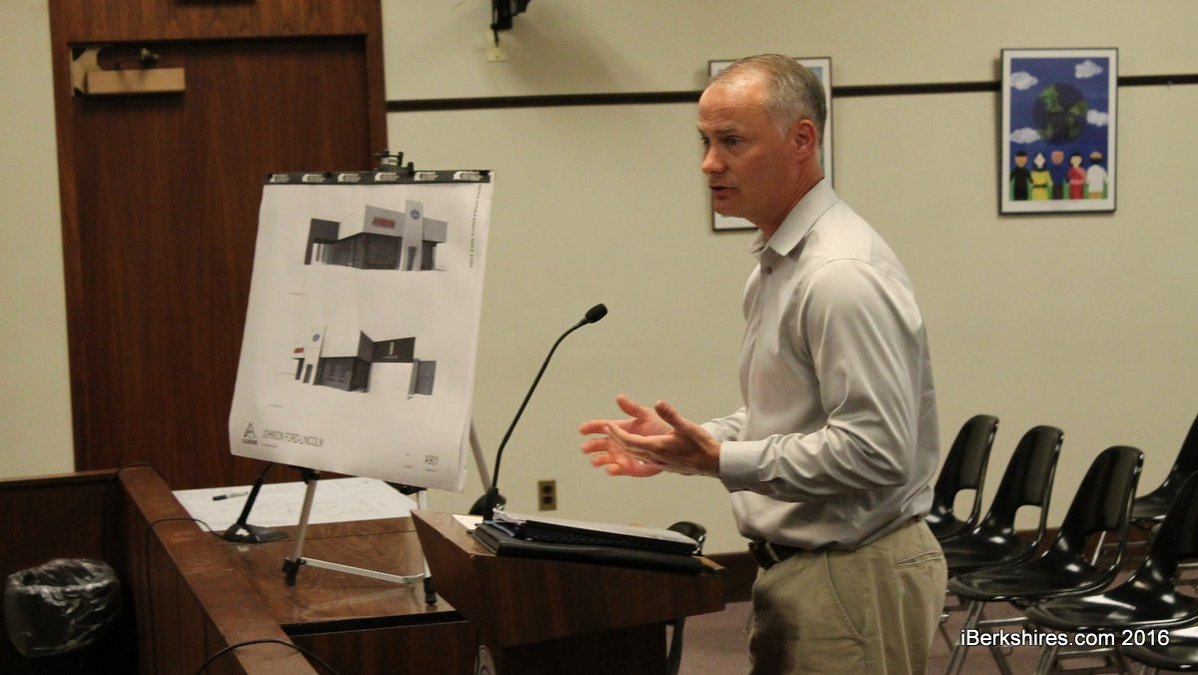
In other business on Tuesday, The Johnson Family is reconstructing the exterior of Johnson Ford on East Street. Scalise represented them as well and because the work is in the floodplain, needed review. Scalise said there are three areas eyed for the dealership's cosmetic improvements all of which are "open air structures in one way or the other."
The material will all be flood resistant and the walls of the dealership's main area are designed to allow water in if flooding occurs.
The project also includes providing additional fill at another piece of property on Fourth Street for floodplain compensation. That too was also approved.
Tags: community development, solar array,