Mount Greylock Envirothon Team Succeeds in First Year
WILLIAMSTOWN, Mass. — Recent Mount Greylock Regional School graduate Benni McComish says he long has been interested in environmental justice.
This year, he got into the science behind the issues.
McComish was one of eight Mount Greylock students who participated in the school's first Envirothon team.
Envirothon, a program of the National Conservation Foundation, is a nationwide environmental education competition that attracts 50,000 people from 4,000 public and private high schools each year.
It attracted McComish, who already was part of Mount Greylock's Youth Environmental Squad, because Envirothon offered a chance to do field research.
"I hadn't really been interested in science before," McComish said. "I really liked that we'd be outside doing things rather than reading stuff in textbooks.
"I'm definitely going to want to take an environmental science class in college because of this."
The Bates-bound McComish and the rest of the Mount Greylock community learned about the program from Williams College rising senior Jeffrey Rubel, a geoscience major who volunteered for two years at the junior-senior high school as a writing fellow, working with students one-on-one in the classroom.
An Envirothon veteran from his prep school days in Missouri, Rubel long thought the program would be a good fit at Mount Greylock.
"We were talking about how we could add to the existing science curriculum at the school," Rubel said. "Given the size of the school, there is only so much they could do in terms of variety. We talked about how we could provide more opportunities for students to learn about things they don't learn about in the classroom.
"I had experience with how the program worked, and I got a lot out of it. I'm kind of a big fan of what it does, so it was kind of a perfect moment at the end of my sophomore year and beginning of my junior year. It was this moment where we decided, 'Let's give this a shot.' "
Last fall, Rubel began recruiting Mount Greylock students for the team, first targeting the Youth Environmental Squad, or YES. McComish's level of interest was not atypical, Rubel said.
"A lot of the kids from YES who did it … if you asked them a year ago if they had any interest in environmental science, a lot might have said no," Rubel said. "There interest in YES was less on the science side and more on the policy, let's save the planet kind of thing."
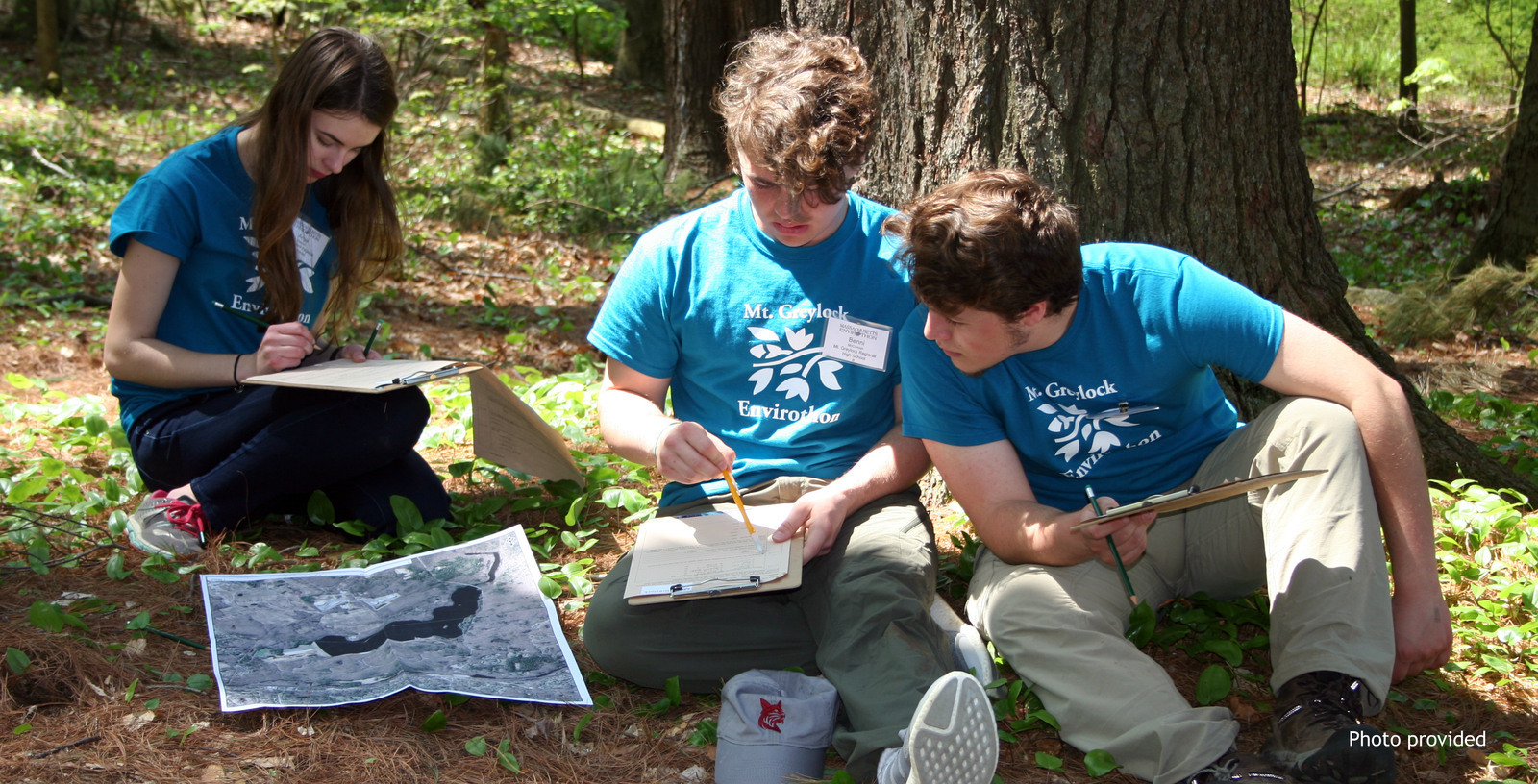
Envirothon focused students' attention on the environment around them through a combination of discussions, exploration and interviews with local authorities, like Williams professor and town Conservation Commission chairman Hank Art.
The topic for the Massachusetts Envirothon program in the 2015-16 school year was "Managing Invasive Species," and the Mount Greylock team learned how to identify and address the invasives in the area, including plants like garlic mustard and Japanese barberry and insects, like the emerald ash borer, which has been found in nearby woodlots but not yet in Williamstown.
"We decided that trailside invasive plants are the most significant invasive species problem in Williamstown," the team wrote in a statement summarizing its experience. "Because Williamstown is a popular tourist destination, the beauty of our local trails is very important to the economic viability of Williamstown.
"We decided that the best way to address these invasives would be to launch education campaigns and create a local volunteer base to remove invasives."
Of course, while it developed that strategy, the Envirothon team did not have time to implement the plan. But both Rubel and McComish said they think the groundwork has been laid for others to put the plan into action.
"It could totally happen," McComish said. "It's just a matter of time. It's something we need to do. Someone needs to find time to do it. It would be fantastic for Hopkins Forest and other local areas if we could find time to do it."
The Mount Greylock Envirothon team met for two to three hours each Sunday during the school year. Rubel said those classes included as much field work as he could arrange, and the students were expected to do homework between classes.
"It's not a light time commitment," he said.
"At times it was tough," McComish said. "But we found time to do it. It was a lot of fun to do. ... It was worth the time."
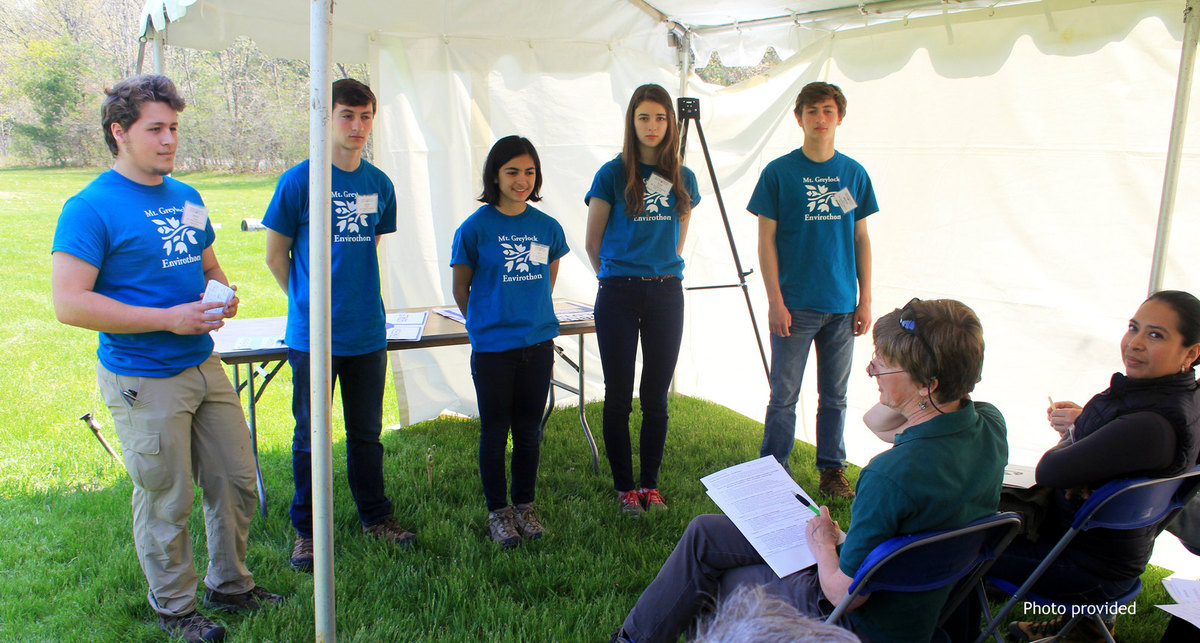
The program culminated in the statewide Envirothon competition, at which students complete ecostations in forest and wildlife, soil and water and deliver a presentation to a panel of judges.
"All the tests are outside," Rubel said. "It's about applying your knowledge, not about limiting your knowledge to what you can regurgitate from a book."
McComish said the statewide competition was an interesting experience.
"It was fun to talk to different teams and find out what kids had done before this," McComish said. "The competition was a really unique experience for me. I've traveled a lot for soccer and squash, but I never went to a competition like this."
In its first year competing in the program, the Mount Greylock team placed third in the state at the water ecostation and fourth at each of the other two. It was one of 16 teams across the commonwealth who earned Mass Envirothon's Community Research Award.
The 2016-17 Mass Envirothon's focus will be on soil and water conservation and agriculture, which, Rubel notes, is a big issue for Williamstown and Lanesborough.
"We're already in the process of scheduling some farm visits for the team so we can get a taste of how this works in action, in addition to the Hopkins Forest field trips, where we look at soil and water," he said.
Tags: environment, MGRHS,