Pittsfield City Councils Votes to Put CPA on November Ballot

State Rep. Tricia Farley-Bouvier said the Legislature each year approves a budget for the CPA but none of those funds are coming back to Pittsfield.
PITTSFIELD, Mass. — Voters will be asked for a second time whether the city wants to adopt the Community Preservation Act.
The state law allows for communities to add a surcharge to property tax bills to pay for parks, open spaces, historic preservation, and affordable housing. The state divvies up fees collected from deed transfers with real estate sales and matches on a percentage basis.
Proponents say a 1 percent surcharge on the bills would have generated $383,613 in local revenue dedicated to those areas. That would have been matched by the state to the tune of $113,933 for a total of $497,546.
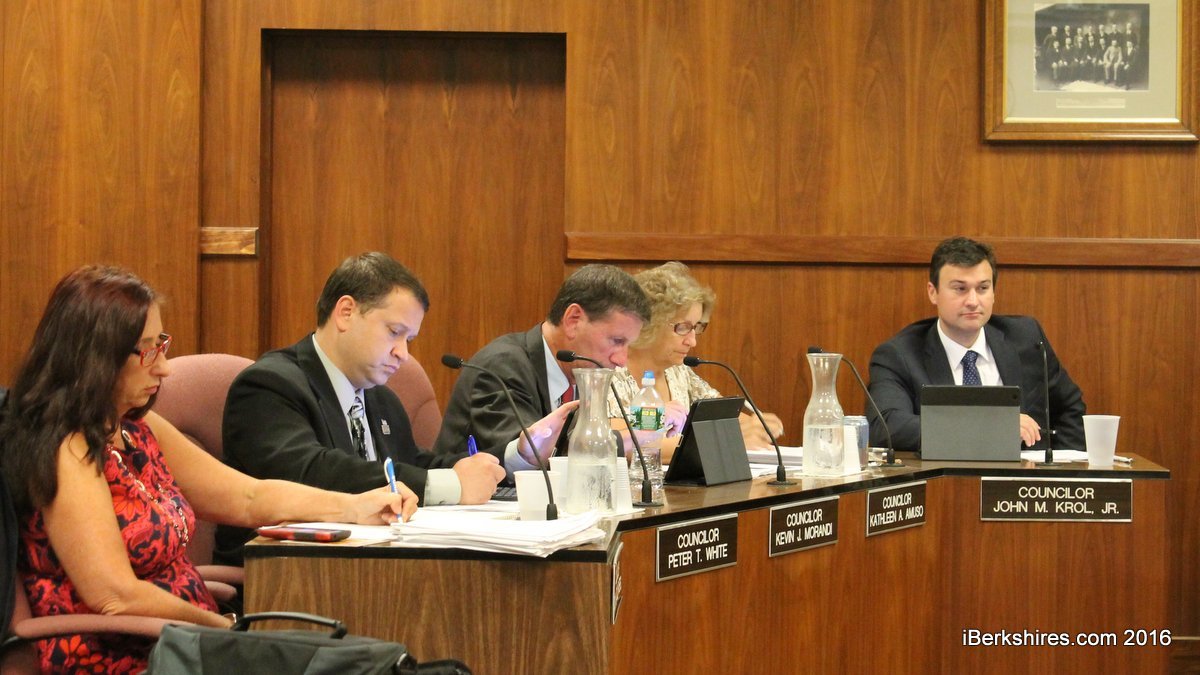
"For the price of a large pizza, the possibilities are endless with what can come back to the city," Ward 3 Councilor Nicholas Caccamo said in voting to put the measure on the ballot.
The fees on the deed transfers are paid by everyone in the commonwealth whether or not the community has adopted the act. Those in favor of the act say the city is missing out on revenue it could be bringing back. Pittsfield resident Beth Van Ness previously said $43,180 was generated in those fees last year, a portion of which could have been brought back to Pittsfield if the city adopted the law. So far this year, $17,170 was generated, she said, all of which will go to match other communities that have adopted the act.
"Each year during budget season we approve $15 million, $10 million in state taxes to go to the CPA communities. But none of it comes back to Pittsfield because we are not a CPA community. I think it is time we get our fair share of that," state Rep. Tricia Farley-Bouvier said.
Locally, the proposal would call for a 1 percent surcharge on property tax bills with the first $100,000 of assessed value being exempted. With those funds, a Community Preservation Committee would recommend how the money will be allocated with the only restriction being 10 percent goes toward open space and recreation, 10 percent for affordable housing, and 10 percent for historic preservation.
The City Council would then be asked to make the allocations. The Community Preservation Committee needs to consist of representatives from the Conservation Commission, Historical Commission, Planning Board, recreation, and the Housing Authority. The city also can appoint up to four at-large seats.
Stewart Saginor of the Community Preservation Coalition estimates that the average single-family homeowner would be asked to pay about $14 a year on top of his or her annual tax bill. The surcharge is also excluded from Proposition 2 1/2.
This is the second time the adoption of the act has come to a ballot in Pittsfield. In 2006, voters shot down the program by 2,008 votes. It has seemingly more support now with many peopel taking to the City Council's open microphone period to promote it.
But, not everybody is behind it.
Resident Terry Kinnas called it a "sneak tax" and vowed to oppose it again. He voiced concern for the additional taxes saying the city is "trying to tax the elderly out of the city as well as a number of the younger people."
Proponent John Dickson countered, saying there are exemptions for senior citizens and low- and moderate-income residents.
At the state level, criticism of the program has been that it further widens gaps between wealthy communities and poorer ones. Towns can adopt up to a 3 percent surcharge and the towns more likely to adopt the act tend to be wealthier. The criticism is that wealthier communities can afford to pay more and then get more revenue collected from all towns back. The money is then spent to better the communities, raising property values even more.
In 2015, Commonwealth Magazine wrote "residents from every municipality pay into the fund through the use of the Registry of Deeds, but only the affluent communities that are able to adopt these tax increases are eligible to receive these matching grants from the state. Thus, most of the money deposited in the state trust from the Community Preservation Act is collected at the expense of the less affluent; by providing funds from a state endowment to fund open space land acquisition, poorer communities are funding wealthier communities, which in turn increases their property values and tax rates."
The article continues to say that the city of Cambridge received a total of $45.7 million in state funds since 2002, receive about 15 percent of the state match while residents had only paid in 1 percent. Worcester and Boston contribute the most to the tune of $14.5 million, Commonwealth Magazine writes, while getting none of it back.
"The Community Preservation Act has unwittingly created a system in which the rich are subsidized by the poor," Commonwealth Magazine wrote.
That argument was made in Williamstown in 2011, when one member of that Community Preservation Committee sought to disband it. Christopher Winters called it a "regressive tax" then because it shifts wealth from poorer communities to wealthier. The idea of disbanding was raised again earlier this year but dismissed because of how much it benefits the town.
Residents in the city of Pittsfield are currently contributing to the pool of state funds through those real estate fees while getting nothing back. Should voters adopt the act, the taxpayers will be paying the extra 1 percent surcharge but would be in line to have that revenue matched by deed fees somewhere around 25 percent.
Thomas Suski is working on the Pittsfield Town Players board and searching for a new theater space but for small organizations like his, a massive fundraising effort is needed. The adoption of the Community Preservation Act could provide a revenue stream to help renovate a historic building into a theater.
The Friends of St. Mary the Morning Star, which has been seeking to save the Tyler Street church and find a reuse project, has been advocating for the act in hopes to help those efforts.
Council Vice President John Krol previously said the money could be a good revenue stream to build a new track at Taconic High School since that is not in the scope of the new high school building project.
The use of the funds are somewhat loosely controlled. Other cities have used them for rental assistance programs, first-time homebuyer programs, demolishing and repurposing buildings, creating parks, renovating historic buildings, building dog parks, veterans housing, and a multitude of other uses. Northampton renovated the exterior of the Academy of Music. Westfield created a whip museum out of a historic factory. Williamstown spent $1.5 million to contribute to the massive Cable Mills project to ensure an affordable housing aspect.
There are no shortages of uses in Pittsfield and with the city's financial state, in which the ability to tax is eroding as it approaches the debt ceiling, many fear those priorities outlined with the CPA funds would be first on the chopping block. The CPA could be a source of income for investments as the city attempts to work through the financial challenges it approaches.
"This is a real good issue that needs to go to the residents on the ballot and let them decide how they feel about this," Ward 4 Councilor Christopher Connell said. "It would involve a small increase on your tax bill. I think let the voters decide."
The adoption of it will be on the ballot in November.
Tags: Community Preservation Act, CPA,