Pro-CPA Group Provides Informational Session on Ballot Question
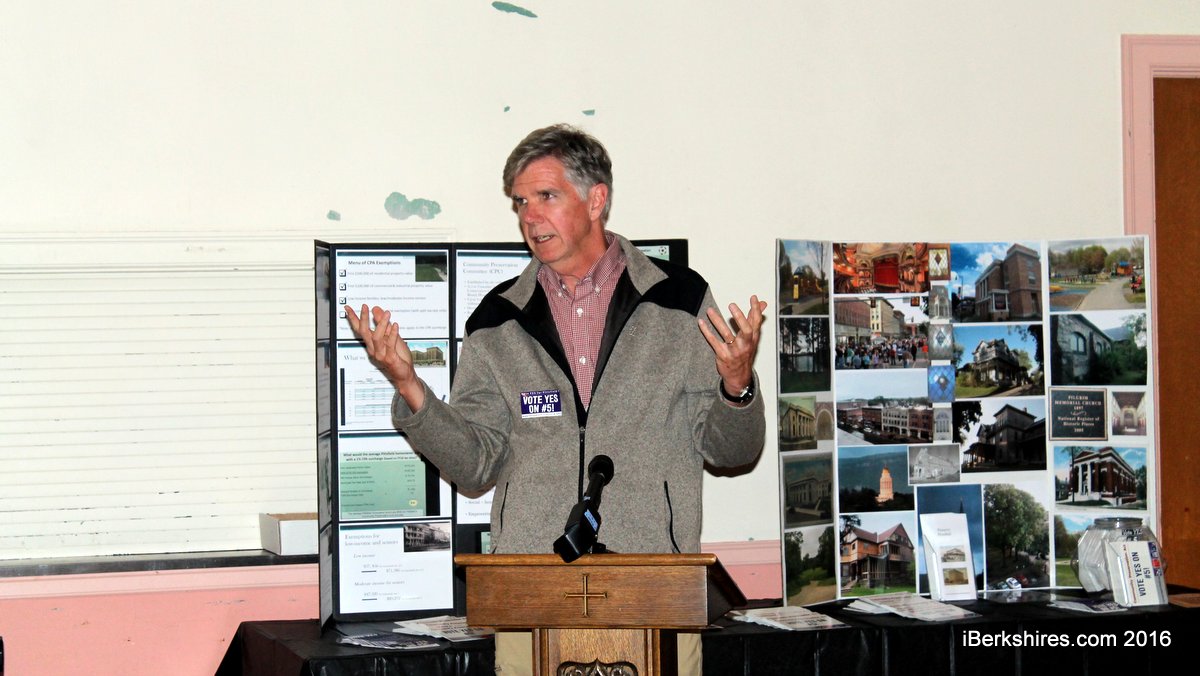
John Dickson envisions the CPA as being an extra revenue source to help save historic buildings.
PITTSFIELD, Mass. — Historical Commissioner John Dickson watched as the former Plunkett School was torn down.
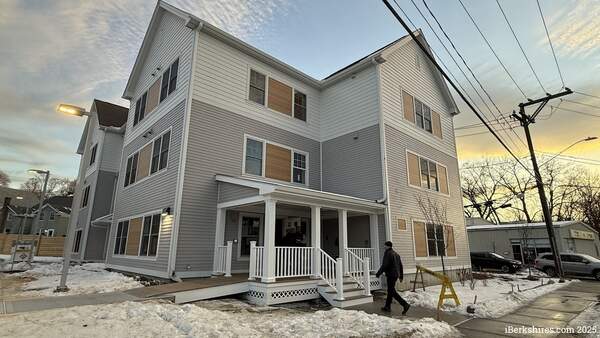
He heard the news that the former St. Mary the Morning Star was eyed for the wrecking ball. He saw the St. Joseph's convent torn down.
He sees these buildings being torn down. But, he also sees developers looking to cobble together funds to save some. He writes letters of recommendations for historic tax credits but so often it isn't enough.
"A number of churches in our community are at risk of not being able to maintain themselves and what are we going to do with these buildings?" Dickson said.
Last year, he discovered the Community Preservation Act. Adopting that state law allows a local surcharge to be added to property tax bills to create a revenue stream with matching state funds for historical preservation, affordable housing, open space, or parks and recreation. The city voted the adoption of that tax down in 2006, but Dickson said it could have provided the missing piece a developer needed to prevent those demolitions.
"We probably lost $1 million in state matching funds in that time. That was money a developer or some creative organization could have used to save the Plunkett School and possibly some others," Dickson said. "These are buildings that are significant and they left gaping holes in the city."
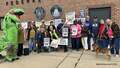
Dickson is now part of Preserve Pittsfield, a group pushing the adoption of the act on this year's ballot. The City Council voted to put the program on a seperate ballot for the Nov. 8 election. Dickson says it won't solve the problem but it will be a tool the city can use to save and reuse valued pieces of property.
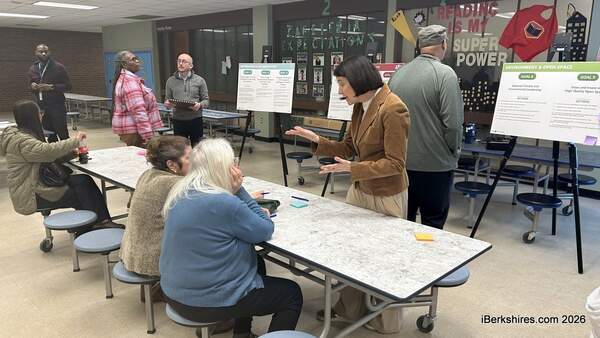
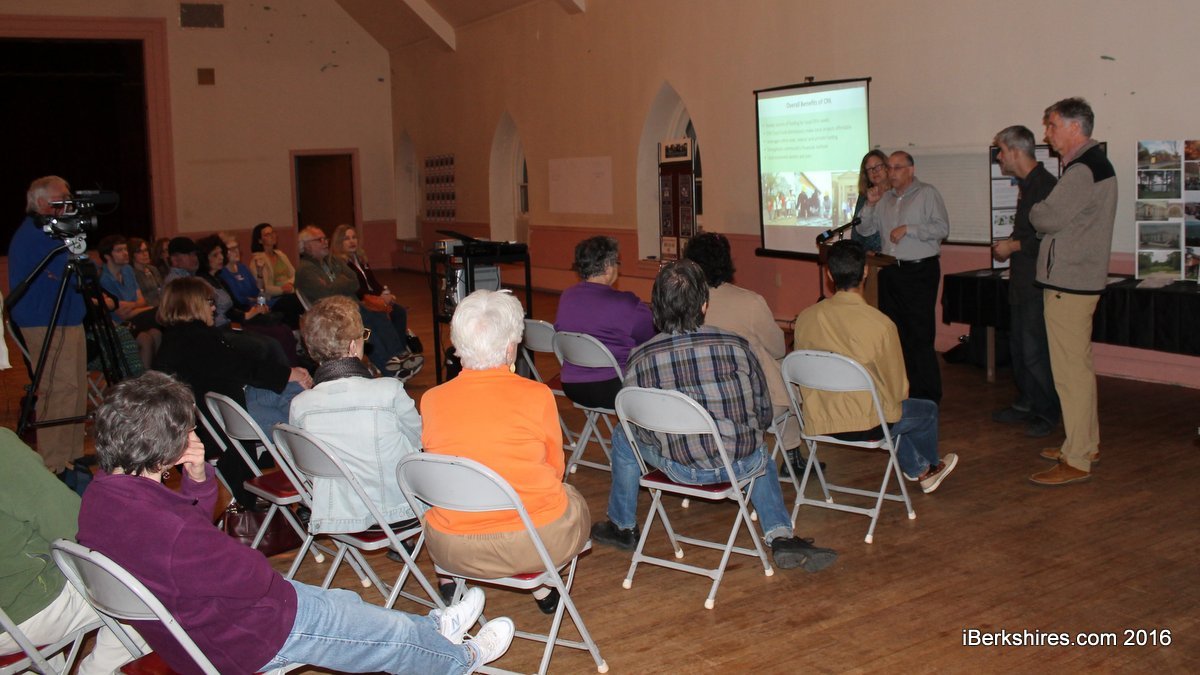
On Thursday, the group gathered inside First Church of Christ Congregational, one of the buildings Dickson has identified as a historic building at risk, to discuss the initiative.
For Dickson, the money for historical preservation or for housing projects is what he hopes can come from the program. For Parks Commissioner Joe Durwin, the revenue source is a way to improve the city's park system.
"The current spending on parks that we have budgetarily is anemic at best. We have barely enough to meet the challenge of basic maintenance from year to year. And sometimes really, to be quite honestly, doesn't meet that challenge," Durwin said.
Durwin is active in the efforts to restore Springside Park, including the house and the pond. But, those large-scale projects are difficult to tackle because of funding. The CPA income could be used to match federal or state grants or it can acquire property for something like a dog park. It can be used to remediate land.
"There is a high amount of flexibility from my amount of study with CPA funding as far as what we can accomplish with parks and a lot of leeway," Durwin said.
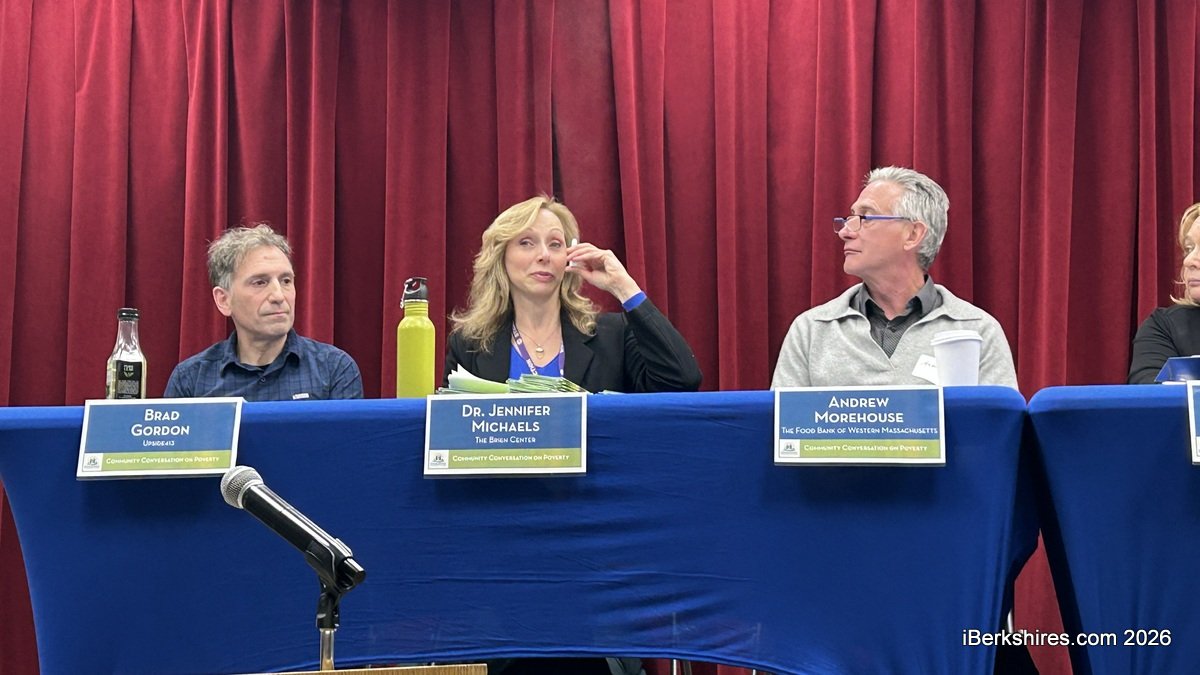
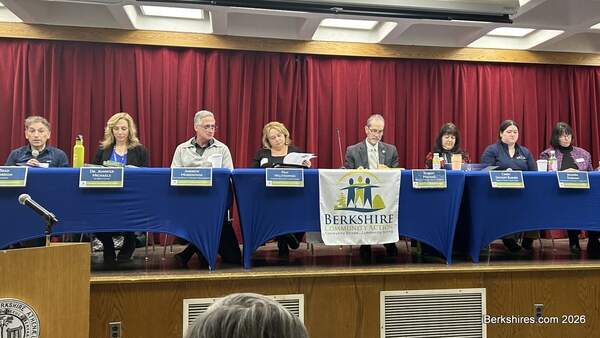
The information forum put on by Preserve Pittsfield drew around a two dozen community members, who watched a presentation from Stuart Saginor, executive director of the statewide Community Preservation Coalition. Some voiced support for the question while others, including well-known tax hawk Terry Kinnas, raised concerns about the economic burdens yet another tax would do to businesses.
Kinnas and another man pressed the question of the impact the surcharge will have on commercial property owners - raising the point that the commercial tax rate is double that of the residential rate. The proponents of the question outlined how the tax burden is billed for residential, presenting the cost to an average homeowner as $14 a year.
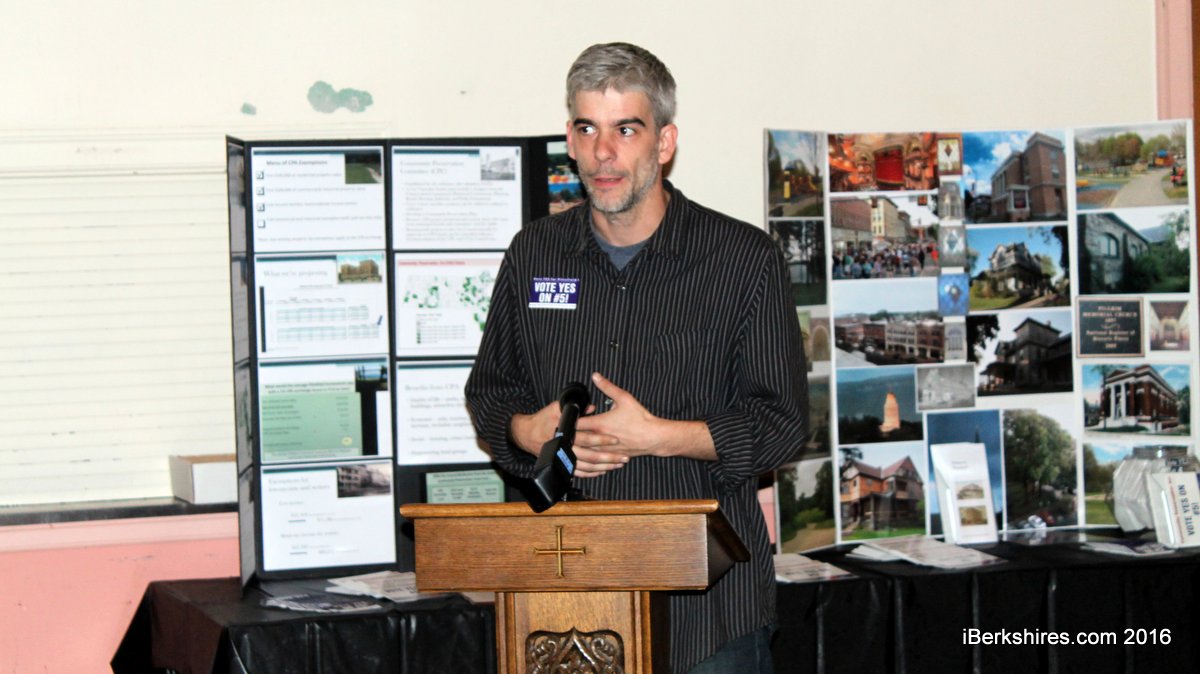
Parks Commissioner Joe Durwin said the Parks Department budget is barely enough to keep up with maintenance, let alone upgrade or build new parks.
However, a business owner can calculate it the same way residential home owners do: first take the value of the property, subtract $100,000, calculate what the tax bill will be, and then the charge would be 1 percent of the tax bill (not the property's assessed value).
For the average homeowner with a property valued at $176,234, that translates to a $1,430 tax bill. One percent of that bill is $14 per year. That money would go into the Community Preservation Act Account.
The state allocates money from a Community Preservation Trust Fund to match at some percent - typically around 30 percent of what the community put in. That money can then be spent on projects, whether that be from private groups or non-profit groups or even municipalities, determined by a locally created Community Preservation Act Committee.
"There are very few requirements on how you spend the money," Saginor said.
The state money comes from fees filed at registries of deeds for property sales.
"The state then gave my fees to other communities, Lenox and Stockbridge that don't need my money. Pittsfield needs my money," Dickson said.
However, in recent years, those fees have been dwindling as more communities have been adopting the act, so the Legislature has allocated additional funds in each of the last three years. The result is a matching of the local funds at around 30 percent.
The plan for Pittsfield has an exemption for senior citizens and low-income families. And the first $100,000 of value is exempted. Saginor said the program last year would have developed $383,613 in local revenue. That would have been matched at 29.7 percent, creating a total of $497,546 to be used by the community for those four uses.
"It is the quality of life things that unfortunately get cut," Saginor said.
That money goes right into the coffers of a local committee. The state has no oversight of the funds. It has no staff. It has no budget. All it requires is that the committee making the decisions on how the money is spent consists of Conservation Commission, Historical Commission, Planning Board, recreation, and the Housing Authority with the city having the ability to appoint up to four more at-large members. And that 10 percent of the pot of money goes toward housing, 10 percent for open space, and 10 percent for historic preservation.
The local committee fields applications from whichever entities apply, makes recommendations to the City Council, and the council issues the final approval. However, neither the council nor the mayor can allocate that money without the recommendation from the Community Preservation Committee.
"It's not a use it or lose it situation," Saginor added, since the money can be stashed aside for future years as well.
Since its creation, the act has been adopted in 161 communities and 16 more have it on the ballot this fall.
Tags: ballot measure, community preservation, Community Preservation Act, CPA,