Pittsfield Council Asked To Push For State Education Funding Changes
PITTSFIELD, Mass. — How the state calculates what it costs to run a school system is much different from what local officials say it actually costs.
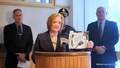
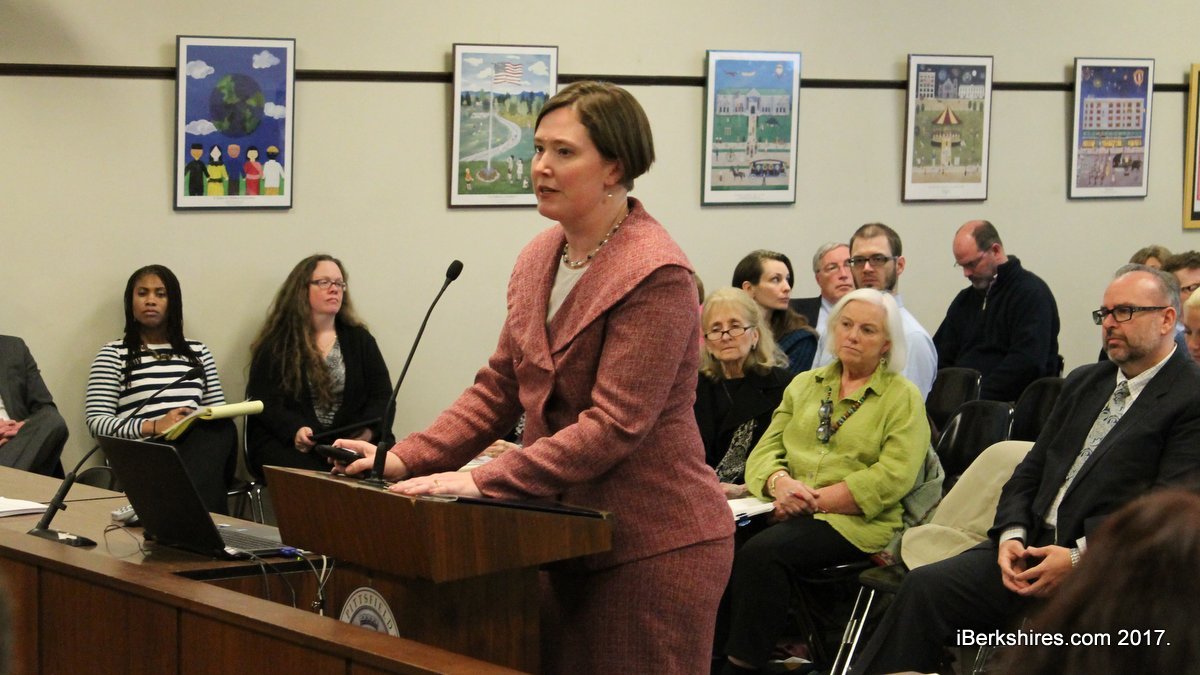
That was the message delivered to the City Council on Tuesday night when the School Committee arranged a presentation from the Massachusetts Association of School Committees. MASC Field Director Tracy Novick urged the council to advocate for changes to the state funding formulas to bring more state dollars into the city.
"The commonwealth of Massachusetts is not doing its fair share in making sure our children are having the best education," Council Vice President John Krol, an avid supporter of the city's school system, said of the current situation.
The story of the state's educational funding formulas starts in 1993 when the Massachusetts Supreme Judicial Court ruled in McDuffy v. Secretary of the Executive Office of Education that the state is constitutionally required to provide education. Previously it was funded by property taxes and the costs grew to become unsustainable for many.
That ruling led to the creation of the foundation budget, the baseline for providing state support to education.
The state crafted some 14 categories of things needed to educate students from teachers to administrations to utilities and building to materials. It sets a cost structure for each of those, which is multiplied by the number of students. The amount of state aid is then determined by the municipality's calculated ability to pay for that budget with the state picking up the rest.
"It is progressive in two ways. First, it recognizes that greater need of students requires greater funding for those students. And also that greater need for a district or a municipality requires greater state support. Not every district get the same amount of funding from the state, it varies depending on the ability of the local district to contribute," Novick said.
For example, in low-income districts the state assumes 21 students will be in a class. That is cross-referenced with the enrollment numbers, additional dollars are factored in for special education, low-income, or English language learners. That determines the foundation budget estimated to run the system.
"The assumption by the state is that 3.75 percent of your enrollment will be in-district special education and 1 percent will be out of district. Anyone who knows anything about schools will tell you those numbers bear absolutely no resemblance to reality," Novick said.
That 3.75 percent restriction was a move by the state so that districts wouldn't intentionally drive up their special education numbers for additional funding, she said. Students who are economically disadvantaged are determined by enrollment in state programs such as MassHealth. The state also has included an inflation number intended to keep up with those growing costs.
"Your foundation budget changes according to your enrollment. If you get more kids or kids in different categories that are going to change it. The inflation rate is not actually the inflation rate most of us recognize, it is an inflation rate based on state and local spending across the nation," Novick said.
Since 1993 there has been a growing difference between what cities and towns are actually spending on education compared to what the foundation budget sets. Novick says most cities and towns are spending over the foundation budget.
In Pittsfield, the city has been spending 15 percent per year over the foundation budget, something other so-called gateway cities can't boast.
"You are an incredible outlier when it comes to gateway cities. I think that is a really important thing for you as the funding side of school systems to understand. This council and the councils that have preceded it, your numbers have consistently been over foundation, has committed additional resources to ensure that you are actually doing the best you can for the kids," Novick said.
While the inflation number calculated by the state is somewhere around 1 to 2 percent, there are other cost sectors rising more rapidly. Health insurance has been a major driver with increases between 6 to 12 percent per year. Every year that cost rises more significantly than the inflation rate to the foundation budget, it crowds out the spending for other areas.
"This is not a commentary on negotiations with teachers' unions. This is not a commentary on health insurance splits. It is not a commentary on negotiations with health insurance. I can show you an identical chart for every district in the commonwealth," Novick said.
"It creates an enormous gap for the rest of the budget."
Pittsfield spent $17.1 million on health insurance last year while the foundation budget has it pegged at $6.4 million. Novick said only 37 percent of the total health insurance costs are recognized by the foundation budget.
For teachers, the city has spent $29.7 million while the foundation budget estimates it would cost $32.4. Novick said that is a 91 percent of the foundation budget and only possible because the city spends in total 15 percent over the foundation budget.
"You kept teachers in the classroom and that is something a lot of cities haven't been able to do," Novick said.
Pittsfield does OK with operations and maintenance with the foundation budget saying it should cost $7.9 million and the city spending $6.6 million. The city spends only 60 percent of the foundation amount on instructional supplies, with the formula saying it should cost $3.4 million with the city spending $2 million. And the city spends only about half of the foundation budget estimate on professional development.
Those differences in those categories, however, are expected to grow. The city is hitting its levy ceiling, which means no more money can be pulled from property taxes. Health insurance rates are going up 12.9 percent while the state aid isn't going up that much. That is leading to a level-funded budget. With the same $60.3 million coming from the city as last year, the district needs to find a way to cover the health insurance increase. The proposal being voted on Wednesday calls for the elimination of 73.5 jobs from the district to do that.
A statewide Foundation Budget Review Commission has estimated that the state is basing its aid on budgets that are being "undercalculated by at least $1 billion a year," Novick said. The city's state aid has grown at a minimal rate over recent years.
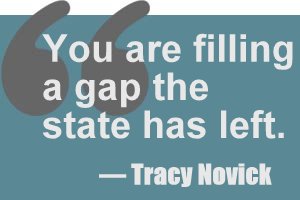
"The amount that districts like Pittsfield are spending over foundation is not accounted in this. You are filling a gap the state has left," Novick said.
The commission has made a recommendation that the inflation rate is not keeping pace when it comes to health insurance. It is recommending that retiree health insurance is added to the calculation and that growth is tied to the Group Insurance Commission rates.
The commission is also recommending that special education is increased and that the percentage of the population limit is raised by a quarter of a percent to 4 percent.
"There has been a pretty significant shift in how we educate students who have special educational needs. Anyone who went through the public school system around that time remembers that the special education students were off in their own hallway and you didn't see them. That is not how we educate students like that anymore. This is recognition that while this is a much better model and does a better way at educating them, it is a more expensive model," Novick said.
The commission also believes the cost estimates for English language learners, early childhood education, and low-income students is increased as well. All of those were included in a 2015 report.
In 2016, the state Senate passed the Rise Act to fully fund those changes but the House of Representatives did not. Novick is calling on local officials to call on their legislators to get those changes into the foundation budget.
Novick did say there is some hope from the state. The governor has proposed increasing state aid for health insurance in education.
"It is the first indication from the governor's office that he actually even recognizes this. That was followed suit by the House Ways and Means budget and the House did pass their education amendment to change that so you can count on that in the House budget. They actually increased it more than the governor did," she said.
"It is not significant money but in terms of political signaling, it does represent some motion in two places we didn't see it previously."
The Senate has also put forth a bill, an act modernizing the foundation budget for the 21st century, to make those changes to the foundation budget.
Novick added that there is a hold harmless provision, which ensures that a city's state aid won't decrease from year to year. But, that is getting the "minimum increase" from the state. Novick said there are districts that don't need that increase but still get it.
Ward 5 Councilor Donna Todd Rivers says this is an issue that everybody needs to be involved with by advocating for more funding from the state. She said the formulas are forcing cities and towns to spend in excess of the foundation budget.
"I think at this point it is completely outdated," Rivers said. "That formula needs to change. It underfunds things that are really important."
Krol said he'd take it one step further. He'd like the state to change its tax structure to be more progressive. The state's income tax is a flat rate, so the same percentage is paid by everybody. He'd support efforts to make it a progressive tax instead. That would help provide the revenue needed to grow state support for education.
Novick said the Fair Share Amendment, which is dubbed the "millionaire tax" and adds an additional tax to incomes earned over $1 million in a year, would help provide that revenue. She expects that to end up on a ballot.
"Essentially this is going to be much like Question 2, one that is on the ballot and won by ground forces," Novick said.
Tags: Education, pittsfield_budget, school budget, state aid,