GIC to Reconsider Reduction to Health Insurance Portfolio
PITTSFIELD, Mass. — The GIC may reverse course on its decision to slash the number of health insurance companies in its portfolio in half.
Last Thursday, the Group Insurance Commission, which administers health insurance to more than 400,000 state, school, and municipal employees, voted to decrease its options from six to three for active employees. GIC leadership said the move would save some $20.8 million.
GIC Executive Director Roberta Herman said the commission performed a study that showed many of the companies were offering similar products and that membership would have similar coverage but at a lower cost.
But, it was faced with a fierce outcry from unions, legislators, and the workers themselves. Gov. Charlie Baker and Attorney General Maura Healey both criticized the process of that decision. House Speaker Robert DeLeo on Wednesday created a committee to review GIC's decision.
One week after its vote, the GIC sent an email to its membership saying the commission will vote to reconsider that decision at its Feb.1 meeting.
"As a result of candid feedback from members and stakeholders, the agenda of the next GIC Commission meeting on Thursday, February 1 will include a motion for reconsideration of the recent vote to narrow carriers," the email to the membership reads.
"While the goal of the GIC action to narrow options was to provide members with continuous coverage in a comparable plan while retaining their networks and doctors, and simultaneously controlling out-of-pocket and premium costs, the GIC recognizes that there is opportunity to better engage stakeholders more directly and robustly in the strategic process moving forward."
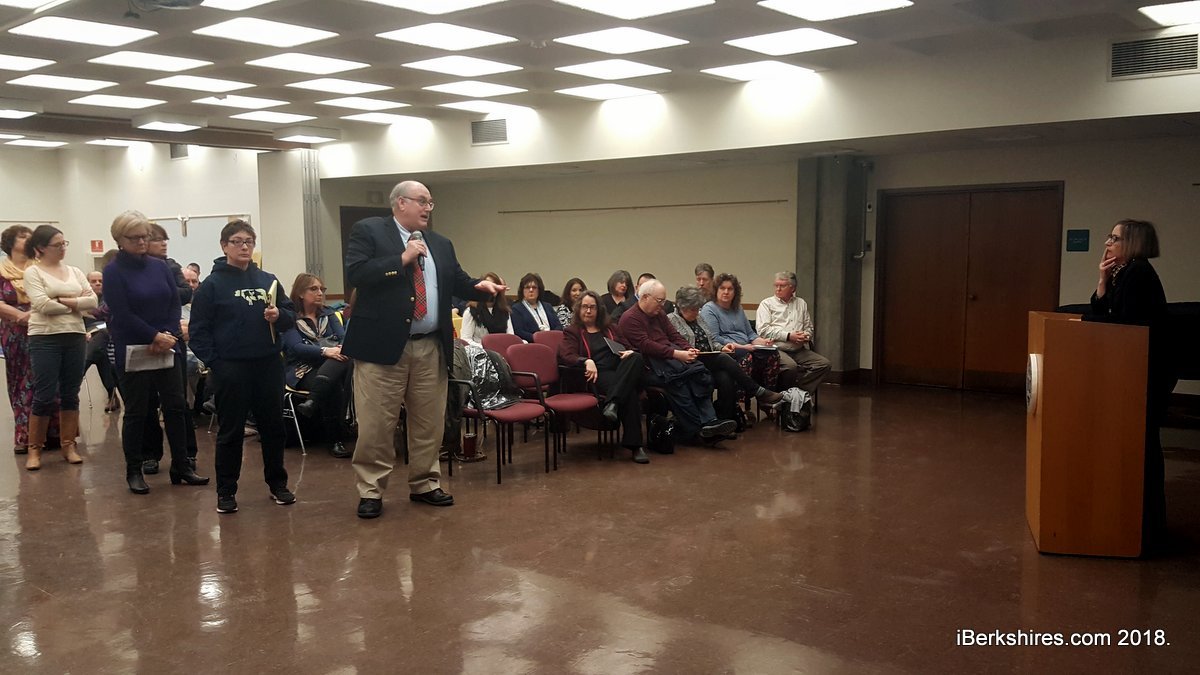
The message comes exactly one day after Berkshire residents fought the move during a public hearing. Locally, the workers were particularly concerned with the reductions of options available to fit each individual's needs.
State Rep. Tricia Farley-Bouvier led off that meeting, harshly criticizing the process in which the GIC made the decision. On Thursday, she remained concerned with the process but was happy with the vote to reconsider.
"It shows that advocacy works," Farley-Bouvier said. "That outcry was heard. It became obvious that they needed to make a change."
It isn't a sure bet the commissioners will vote to reconsider. Farley-Bouvier hopes from now until then, the membership can take a deeper look at the proposal that caught most off guard and determine if maybe the decision could actually be a benefit. She said the membership never had that chance because of the "secretive" way the GIC made the decision.
"I hope the members can really dig into the proposal and understand how the decision was made," Farley-Bouvier said.
Either way, Farley-Bouvier says something needs to change with the membership of the GIC board. The members are appointed by the governor and she feels the representation is off balance that way.
"I think this whole episode exposed problems with the makeup of the GIC board," Farley-Bouvier said.
She said there is now an internal group of legislators, led by state Rep. James O'Day, D-Worcester, which she will work with moving forward. She doesn't know if that means new legislation or something else. But, for Farley-Bouvier, it is clear that something needs to be done differently.
"I am certainly concerned about the process," Farley-Bouvier said.
The concern over how the decision was made was echoed by many in the Legislature, including DeLeo.
"I'm deeply concerned about the impact that the proposed changes by the GIC will have on the lives of Massachusetts residents and on our economy," DeLeo said in a statement. "The process has been flawed and the policy is questionable: these changes will be very disruptive, while resulting in ambiguous savings."
Tags: GIC, health insurance, public unions,