Spring Harbinger Butterflies Abound on Mount Greylock


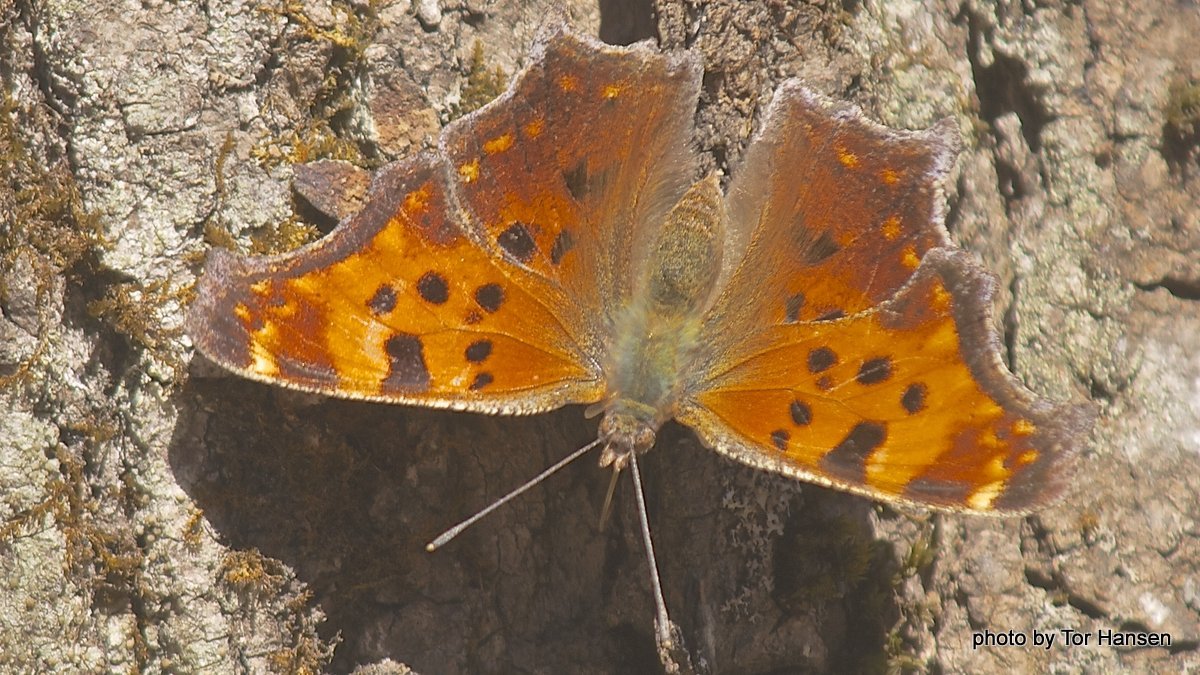
Above, a mourning cloak, or Nymphalis antiopa, soaks up the sun after overwintering on the mountain. Right, a spring beauty is ready to bloom.
ADAMS, Mass. — Under azure blue skies our sun is warming the ground story all around the woodlands of Mount Greylock, and the native butterflies are responding. Drawn out of winterlong hibernation, resident species are actively flitting about, searching for mates, and sipping both ground moisture and sap from oak and beech trees.
As April warmth pervades the trailside glens, as winter's remnant snows remain and recede, one may find joy in witnessing these showy denizens basking in vernal warmth, and dashing and zooming hither and yon, in pursuit of conjugation or coupling so to procreate their progeny or offspring.
Here nature shows us how butterflies and other insects share natural resources at hand in the ecosystem, and how they adapt to the changing climate, often abrupt and harsh intrusive cold, when cloud covers may chase these winged acrobats back into cold storage. After a long winter sleep or dormancy, they need to replenish dwindling fat reserves needed to supply energy to outlast a long winter. Such a glen with a trickling brook supplies a flowing reservoir where butterflies can imbibe or drink water and groundwater minerals essential for healthy life. They will seek early blooming wildflowers, here so far only the tiny Spring Beauty (Claytonia species) where true flies (family Diptera) are first to imbibe nectar, and like the flies, in turn, may cross-pollinate the flowers, another role of butterflies!
The evolution of the drinking proboscis is indeed remarkable. Like a flexi-straw, this coilable sucking tube allows energy supplying liquids to be swallowed and ingested. In three words evolution can be explained as "change over time." This incredible organ developed most likely as an outgrowth of a "positive" mutation of the caterpillar's jaws tissues that became beneficial to obtain nourishment. Microscopic studies in histology (tissues in cell biology) of the origin of the tongue-like proboscis may lead to an astounding clarification that led to the amazing success of the Lepidoptera (all butterflies and moths). However certain moths (family Saturniidae -- giant silk moths like Cecropia, Promethea, and Luna) do not have a working proboscis.
Knowing this background will help us to appreciate the wonder of how butterflies survive and utilize raw materials at hand. As we observe mourning cloak, comma, and question mark, the three species herein, going about their routine search for energizing fluids, they deploy an innate ability to probe soil, bark, and sap oozing wounds to find and secure molecular nourishment. In terms of structure, a proboscis can probe and decipher, sip, suck up, or imbibe (a fancy word), or pierce outer layers to obtain fluids within the cambium, or germinative layer inside the bark, where nutrients rich fluids are found.
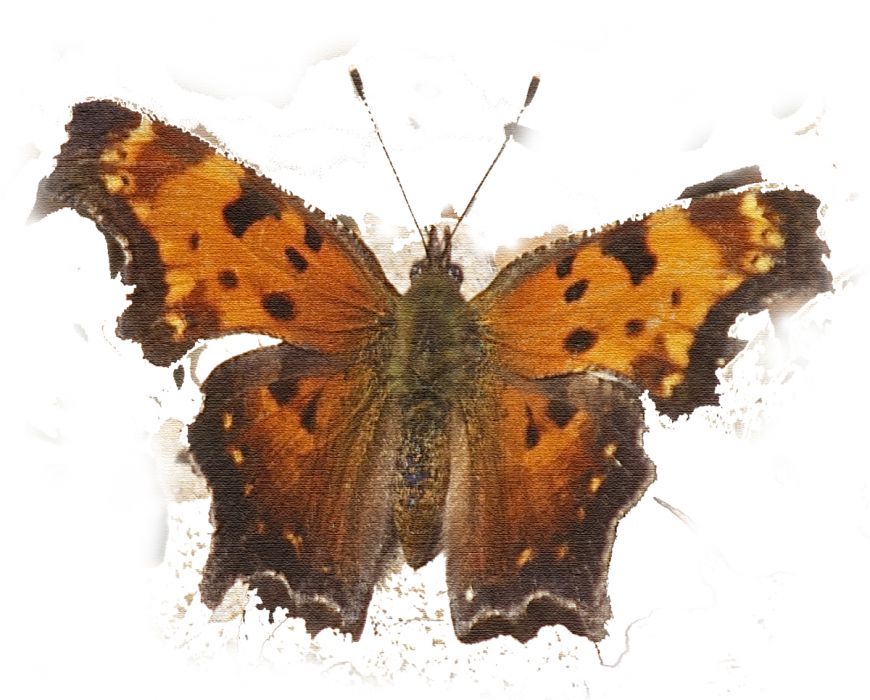
A comma butterfly's wings offer camouflage.
Now patiently follow the butterfly mini-bonanza. Endure the hiatus between events; for a while nothing may happen. Presently a flutter of wings appears down in the old leaf litter. Mourning cloaks lay camouflaged among the sun warmed leaves, but suddenly motion appears and the shimmering wings open and display their sumptuous hues. And then another cloak dashes by on the wing, and together they flutter up into a spiraling dance, rising upwards some 30-50 feet or more, and then leisurely float down separately. If they disperse the meeting shows two males may have defined a territorial dance; if the two fly off together, they may be male and female eager to mate and procreate.
Here on the down slopes and glens of Mount Greylock, Commas and Question Marks add to the jubilee. Before long these little sparks of flame-like flashing colors dash into arouse the cloaks to fly up into acrobatic ballet, a three-some swirling in awesome aerial acrobatics lastings seconds and long moments of thrilling encounters. A Mourning Cloak circled me three times and landed briefly on my head!
Hidden joys are made manifest in exploration and discovery. Alighting once more on to a warming oak leaf, each butterfly can open its wings and basking in the sunlight, will soak up solar warmth, and in well-gauged thermo-regulation, so equip these lords of the air to perform their skillful needs towards species continuity. So they enhance halcyon grandeur through advancing biological diversity. Yes, observe a glimpse of sustaining a portrait of Emersonian utopia.
Tor Hansen, a naturalist writer, photographer, and musician, is a recent addition to the North County community.
Tags: butterflies, nature,