Middle Ground Sought In Pittsfield Mosquito Control Plans
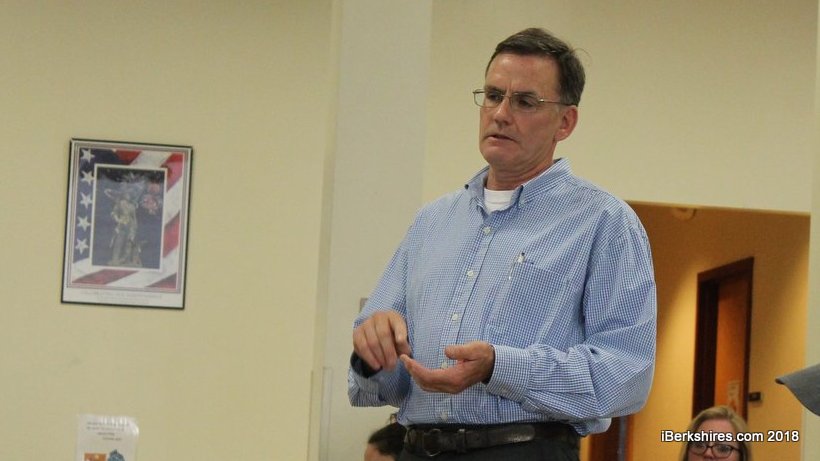
Superintendent Christopher Horton says the spraying is a vital part of the program.
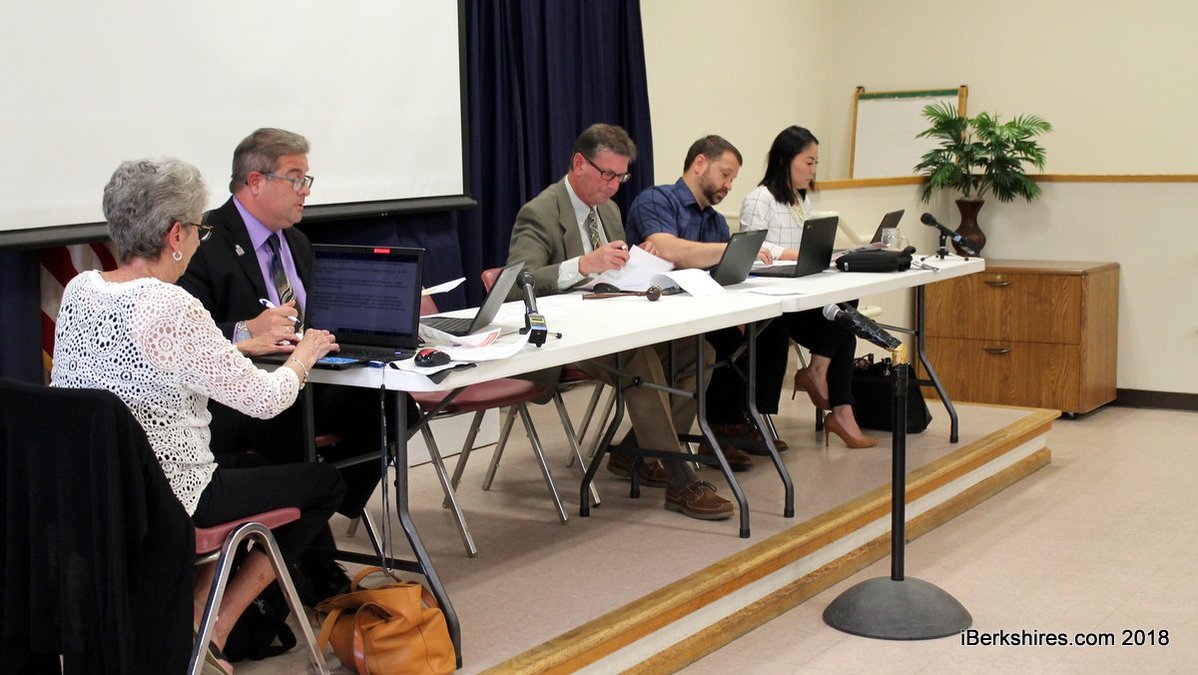
The council's Public Health and Safety subcommittee met again on the issue Thursday night in the wake of pushback and a petition from citizens to end the adulticide spraying.
Councilors Helen Moon and Peter Marchetti filed a petition to leave the Berkshire County Mosquito Control Project.
On one side of the issue, residents voiced concern with the chemicals used in spraying, saying it is detrimental to the environment and causes health problems. On the other, the Board of Health and supporters believe the chemicals are not dangerous and the project protects the public from West Nile Virus and eastern equine encephalitis.
In a compromise, the Board of Health agreed that it would adopt a policy to narrow the occasions it opts for the adulticide spray and the city will continue to stay in the program. But, it does not totally eliminate the spraying.
The city rejoined the project in 2010. It starts with the organization's efforts to find and rid the city of potential mosquito breeding grounds -- such as tires. From there, the project treats catch basins and other known mosquito breeding grounds with a chemical larvicide treatment. During the season, traps are set to collect mosquito samples. Those samples are tested by the Department of Public Health for the presence of the disease.
That aspect of the project hasn't faced much opposition. It was the spraying of adulticide chemicals that particularly raised the ire of residents. The adulticide truck-mounted spray is deployed in areas throughout the city when certain criteria are met.
Opponents, however, say the spray has not been proven to be effective but does kill other animals such as bees doing damage to the ecosystem. They allege that the chemicals have shown to cause birth defects and other human health concerns.
"I'd rather die of EEE than 10 children being born 10 years from now with birth defects because we don't know these chemicals," said resident Jen Downs.
Bruce Winn of the Berkshire Environmental Action Team said there has only been one case of West Nile virus in a human locally since 2012. And in that case, the person quickly recovered. He said for most people who do get it, the symptoms are mild and they don't experience serious issues.
At cost a cost of somewhere around $200,000 for the entire county, Winn wonders if there is a better use of that money.
"If I were to tell you that I had $200,000 a year to spend on health issues would you decide to spend it on mosquitoes or would you spend it somewhere else?" Winn said, citing health screenings or efforts to tackle the opioid epidemic.
He continued to say that most towns without the project seem to do just fine and he said there is a lack of evidence to suggest that it actually works. He believes it is a placebo effect, in that residents feel like they are being protected by the chemical hasn't actually reduced risk.
"I would argue our county already has its fair share of chemicals," he said.
Marchetti had previously voiced opposition to the spraying because that's the most of what he heard from residents. He had pushed for the project to continue with its other efforts but halt the spraying.
Mosquito Control Project Superintendent Christopher Horton, however, said the spraying is a vital part of the program by hitting areas where larvacide treatments were impossible, where there are outbursts in population, and when larvacide treatments fail.
He emphasized that the program's goal is to prevent the spread of what can be potentially deadly diseases. He said for years the state Department of Health had sent warnings that there was an elevated risk in the area and the project was able to curb that before it became worse. The program follows guidelines set by the Center for Disease Control, he said.
"The threat is real. The stakes are high. The risk is certainly manageable," Horton said. "We need this component as part of mosquito management."
Horton said the spraying is used to control the adult mosquito population by killing them in the air. That is deployed when a virus is found and can quickly spread among the population in that area. Or, it is used when the sheer numbers of certain mosquito species indicate a high likelihood that the disease is there.
The traps only catch a small portion of the mosquito population but already he's found a number of occasions where West Nile Virus was found. In 2015, the city found two occasions of West Nile and reacted with a spray response both times. In 2016, it found one and did one response. In 2017, there were 10 findings but four spraying responses were done.
"Evidence shows that a one-mile spray response is an effective way to address the problem and reduce that mosquito population," Health Director Gina Armstrong said.
While the City Councilors were still reserved on that, uncertain about the true effectiveness, what really saw opposition among councilors was that the project would spray properties by request.
Horton said those sprayings are much smaller and more targeted. They are done by request - provided the population count hits a certain threshold -- and help to curb large swarms from growing even more. But, it was also being sprayed when people requested so for weddings or barbecues -- which the City Council felt was inappropriate with a publicly funded program.
"I'm not convinced that just because there are a lot of mosquitoes we need to be spraying," Marchetti said.
In 2015, there were 73 requests for sprayings, those Horton said that would likely translate to about half that amount because requests will often come from the same neighborhood and only one spraying works for all of those requests. In 2016, there were 58 requests for service. In 2017, there were 78 requests.
The City Council doesn't have the authority to oversee the control program. The policies and procedures are dictated by the autonomous Board of Health. The City Council does, however, have the ability to opt out of the program and cut the funding for it altogether.
The Public Health and Safety subcommittee was supportive of the public health aspect of it. But fully in objection to sprayings by request. So an agreement was hatched. The subcommittee will ask the City Council to vote affirmatively to recommend changes to the program.
The Board of Health will only authorize spraying under certain criteria including sustained West Nile or other diseases are found, or when certain species hit a certain population number. That criteria is already part of the integrated pest management plan but will become the only reasons for spraying.
Armstrong agreed to subsequently bring a new policy to the Board of Health, and Board of Health members Alan Kulberg and Steve Smith nodded their head in agreement from the seats behind her.
"From that perspective, we are all on the same page. I don't object to those type of sprayings," Marchetti said of the health concerns.
Board of Health member Steve Smith added that criticism of the language used by the board to announce the sprayings was fair. Critics asked why if the Board of Health felt the chemicals were safe, then why would the city ask people to stay inside and close windows during spraying.
Smith said that was dated language and the department would revise it. And councilors and residents voiced the desire to include more educational materials to homeowners to help them do their part to protect themselves and eliminate breeding grounds.
The mosquito control project has become nearly an annual battle. A large group of residents has repeatedly fought the project to no avail. At the same time, every time opposition arises a number of other residents respond in favor of the project citing concerns about the virus and the sheer number of the mosquitoes biting them in their neighborhood.
Tags: mosquito spraying,