Pittsfield Passes 5G Zoning Laws
PITTSFIELD, Mass. — When 5G infrastructure is installed in city's rights of way, it'll have to look nice.
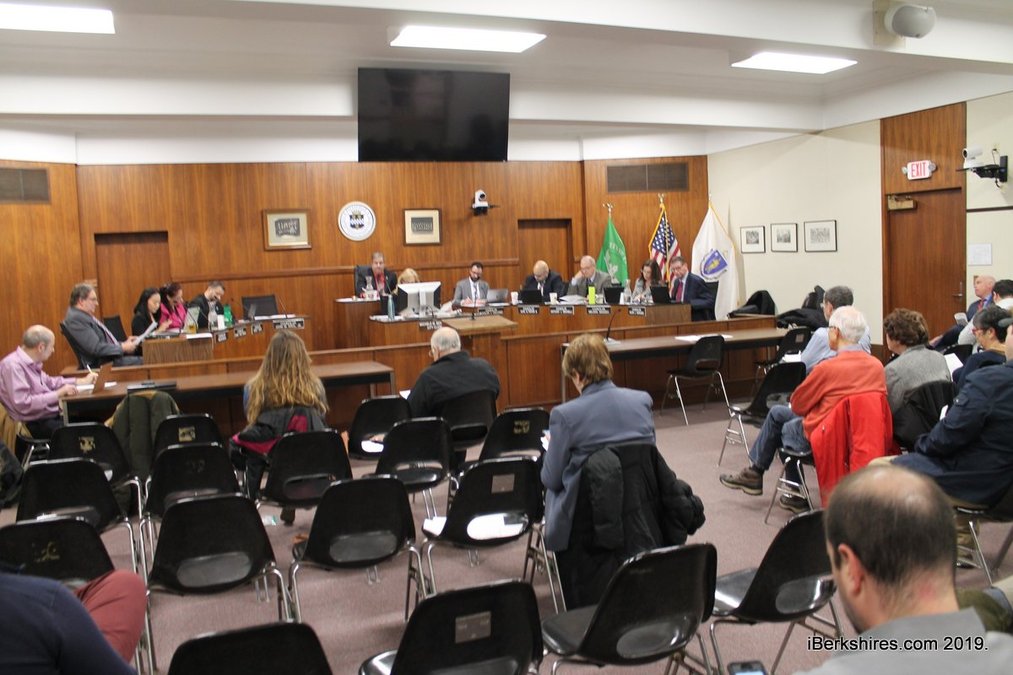
The City Council approved the proactive measure of updating its zoning regulations to ensure the streets aren't lined with unsightly technology. Tower and wireless companies are rolling out 5G technology throughout the nation and that will require a significant number of new towers and antennas.
The Federal Communications Commission approved a rule allowing tower companies to use municipal rights of way but new zoning will require them to avoid taking the cheapest route to do so.
"You have been granted the ability to regulate in terms of aesthetics," said attorney Anthony Lepore of Cityscape Consultants Inc., who has been consulting with cities and towns about the upcoming infrastructure.
Lepore said some 500,000 towers will be needed throughout the nation and new laws have been passed to usher in the enhanced technology. Tower companies are likely to want to install the technology as cheaply as possible, which would mean bulky equipment cabinets littering the sides of every street or poles stacked with multiple levels of equipment.
However, Lepore said the equipment can be nice looking and that's what the local laws are intended to do.
"We created a hierarchy of preferences for the type of infrastructure to be located in the city of Pittsfield," Lepore said.
The 5G technology provides faster internet streaming, communication and entertainment, and could eventually control driverless automobiles. States have welcomed the technology with the promise of better services. But, it does require more bandwidth so the signal travels a shorter distance from tower to tower. Lepore previously estimated that equipment would have to be on utility policies every seven to 12 homes.
The technology now being rolled out is small cells, which include an equipment box and antennae attached to a typical utility pole; microcells, which are smaller and hung from wires; base stations, which are typically installed on top of a building; and "DAS installations," which are similar to the small cell with an antennae on a pole but the equipment box is located elsewhere.
The history of permitting of telecommunication infrastructure took its first major step in 1996 with the passage of a federal law that said local zoning boards could have authority over cellular tower installations but that a town couldn't discriminate against any particular company. That included a provision requiring a city or town to provide "substantial evidence" as to why a permit was denied.
By 2009, the industry started to get impatient as companies felt local governments were dragging their feet on permitting. Another federal law was passed that required municipalities to act within 90 days for a co-location application and 150 days for new structures. In 2012, an amendment added language saying local governments "may not deny and shall approve any eligible facility" and scaled back the co-location timeline to 60 days.
With the latest line of technology, many states are now passing laws that strip cities and towns of any control over the rights of way. But Massachusetts isn't one of those, though a bill did arise the last session but was never passed.
The rollout of the technology is expected to happen soon and the limited authority the city still had over the industry was bolstered by the City Council's adoption of the new laws.
"We all want the service but you've got to be able to, as a local government, control what goes on in your right of way," Lepore said.
The City Council had few questions. Councilor at Large Melissa Mazzeo questioned why 22 other states passed laws to further accommodate the rollout of the industry, in which Lepore responded saying the states are often missing the local piece in trying to hasten the rollout of the technology.
Ward 2 Councilor Kevin Morandi asked about the safety of the equipment. Permitting Coordinator Nate Joyner said the department will have the ability to require the companies to provide documentation that they are in compliance with FCC standards.
Tags: cell service, cell tower, Internet,