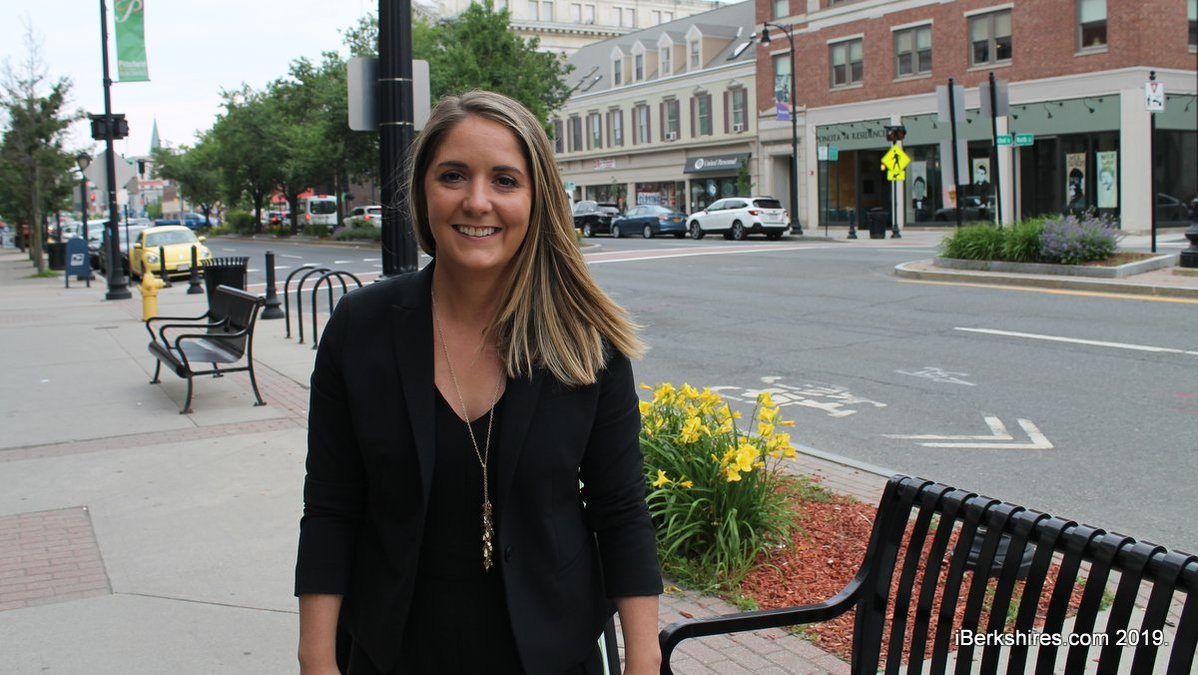
Lampiasi Looks To Bring Strong Representation To Pittsfield's Ward 6
PITTSFIELD, Mass. — Dina Guiel Lampiasi believes there is room for compromise even if it doesn't seem that way.
Lampiasi is seeking to fill the Ward 6 City Council seat being vacated by John Krol. She feels she brings a collaborative approach and a deep understanding of how government works to the table.
"I think it is important to be a collaborative worker. When we look at the City Council or government, what it really is is a group project. You need to be able to work well with others and find common ground even when you don't think there is on any particular issue and go from there," Lampiasi said.
"Right now when I look at our city and the politics in our city, it is often very divided. It may not be intended to be that way but I do think we could be more collaborative. That's something I bring to the table. I have a reputation for being that way on all of the boards I am on. I believe in compromise."
Lampiasi had the previous run in Ward 2 two years ago but fell just 44 votes of ousting the incumbent. Since that bid for a seat, she has grown her involvement in local government, moved to Ward 6, and now is seeking a seat on the dais.
"There is a lot of contrast in Ward 6. There are some of our highest earning households in the city and there are also some of the most struggling homes in the city. And with that, there is a very strong middle. I think that is representative of Pittsfield as a whole," Lampiasi said.
"The worries of the west side of safe streets, better schools, permeates throughout the city. I'm still listening and meeting the residents and my neighbors. But I just view it as a neighborhood and a side of town I'm really excited to be a part of."
She had considered running at large but with the incumbent ward councilor leaving government, she felt the ward needed to have a strong representative. She has a master's degree in public administration from Northeastern, worked in the Denham Planning Department at one point, worked for Attorney General Maura Healey, and now works for the Berkshire County District Attorney's office as director of operations.
She also sits on the city's Licensing Board, the Human Services Advisory Council, the Berkshire Community Action Coalition's board of directors, and is co-president of the Massachusetts Women's Political Caucus.
She feels that experience working in government makes her well qualified to take the position
"I don't think we can reach our full potential if we have a local government that doesn't work for all of our neighborhoods, all of our residents, and that doesn't work to each other and institution down. We really need to focus on how do we improve things instead of just assuming it won't work or tearing down new ideas," Lampiasi said.
Her top priority is economic development, but she takes a wide-angle look at that. She doesn't believe economic development is just focused on attracting new business but creating a city that is business friendly. For example, she is supportive of Mayor Linda Tyer's At Home in Pittsfield program, which the council ultimately shot down, but she believes that it would improve the neighborhoods, which in turn will help improve the economy.
"For me economic development does include our housing stock and infrastructure. I'm not somebody who thinks those are separate. Economic development absolutely involves both the business side and how we are building out our town, how are people living here," Lampiasi said.
"Schools are really important. We do have great schools but we have other schools that are struggling and we need to figure that out."
She hopes to bring more equity to the city. She said while some schools are performing well, others are struggling. The said the schools that are underperforming doesn't just impact the parents of the children attending there but drags down the entire city. She would like to have a focus on how to lift up those schools.
"I intend to be a friend of education when budget time comes. The role of a city councilor is somewhat limited in how we can impact but we can take a firm stand when it comes to how we fund things," Lampiasi said.
The same goes for struggling neighborhoods. She said she'd be advocating for such things as improving lighting in dark neighborhoods to help people feel safer in their homes. She promised to have regular ward meetings and be in constant communication with the constituents so she can effectively advocate for things that will improve their lives.
"It is really about listening to their concerns and their hopes and bringing that to my work for the city if I am elected. However things go, whether they go in favor for what I've been asked to advocate for or not, going back out to the residents and reporting how it went," Lampiasi said of being a ward representative. "I think government is a two-way street."
She also believes there need to be more youth activities. Recently the city debated the creation of a pickleball court ad nauseam before it ultimately denied it. Lampiasi said that while she understands the city's desire to be multi-generational, she thinks a greater priority should be placed on providing activities for the youth.
"I want to see more investment in infrastructure that is kid-friendly," Lampiasi said.
But the city is still in a financial crunch so there isn't that much money available to do those things. Lampiasi believes that with any new project, there are grants and other types of funding methods out there that can help make some of these projects happen.
"There is always somewhere you can cut [in the budget] but I think we'd be better served if we aggressively seek funding for different projects," Lampiasi said.
Lampiasi moved to the Berkshires 11 years ago when she was attending the Massachusetts College of Liberal Arts. While in college, she was working at Brix Wine Bar and she grew to love Pittsfield.
"I started to notice and feel the energy here. I just thought it was a really cool community. It started to feel like home," Lampiasi said, adding that she no gets lost when she returns to her hometown of West Springfield.
She liked it so much, that she moved to downtown Pittsfield and commuted to North Adams for college. She then stayed in Pittsfield as she worked on her master's degree, commuting to the Boston area.
She worked on a few government projects during graduate school and shortly after. She had been involved in creating a mentoring program in Holyoke and Springfield. She worked on the town of Denham's master plan. She was part of a project connecting those addicted to opioids to treatment. And then ultimately was hired by the attorney general's office as a local liaison.
"It really consisted of traveling the county, meeting people, and helping them to find answers they needed, training and helping residents identify situations like a scam or something like that," she said.
Earlier this year she began her current job in the district attorney's office. Since her last run for office, she bought a new home, got married, and got a new job. She is happy with her life and her various roles in the community so much that she wasn't initially considering running. But she sees a need on the council and believes she can fill it.
Also seeking the seat is Edward Carmel. Craig Gaetani and Joseph Nichols also took out nomination papers but have yet to be certified for the ballot.