image description
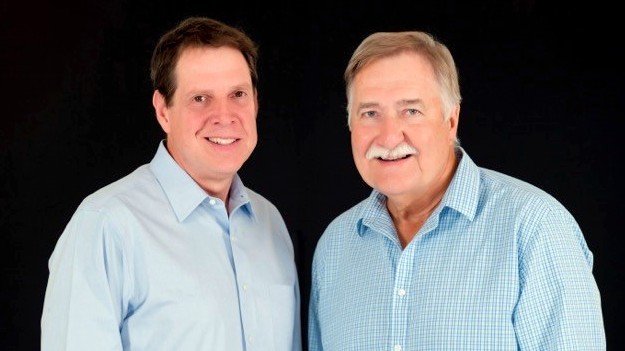
The Southern Berkshire Chamber of Commerce's 2019 Business Persons of the Year are Gary Happ and Andrew Mankin of Barrington Brewery.

Southern Berkshire Chamber Names Business Persons of the Year

Print Story | Email Story

GREAT BARRINGTON, Mass. — The Southern Berkshire Chamber of Commerce's 2019 Business Persons of the Year are Gary Happ and Andrew Mankin of Barrington Brewery.

The SBCC Nomination Committee received nominations in May from the business community and residents. After an extensive review by the Nomination Committee, they presented this year's nomination finalist to the SBCC board. Happ and Mankin received a unanimous vote.

A celebration will take place at the Norman Rockwell Museum on Wednesday, Sept. 11, from 5 to 7:30 p.m. Tickets for this event are available through the Southern Berkshire Chamber of Commerce business office, 40 Railroad Street, Great Barrington, by phone at 413-528-4284, on the SB Chamber website event page or by email.

Mankin was raised in Kent, Conn. He started his career at the Kent and Dover Plains Waters Companies. He began home brewing in 1982. He developed his interest in brewing through an internship at Vaux Brewery in Northern England in 1988, contributing to his style of traditional English ales, Czech and German lagers. He moved to Great Barrington in 1990, and 20 Railroad was the local pub.


Happ was born and raised in Oceanside on Long Island, N.Y. He was introduced to catering and the service industry at the young age of 13. In 1973, he had his first taste of the Berkshires when he attended a concert at the Music Inn. He returned to the Berkshires two years later to take a job at Kolburne School but soon realized that wasn't for him. In 1977, at the age of 27, he opened 20 Railroad Street in Great Barrington, well known as the local pub.

In 1995 the two decided to go into business together. Using Happ's restaurant knowledge and Mankin's brewing knowledge, they opened Barrington Brewery. From the beginning they have emphasized local products, and environmentally responsible conditions and materials, and were always smoke free. They built the first brewery solar hot water system in the Northeast. In 2007, seeing a need in the community, they opened Crissey Farm Banquet Facility, which included the solar hot water system. In 2015 they bought two adjacent acres and designed a 144 KW solar-electric photovoltaic array, which supplies 85 percent of the business's electricity needs.

"We are so fortunate to have so many community-minded, environmentally conscious, forward-thinking businesspeople in the southern Berkshires," said Betsy Andrus, executive director for the Southern Berkshire Chamber of Commerce. "Choosing Andrew and Gary as this year's honorees was a no-brainer; they are both ingrained in the Southern Berkshires. They have invested in their business by using local products, brew on-site and very supportive of their staff. They have invested in our community by creating Crissey Farm Banquet Facility, so we have nice place for family, community and corporate events, and they have invested in our environment by creating the first brewery solar hot water system and a solar field to run their operation. 2020 will be their 25th anniversary, not an easy thing to accomplish."

If you would like to contribute information on this article, contact us at info@iberkshires.com.

Social Service Organizations Highlight Challenges, Successes at Poverty Talk

By Brittany PolitoiBerkshires Staff

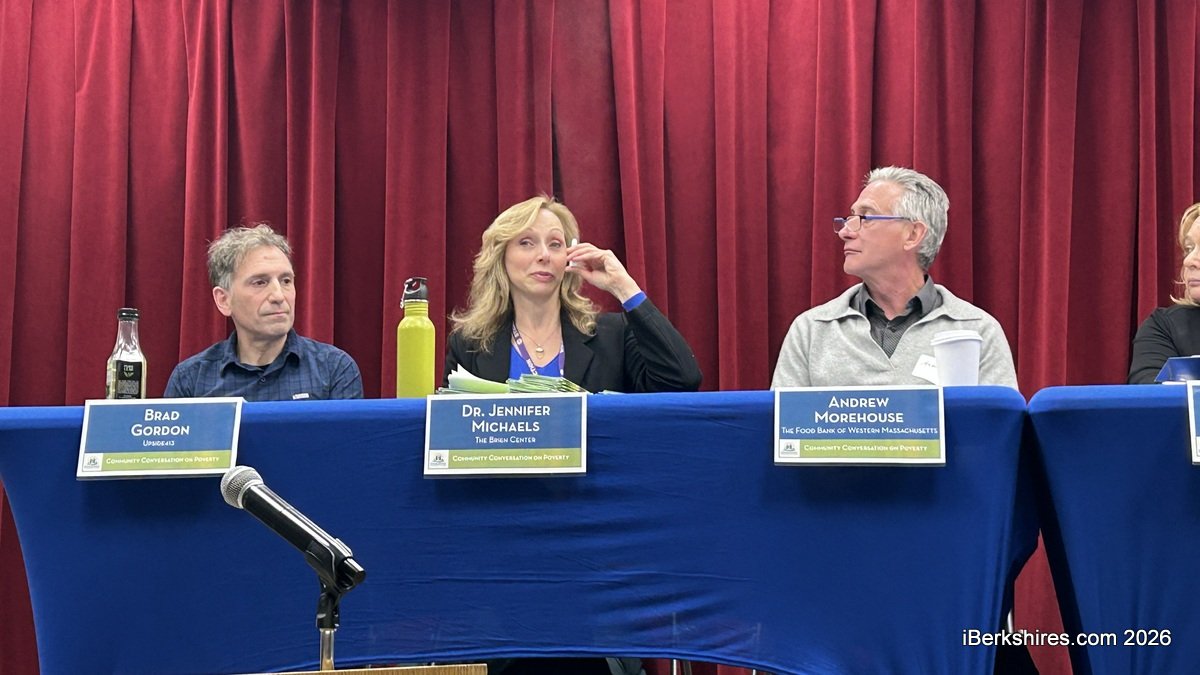
Dr. Jennifer Michaels of the Brien Center demonstrates how to use Narcan. Easy access to the drug has cut overdose deaths in the county by nearly half. 

PITTSFIELD, Mass. — Recent actions at the federal level are making it harder for people to climb out of poverty.

Brad Gordon, executive director of Upside413, said he felt like he was doing a disservice by not recognizing national challenges and how they draw a direct line from choices being made by the Trump administration and the challenges the United States is facing. 

"They more generally impact people's ability to work their way out of poverty, and that's really, that's really the overarching dynamic," he said. 

"Poverty is incredibly corrosive, and it impacts all the topics that we'll talk about today." 

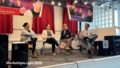
His comments came during a conversation on poverty hosted by Berkshire Community Action Council. Eight local service agency leaders detailed how they are supporting people during the current housing and affordability crisis, and the Berkshire state delegation spoke to their own efforts.

The event held on March 27 at the Berkshire Athenaeum included a working lunch and encouraged public feedback. 

"All of this information that we're going to gather today from both you and the panelists is going to drive our next three-year strategic plan," explained Deborah Leonczyk, BCAC's executive director. 

The conversation ranged from health care and housing production to financial literacy and child care.  Participating agencies included Upside 413, The Brien Center, The Food Bank of Western Massachusetts, MassHire Berkshire Career Center, Berkshire Regional Transit Authority, Greylock Federal Credit Union, Massachusetts College of Liberal Arts, and Child Care of the Berkshires. 

The federal choices Gordon spoke about included allocating $140 billion for the U.S. Immigration and Customs Enforcement, investing $38 billion to convert warehouses into detention centers, cutting $1 trillion from Medicaid over 10 years, a proposed 50 percent increase in the defense budget, and cutting federal funding for supportive housing programs. 

Gordon pointed to past comments about how the region can't build its way out of the housing crisis because of money. He withdrew that statement, explaining, "You know what? That's bullshit, actually."

"I'm going to be honest with you, that is absolute bullshit. I have just observed over the last year or so how we're spending our money and the amount of money that we're spending on the federal side, and I'm no longer saying in good conscience that we can't build our way out of this," he said. 

Upside 413 provided a "Housing Demand in Western Massachusetts" report that was done in collaboration with the University of Massachusetts at Amherst's Donahue Institute of Economic and Public Policy Research. It states that around 23,400 units are needed to meet current housing demand in Western Mass; 1,900 in Berkshire County in 2025. 

View Full Story

More Great Barrington Stories