Representatives of solar developer Engie North America address the Planning Board on Monday night.
LANESBOROUGH, Mass. — Solar power was the topic of the evening at the Planning Board meeting on Monday night as the board extended permits for three large commercial solar operations.
Engie North America Inc. was seeking an extension to special permits previously issued for projects at 405 South Main St. (Skyline Country Club), 550 North Main St. (Pillar LLC), and land on Partridge Road owned by Petricca Development. The substantial use permit expired on Aug. 20 and the company is seeking an extension to the end of the year. The extension was made necessary by recent snags in obtaining the panels.
"We can get the panels, but in mid-June there was an exemption that was put in on bifacial (two-sided) solar panels to the tariffs that are being imposed on imported solar panels," said Matt Singer, project developer for Engie. "What that did was really turn the solar module market upside down. We were pretty far along with a supplier, ready to finalize a deal, then the market changed overnight and [the supplier] essentially backed out and we had to line up a new supplier. Which we did."
All the sites had minor issues that were addressed by Engie.
The solar field at 550 North Main St. will have utility poles close to the road that most felt would be an eyesore.
"We care what the Route 7 corridor looks like," said board member Gwen Miller. "And now the new iteration will have six utility poles visible."
Singer gave a simple explanation when board member Joseph Tybrus asked if it was necessary the poles be located so close to the road or could they be moved farther up the property: "They serve as a disconnect to the existing distribution on the street so because the poles run along Main Street that's where they need to be.
Andy Seward, project manager for Engie added, "Technically, from an engineer's point of view, this could absolutely be done but interconnection requirements as written by Eversource (the utility company) show how close it should be."
The project at Skyline Country Club should be an easier build.
"In terms of a solar array, you can't pick a much better site for a project," Singer said. "There's no need for tree clearing, very low slope, or much of anything."
Chairman Jamie Szczepeniak brought up potentially losing the golf course.
"I was under the impression that this project was going to save the clubhouse and a nine-hole golf course," he said. "I spoke with the owner at an event there Saturday and he is looking to close it down after this is up and running. It's certainly his prerogative but I think it's a shame."
The owner of Skyline CC, James Mitus, had spoken to Engie about stockpiling valuable topsoil, especially from the putting green areas, for resale. Szczepeniak was clear that, as the project was proposed and permitted, this would not be allowed.
"If anything develops, you guys see this board again with what your intentions are," he said.
Singer said they have only been preliminary discussions and if anything changed he would approach the board.
Szczepeniak asked the Engie representatives present if they would be interested in the entire site should the golf course cease operations. They said they would but listed a litany of reasons why that would be a long process. Not the least of which was Massachusetts' complicated regulations regarding tying arrays into an existing electrical service.
The Partridge road site was viewed as a prime location for solar by Szczepeniak.
"This was my favorite project when it first came to this board," he said. "Because of the location of it, where it couldn't be seen."
The site is currently owned by Petricca Development LLC. A parcel of land will be conveyed to Greg Petricca on which he intends to build a residence. He will also lease a portion of the land to Engie for the solar project.
Michael MacDonald, part time general counsel for Petricca, went through the process with the board.
"We've been around with the Engie folks on how to address the frontage issue on Partridge Road, we've explored five or six different options," he said. "Greg has carved out a parcel of land on which he intends to build his house … the remainder of the parcel will be conveyed unto Greg and by operation of law the two lots merge. Greg would then lease that back portion to Engie."
Engie intends to have any issues sorted out within the next two months and mobilize operations in November. The representatives said they expect to take possession of the solar panels by April and be operational by September 2020.
Engie is the third company to take control of these projects. Both TJA Solar and Eversource have been involved in the past. They've installed and manage 500 megawatts of solar power in the United States.
All three permit extensions were approved by a 4-0 vote with Barbara Hassan abstaining as she was not on the board when the original permits were granted.
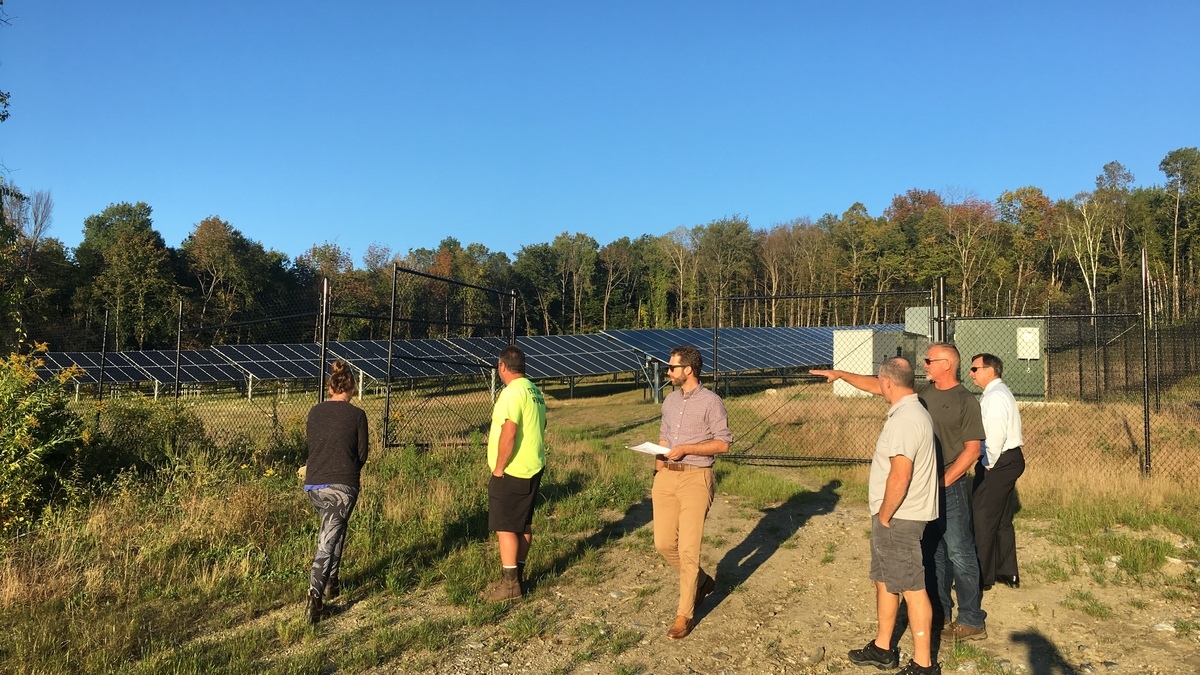
A site visit was conducted immediately prior to the public hearings on Monday at a currently operating solar array at 248 North Main St. BVD Solar of Pittsfield operates the site and agreed to site visits as a requisite to renew its licenses. The board is generally happy with the finished project but had some concerns regarding water runoff management and having room for emergency vehicle turnarounds. The board decided to table the issue until the October meeting.
The board briefly touched on a future use study they received for the former Berkshire Mall. The 204-page study was conducted by the Berkshire Regional Planning Commission and can be found on the town website by searching for "Berkshire Mall Reuse." There was no discussion on the report as Szczepeniak wanted everybody to have a chance to digest it.
If you would like to contribute information on this article, contact us at info@iberkshires.com.
Your Comments
iBerkshires.com welcomes critical, respectful dialogue. Name-calling, personal attacks, libel, slander or foul language is not allowed. All comments are reviewed before posting and will be deleted or edited as necessary.
No Comments
Dalton Planners Hold Public Hearing on Tiny Homes Bylaw
By Breanna SteeleiBerkshires Staff
DALTON, Mass. — The Planning Board held a public hearing last week on a bylaw for mobile accessory dwelling units (ADU) that will be brought before a special town meeting.
For nearly two years, Amy Turnbull has been trying to amend the current ADU bylaws to allow mobile tiny homes.
A movable tiny home is defined as a unit under 400 square feet that meets all of someone's daily needs, including sanitation, cooking, and other facilities, and which is also mobile. Most homes considered "tiny" are built on a trailer so they can be towed.
Her proposal defines a movable tiny house as a "residential property with an existing primary house, intended for year-round living," and outlines eight conditions for approval.
Among these conditions: the unit must adhere to accessory dwelling unit regulations, undergo site plan review, be licensed and registered with the state Registry of Motor Vehicles, have approved energy, water, and wastewater systems, and comply with American National Standards Institute 119.5 and National Fire Protection Association 1192 safety requirements.
Additionally, the unit must be certified for ANSI or NFPA compliance by a manufacturer or third-party inspector, including adherence to Appendix Q and the International Residential Code's structural guidelines and energy efficiency standards. The tiny house cannot move under its own power, and its undercarriage, wheels, axles, tongue, and hitch must be concealed from view. Wheels and leveling or support jacks are required to rest on a level gravel or paved surface.
Turnbull has gotten enough signatures for her petition to amend the current bylaws to add her definition of the mobile ADUs. Last Wednesday, the board held a public hearing on the petitions, which will be voted on at a special meeting.
Turnbull says she has two reasons for wanting to add this to the town's bylaws: aging in place and affordable housing.
"We need a variety of housing types in Dalton, and that we also need to address the idea that you know nearly 30 percent of our population by 2035 is going to be over 65 years old, and it's problematic because ... there's not enough choice for these people to to age in place,"she said. "What movable tiny houses does, is it provides a less restrictive ADU. It's much cheaper to place, and it's easier to place, less time consuming. And what it offers to people is it offers people who are owners a place for their children to come and live, or a caregiver to come and live, or for the people who own their own house to come and live while they rent out their maybe their three bedroom home to a new family who wants to attend to Craneville simultaneously."
She said people need to move away from calling and treating the tiny homes as though they are trailers, as one former Planning Board member has voiced opinions on.
"That is an opinion, and I think we need to get over that, because I want to say that these are foundation homes, and that the chassis is a foundation, and it's a stick-built home on a chassis, and in very many ways it's like a modular house. I think we will not be surprised in the next 10 years if we see the market turn around and start to make smaller, tiny modular homes, but that is not the case right now, and we have a dire need for affordable housing," she said.
At a former Fire District meeting the Water Department drafted regulations for water hook-ups for these types of homes. The superintendent sent a letter to the Planning Board to be read at the meeting stating it will not be a hindrance for sewer system connection.
"The Department of Public Works does not feel that mobile ADUs will be an issue with the town sewer system. The homeowners will be responsible for any issues outside of the sewer main and connect and responsible for connecting in, so that would address any permits, fees, or anything like that would be added to that," the letter states.
"The Water Department, as we've stated previous, and as you stated, the water department has come up with their own set of SOPs, standard operating procedures, for hooking up a an adu and a mobile adu, which will then have to meet winterization and all those, but they've laid out a plan for that, that they have, so I'd like to point that out," board Chair Robert Collins said.
One concern was raised that if someone can have a mobile ADU could they also have another tiny home on their property, including the main house. That situation is not likely, said Turnbull, as it would cost a considerable amount of money. Town Manager Eric Anderson also stated that in his former community when they adopted similar laws their first one wasn’t put in until a couple years later and then maybe one a year.
Jason Codey struck out 13, walked two and allowed just an infield single as the Generals earned a 7-1 win over Wahconah to claim their third straight regional title. click for more
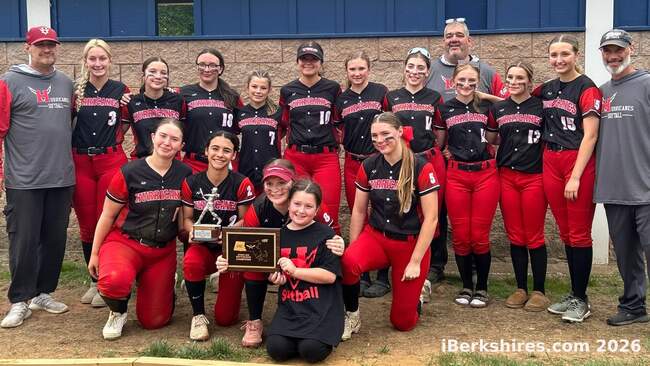
Gracelyn Wright struck out eight, and Genevieve Lagess went 3-for-5 with four runs batted in as the Hurricanes beat Monson, 17-3, to claim their first Western Mass title in four years. click for more
For the boys, Ward Bianchi helped lead the way with a win in the shot put and a second place in the javelin as the Mounties finished 16 points ahead of runner-up Pittsfield (pending the results of the pole vault, which were unavailable at 11 p.m. Friday night). click for more
Brady Auger Friday scored five goals to lead the Mount Greylock boys Lacrosse team to a 16-14 win over Hoosac Valley in the title game of the Western Massachusetts Class C Tournament. click for more
Brooke Harrington scored four goals, and Abigail Rodhouse had a hat trick as Wahconah won its second straight Western Mass title and the rubber match against the Mounties in the third one-goal game between the teams this spring. click for more