Williams College Chemistry Professor Wins NIH Grant
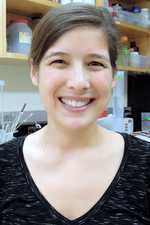 |
WILLIAMSTOWN, Mass. — Katie Hart, assistant professor of chemistry at Williams College, has won a three-year $378,000 grant from the National Institutes of Health to research the relationship between the chemical composition of proteins known as beta-lactamases, a family of enzymes involved in antibiotic resistance, and their ability to degrade medicinal drugs.
The grant will also enable new equipment for Hart's lab and support student research assistants during the summers and academic years.
Hart's lab at Williams studies how drug resistance evolves at the molecular level with a particular focus on protein stability. Many forms of drug resistance depend upon a small number of mutations that result in changes to a protein’s amino acid sequence. By investigating how these changes affect protein structure, stability and function, Hart and her team of researchers strive to increase understanding of how evolution works at the molecular level and leverage these insights to inform the design and implementation of new drug treatments.
Hart's NIH-supported project, titled "Identifying features of beta-lactamase's energy landscape that constrain its evolution," aims to understand how this important class of proteins evolves new functions and to answer persistent questions about how exactly mutations lead to resistance.
"This could one day allow us to anticipate resistant mutations and inform how we design new drugs," Hart said. "More generally, we hope to uncover the important chemical rules that govern how proteins evolve."
Proteins adopt complex three-dimensional shapes, or folds, and a mutation that changes a protein's chemical composition has the potential to lead to antibiotic resistance but may also disrupt its structure. A major goal of Hart's project is to quantify how well beta-lactamase folds and determine the impact of mutations on its ability to fold.
"My first thesis student made a surprising discovery that uncovered an unusual structure in one type of beta-lactamase," Hart said. "So, another major goal of my project is to further characterize this structure and try to understand its impact on the way the protein behaves in a cellular context, because we think this structure may have important implications for how this protein evolved."
Hart's lab is located in the college's new South Science Building, which houses the chemistry department and others such as biology and physics.
"Having the lab in its current location in the South Science Building has been great for fostering community with researchers in chemistry and other departments," Hart said. "Because my research is interdisciplinary, straddling fields like chemistry, biology and physics, it’s helpful to interact so easily with experts–and all I have to do is venture next door or down the hall."
Hart received her B.S. from Haverford College and her Ph.D. from the University of California, Berkeley. Before joining the faculty at Williams, she was a research instructor in the Department of Biochemistry and Molecular Biophysics at Washington University in St. Louis.
Tags: Williams College,