Q&A: Wahconah High Teacher to Participate in NASA Program for Educators
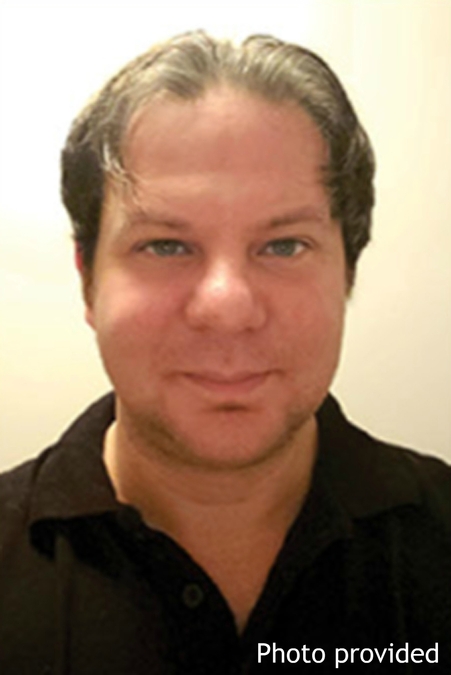
Wahconah science teacher David Dahari is
participating in a NASA program this summer.
This winter, Dahari was selected to participate in the 2020 NASA Airborne Astronomer Ambassador program.
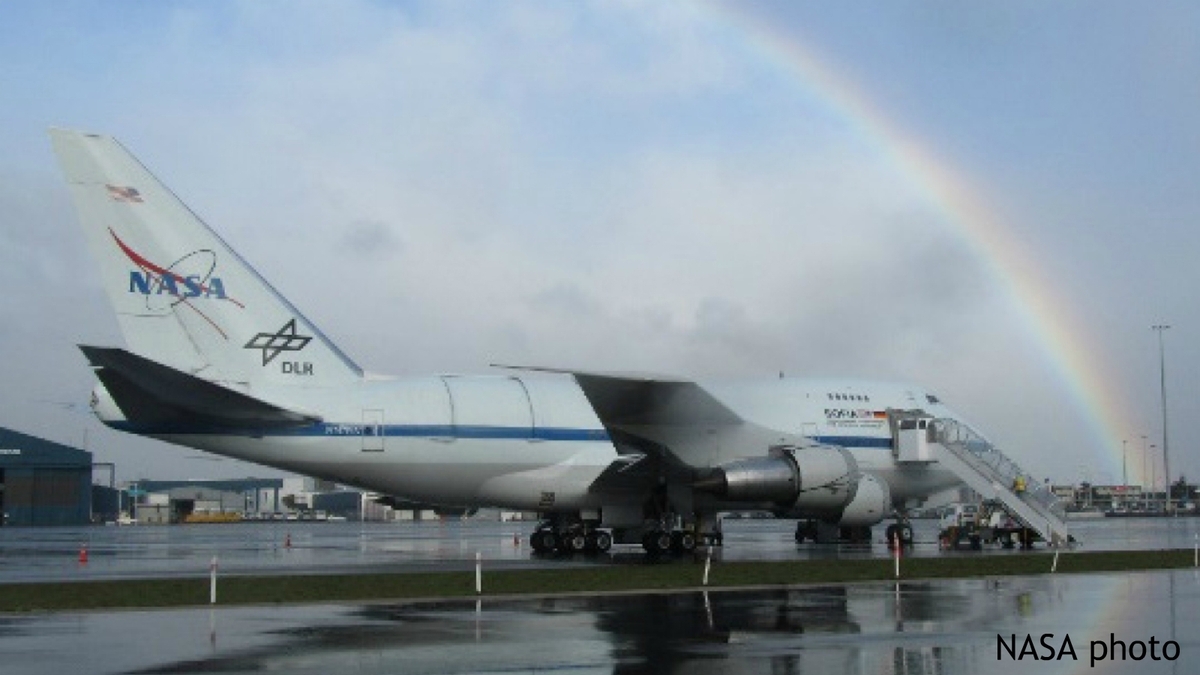
As one of 28 teachers selected from 13 states, Dahari will have the opportunity this summer to train at NASA's Armstrong Flight Research Center in Palmdale, Calif., and study aboard the agency's Stratospheric Observatory for Infrared Astronomy (SOFIA), a modified Boeing 747 carrying a 100-inch diameter telescope.
Participants in the program receiving training in astrophysics and planetary science content and teaching techniques.
It promises to be a once-in-a-lifetime opportunity for the 18-year teacher, who is in his 10th year at the Central Berkshire Regional high school, where he teaches physics and chemistry.
It is not the first time Dahari has sought experiences outside the classroom that he can bring back to his students.
"My job is to teach these kids, to inspire them," Dahari said recently. "But I spend a lot of my time not doing science. I'm a science teacher but not a scientist.
"This gives me a fresh glimpse of what scientists are doing around the globe right now. If I can bring that back to my classroom to help the next generation of scientists, that would be icing on the cake."
Dahari spoke to iBerkshires.com at length about his past encounters with such experiential learning and his expectations for the AAA, a partnership between NASA and the California-based SETI Institute.
Question: How did you get interested in this program?
Dahari: Lately I've been feeling like I've been needing more professional development, more to keep me abreast of all the different topics that are happening. Being in Western Mass is a little tough. We're not in a city, and there are not a ton of science teachers who teach the same things you do.
I've been looking for other professional development opportunities, and last year I had an amazing one. I got an opportunity to go to Washington State to work at the Laser Interferometer Gravitational-Wave Observatory [LIGO]. While at this facility for a weeklong program, I was doing a little research and seeing how I can teach modern physics concepts to my students.
And there were people there who had done a lot of other professional development opportunities. … One of them mentioned to me about this [NASA/SETI] program, and I said, ‘That's one I need to try out for.' It's NASA-sponsored and astronomy-based, which is my passion, outside of physics.
Q: What was involved in applying?
Dahari: I filled out a form that had all kinds of questions about my teaching and the next generation science standards and all different kinds of instruction and my knowledge in basic science. … They got back to me and said: We really like what you offered, and we'd like to talk to some administrators in your district and arrange a memorandum of understanding, which basically shows that the district is committed to supporting me through this.
Whenever I leave for professional development, the district is committed to getting me a sub and that kind of thing.
Then I guess they had a panel comprised of some previous members of the program and some scientists and whatnot, and they made a decision from the applicants and I was chosen.
I was super excited. To be honest, I've known for quite some time, since basically early January, but I wasn't able to say anything because NASA put an embargo on it until they did the press release. My principal knew and [Central Berkshire Assistant Superintendent Leslie Blake-Davis] knew and my wife knew. But I wasn't able to tell the students or anything like that.
Q: How have experiences like the LIGO trip last summer helped you in the classroom?
Dahari: First of all, what's amazing about a facility like LIGO is that they employ so many different kinds of people. There are so many different engineers, so many scientists and, obviously, educators. Just to see all these people working together, solving problems is amazing.
I guess a naive view of what happens at an observatory is that it's just scientists looking at the stars. What they're actually doing is solving problems -- software bugs, physical things with the geography. To see all these people working together and realize the curriculum kids are learning physics or chemistry is so much more than how an object flies through the sky or how two molecules react to form something else. There are so many more pieces to thinking about these problems.
I can give the kids a problem to solve, and it's OK that there are a lot of problems. That's what the scientific process is. It's figuring things out. It's all about putting it together, observing what you can observe, recognizing there are issues you have to overcome and pulling on different resources and solving those problems.
Q: What else?
Dahari: Another way is, specifically, there are amazing physics topics that we discussed and saw in action at LIGO. In my regular physics class, I just did a whole unit on modern physics, and I pulled all kinds of activities and ideas from that summer program, and we worked through them.
Q: Do you have the same kinds of expectations from the NASA/SETI program?
Dahari: I do, but there's an additional component to the Airborne Astronomy Ambassador program that the LIGO program didn't have. When I come back from my summer experience, next year I am going to be teaching specifically for a few weeks a NASA-inspired curriculum for part of the year.
I say NASA-inspired because they created the framework to it, but part of what I'm doing is adding to it with my cohort of educators.
Q: And that's something you'll be able to utilize in all your classes.
Dahari. Yes. I teach three sections of honors physics, one section of chemistry and one section of AP Physics. I'll teach it in all those classes because they're all physical science based classes.
Q: Are there benefits that you will be able to share with other members of the faculty?
Dahari: Definitely. … We're doing something here at Wahconah called instructional rounds. Basically, it is a way for schools to solve problems they have in schools. As a faculty, we choose a problem of practice that we're interested in solving. We get together as a faculty and pinpoint what questions we want to ask. The goal is to figure out how we want to improve on those problems of practice. We non-evaluatively take turns observing each other. Nothing goes on our record, but we're looking for specific things, like student engagement.
I think going to programs like [LIGO and AAA] where I not only am getting outside experience but also learning best practices in science education will reflect well and possibly offer some solutions to problems of practice that we have.
The other way is that, as far as science teachers go at the school, we all are very close to each other and very good at sharing our experiences in the classroom, both formally and informally at department meetings and lunch. We're great about sharing with each other what works and what doesn't work. Doing this kind of professional development is inspiring to colleagues but also informative to them as far as what best practices are.
Q: So what is your schedule with the AAA program?
Dahari: I'm taking a few different trips. One component is these weekly or sometimes every other week webinars. We have webinars with our cohort hosted by scientists and educators who run the program at NASA. … In the last one we had last week, we spoke about the scientific instruments that are aboard SOFIA, the observatory I'll be going on. We talked about the science behind each of those.
There's also a graduate level astrophysics course I have to take that I've started. I'm learning a ton about the science of infrared astronomy through that.
Then there's also the actual flight week. I'm going to Palmdale, Calif., the NASA Armstrong Flight Research Center, that's where SOFIA is in the spring and summer. I'm going to be doing observing runs. What that means I get to fly in this observatory … with the scientists and maybe do some data analysis as well. When I'm not flying, I'll be at headquarters doing other work with those scientists.
Also, there's another workshop in the summer, and I don't know exactly where it will be. The location will depend on the pool of teachers. If you look at the list of schools, I think there are two on the East Coast … so it's most likely not going to be on the East Coast. But there will be a workshop where we spend a lot of time developing the curriculum and getting ready to teach future students.
Q: And that curriculum will be ready for next fall.
Dahari: Yes, we'll be ready to start teaching it next year. … I'm so excited about this.
Tags: NASA, Q&A, WRHS,