Massachusetts Schools Will Not Reopen This School Year
BOSTON — Schools won't be reopening this school year.
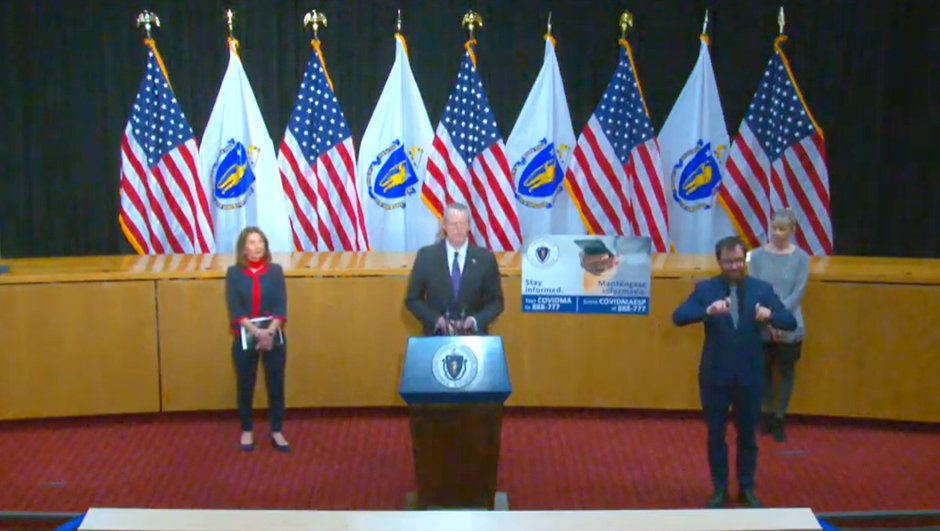
Gov. Charlie Baker on Tuesday announced the decision to continue remote learning through the end of the year and to extend the closure of non-essential child care centers through June.
"It's the right thing to do, considering the facts on the ground associated with the COVID-19 pandemic," he said at the daily update on the state's pandemic response. "At this point in time, there is no authoritative guidance, or advisories with respect to how to operate schools safely and how to get kids to and from schools safely. We believe students, therefore, cannot safely return to schools and avoid the risk of transmitting this virus to others."
Public and private schools were closed by executive order on March 17 as cases of the novel coronavirus began rising within the state. The initial order was for two weeks but was eventually extended to May 4.
Jeffrey C. Riley, commissioner of elementary and secondary education, said there had been discussions with teachers, administrators, superintendents about how to safely reopen.
"They missed the kids. Right, they love what they do. But the data isn't supported and at the end of the day, we're going to err on the side of the caution in the best interest of the safety of our children, and the adults," he said. "And that's why this decision was made. ...
"I think this is the right decision."
Remote learning will continue and officials said there would be efforts to strengthen educational efforts and prepare for summer school for students at risk of falling behind.
"The department will launch a remote learning initiative, that will provide more tools for teachers and students to utilize from home," said the governor. "The department will also launch an advisory group comprised school officials, students, parents and business leaders to work on creating more resources."
Officials had been queried for weeks about when a decision would be made regarding the reopening of schools as the state was in the middle of a projected "surge" in cases of the highly contagious virus.
The governor said there were "a lot of mixed feelings" among officials and educators about how to safely reopen. But trying to reconfigure classrooms to safely socially distance, the tendency of children in school and on buses to "pile all over each other," and the proximity of vulnerable populations — families, staff and faculty — lead to the decision, said Riley, to "err on the side of caution."
The decision to continue remote learning appears tied with "re-entry" plans to reopen the state's economy. Hundreds of thousands of workers have been laid off or furloughed by the "stay home" order that's closed businesses across the state. Any reopening would have to be done carefully and supported by data, said the governor.
"The last thing we need to do is give this insidious and somewhat invisible virus the opportunity to breathe," said Baker.
Riley said he would be issuing additional guidance on remote learning, acknowledging that there is still a long way to go to have it work smoothly. This third phase, as he put it after the initial closure and then preliminary guidelines when the closure was extended, will be rolled out this week.
"The fourth phase, we'll also be addressing in the guidance later this week, which is the idea of reopening schools [in the fall], a process that we hope will happen in the coming months, in collaboration health experts and the school community," he said. "Today's announcement gives us additional time to work on phase four, and consider what that will look like and how that will work in which we are with you."
Based on what has been done in other countries, Riley said it could mean temperature-checking students, keeping desks 6 feet apart and staggering schedules. Any policies would be done in consultation with public health officials.
Officials say it may be several years before the full impact of this disruption in learning will be understood and there are concerns that children will fall through the cracks.
"This has been an unprecedented interruption to an entire generation of students. And we want to minimize learning loss as much as possible," Riley said, later adding, "I do think we are probably better positioned than most states to come out of this in a better situation, because in my opinion we have the best teachers and principals in the country."
Officials also announced:
• Child-care and early education centers serving non-essential workers will be remain closed until June 29.
"We know that reopening child care won't be as simple as flipping a switch," said Samantha L. Aigner-Treworgy, commissioner of the Department of Early Education. She said the department is working with stakeholders and providers on a multi-phased plan to ensure a safe reopening.
• The Department of Higher Education is deferring scheduled repayments for its No-Interest Loan Program for four months. These deferments will help approximately 12,000 students that participate in the $5 million annual program.
Updated with more information and quotes at 2 p.m.
Tags: COVID-19, school closures,
More Coronavirus Updates