Pittsfield City Council Approves Hotel, Brewery TIF Agreements
PITTSFIELD, Mass. — The City Council accepted two amended tax incentive financing agreements with extended timelines in response to delays caused by the pandemic.
"We understand that both projects might be delayed because of COVID-19 specifically related to the timing of construction," Mayor Linda Tyer said Tuesday. "So we wanted to extend the period of the TIF agreement to give them an opportunity to get their projects underway and still have the benefit of the phased-in taxed increment finance plan."
City Council first accepted a TIF agreement with Robert Trask who plans to open a brewery and restaurant at 41 North St. that instead of spanning five years will span six.
Trask plans to purchase and invest $1.7 million in the former J. Allen's Clubhouse however he noted at a past subcommittee meeting that the pandemic could cause delays in the project.
The amended agreement will forgive 100 percent of the incremental increase in real estate property taxes in the first two years instead of just the first. From there this percent will decrease by 20 percent each year hitting 20 percent in 2026.
41 North Tap Room would have to invest the full amount agreed upon in the property as well as creating 30 full-time jobs within five years.
The council also approved an allocation of $150,000 from the city's Economic Development (GE) Fund to help Trask purchase brewing equipment, however, this was not without a lengthy discussion. Some councilors felt they could no longer support the allocation with the pandemic disrupting the economy and shuttering existing businesses.
"I think the time we are in right now and the way the economy is going we can’t perceive the future and in good conscienceness, I can’t vote for this because right now we have so many of our local business struggling or closed," Ward 7 Councilor Anthony Maffuccio said. "We cant be handing out money at this point in time in the game."
Councilor at Large Earl Persip disagreed and felt now more than ever the city has to support new business and move forward.
"I think it is important to continue to build business during these times ... I think we need to continue to move forward," Persip said. "...I will support this and i think it is important to build a strong economy and this will do that
Persip said the GE fund was created to help grow businesses and that the city has allocated separate funds to help existing businesses. Director of Community Development Deanna Ruffer clarified that once approved by HUD the city will have $500,000 for which businesses can apply.
Ward 2 Councilor Kevin Morandi was also not in support of the amount and felt this allocation was an "unfair advantage" to a new bussiness.
"There are businesses that have been here for a long time in this city that have never asked the city for one dime," he said. "...These businesses have done it the hard way and ahve benefited in many ways...I just feel with these times we can’t afford this."
Ward 4 Councilor Christopher Connell said there was a brewery in the city that had failed in 2010 and Morandi was concerned that a new brewery could hurt the existing one.
Ward 3 Councilor Nicholas Caccamo said the craft beer market was far different 10 years ago and Councilor at Large Peter White said the former Pittsfield Brew Works only left the city because its owners wanted to just brew beer and could not find a location in the city.
White said he thought the brewery will be an important attraction and job creator once the pandemic passes and the city starts the recovery process. Also, it would be better than an empty building on North Street and could actually support the surrounding business.
Trask chimed in and said the investment has now become much riskier with the post-pandemic landscape so uncertain.
"The risk for this investment is tenfold or more in terms of what it is going to look like for the public going out," he said. "This is more important now than it was before in terms of support from the city and I think there is a lot of potential here."
Ward 1 Councilor Helen Moon said she was surprised Trask wanted to continue with the project and felt if he was willing to take the risk the city should as well.
"When we know when we have a committed partner during these times when everything is so uncertain," she said. "That huge risk I think we have to take part in that with them because we are investing in ourselves."
Right before the vote, Connell asked to table it until councilors could meet in person rather than over a virtual platform. He said he has heard from many business owners who are upset about the allocation and felt if there was an open forum they would be present to share their displeasure.
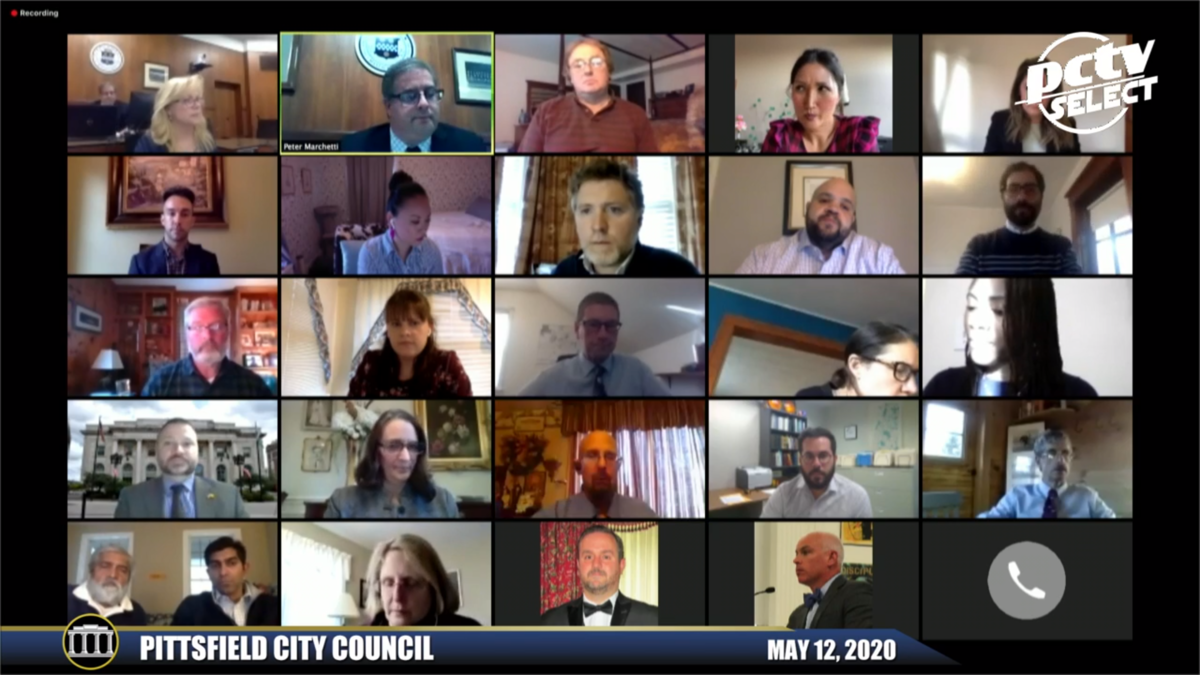
Council President Peter Marchetti said he spoke with Connell before the meeting about this issue and for this reason, they opened up the meeting to callers.
However, no one called in during public comment.
Connell’s motion failed with only Maffuccio and Morandi supporting it.
Before this vote, Connell said he planned to call a Charter Objection if it failed, however, he was discouraged by other councilors because it would only delay the vote until the next meeting.
The council does not plan to meet in person during May because of the pandemic.
The council then voted to approve 7-3 with Councilors Connell, Maffucio and Morandi in opposition; Councilor at Large Yuki Cohen abstained.
The City Council also executed an amended TIF agreement with Mauer and Dilip Desai who plan to construct a 77-room Holiday Inn Express at 1055 South St.
The Desais said at a subcommittee meeting that if they are unable to break ground by June at the very latest, they would delay the project a year.
The amended agreement is structured the same as the brewery's and the Desais would be responsible for $10 million in a new hotel and create 25 to 30 jobs,15 of which will be full time.
Morandi asked if there was a reason why they extended the agreements instead of just delaying them.
Ruffer said it is more difficult to postpone an agreement because it would need a new base valuation.
"Structurally, it was the soundest approach," she said.
Tags: tax incentive,