Williamstown Planning Board to Look at Impact of Land Regulations on Equity
WILLIAMSTOWN, Mass. — The Planning Board wants to make a concerted effort to assess potential bylaw changes with an eye toward increasing equity.
Picking up on a conversation that has dominated discussions in the town's Select Board in recent weeks, the Planning Board last Thursday began talking about how it can advance social justice through its work.
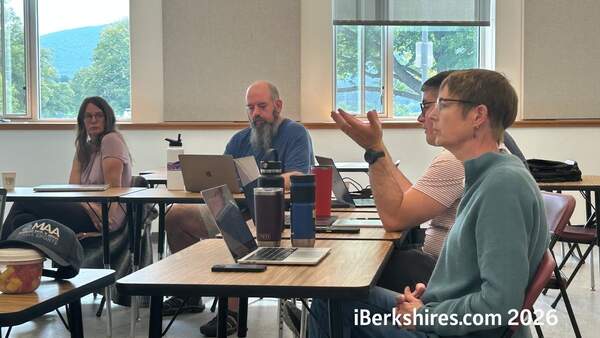
"I think this is really essential work for us to be doing," said Peter Beck, who participated in his first meeting since his election to the board in June. "Issues of racial equity are not tangential to planning and land use but deeply wrapped up in it."
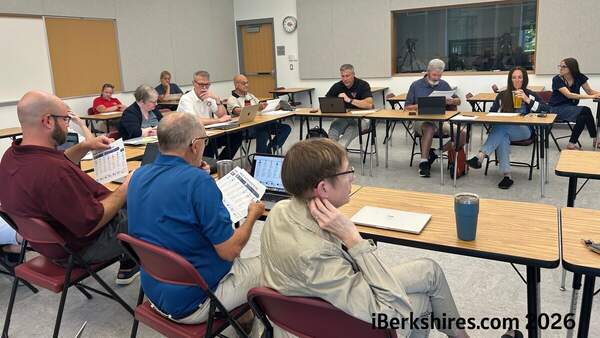
Chair Stephanie Boyd raised the issue toward the end of a meeting dominated by discussion about bylaw amendments the board plans to bring to next month's annual town meeting.
Boyd assigned her colleagues of doing the "homework" of familiarizing themselves with materials from the Boston-based Metropolitan Area Planning Council and the American Planning Association. The latter last year published a 27-page policy guide titled "Planning for Equity" that challenges planners nationwide to, " explicitly remove barriers in policies and regulations that perpetuate inequity."
"I think the more we work to continue to educate ourselves and share with the community, about the ways in which zoning, land use and planning have created so much of the segregation and inequality that we see — the more we can do that, the better, and do our jobs in a much better way and help our town be a much more equitable place," Beck said. "I think it's helpful for us to have these resources and share them concerning national patterns of inequality in land use.
"But I also think it's important for us to do, as much as possible, our own digging into the local history of land use and its effects so that we don't get into a position where we think this is 'somewhere else's problem' and not something deeply local here as much as anywhere else. I think that will be an important way for us to stay in this conversation and make progress."
Boyd noted that one of the board's priorities for 2020 is to get the ball rolling on a revision to the town's 18-year-old master plan and the principles of equity expressed in documents like the APA's policy guide could be a "guiding principle" for developing that document.
"I think it would be important to discuss something like that amongst ourselves and maybe do a little bit of learning," Susan Puddester said. "In the past, we have tried to open up housing options through Planning Board zoning changes. They haven't been successful. I'm all for trying to see if there's a different opinion on that at this point.
"I think it's really important to make it so that anybody who wants to live in our community can live in our community and that there are housing options for those individuals."
Another goal for the Planning Board in the year ahead will be to complete work on a lighting bylaw that aims to cut down on light pollution. On Thursday, Boyd read into the record a letter from Anne Jaskot, an assistant professor of astronomy at Williams College.
"Light pollution in Massachusetts has been increasing by 4 to 6 percent per year according to an MIT researcher" Jaskot wrote. "Part of the rise is due to the growing adoption nationwide of bluer, brighter LED lighting. Scientists are increasingly learning that light pollution comes with a cost. It harms wildlife, pollinators and human health, while also erasing the beauty of a dark night sky."
Boyd said lighting remains a priority for the board and that a joint project of the town, fire district and environmental activists to address the town's street lighting needs continues.
"Last week, [Town Manager] Jason Hoch, Nancy Nylen and I met with the lighting designers that we have hired to do a lighting design for the street lights," Boyd said. "We are now in the process of planning to get some sample street lights up that we would invite the community to come and take a look at and decide which street lights they prefer.
"[The project] is still several months from being completed, I'm guessing, but progress is being made."
Chris Winters said that he hopes that choosing the correct type of light is just part of the equation.
"I hope that as the town and fire district move forward on evaluating the character of new street lights — LED, frequency, wave length, all these things that define the character — I hope they also tackle the issue of quantity," Winters said. "That is another input into light pollution. It's not only the character of the lighting, but it's the issue of the sheer number of lights.
"I've always felt we're living with a street lighting template that was designed probably in the [19]30s, when modes of travel and technology were very different. Just look at headlights. The quality of headlights is so much better than it was when the street lighting layout was made. Perhaps we don't need as many street lights as we used to."
In other action on Thursday, the Planning Board elected Boyd to chair the panel for another year. As part of its annual reorganization, Winters was elected vice chair, Puddester was returned to the Planning Board's seat on the Community Preservation Committee and Dante Birch was named the town's representative to the Berkshire Regional Planning Commission.
Boyd took the opportunity of the board's first meeting since the annual town election to thank Alex Carlisle for his service to the Planning Board. Carlisle was defeated in his bid for re-election by Peter Beck.
Tags: Planning Board, social justice,