Barrett Answers Williamstown Residents' Call for Law to Address Racist Covenant
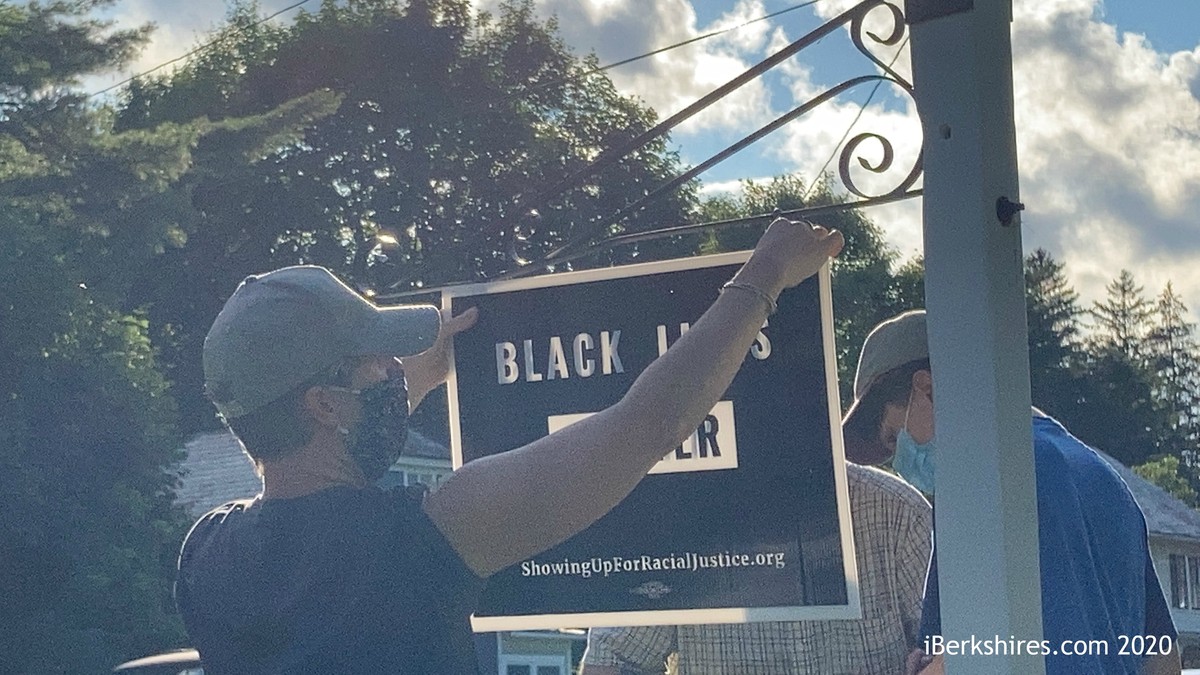
Organizer Jessica Dils hangs a new sign to replace the marker for the turnoff to the Colonial Village neighborhood from Main Street (Route 2).
WILLIAMSTOWN, Mass. — A document meant to divide the community brought scores of residents together on Friday evening in search of healing.
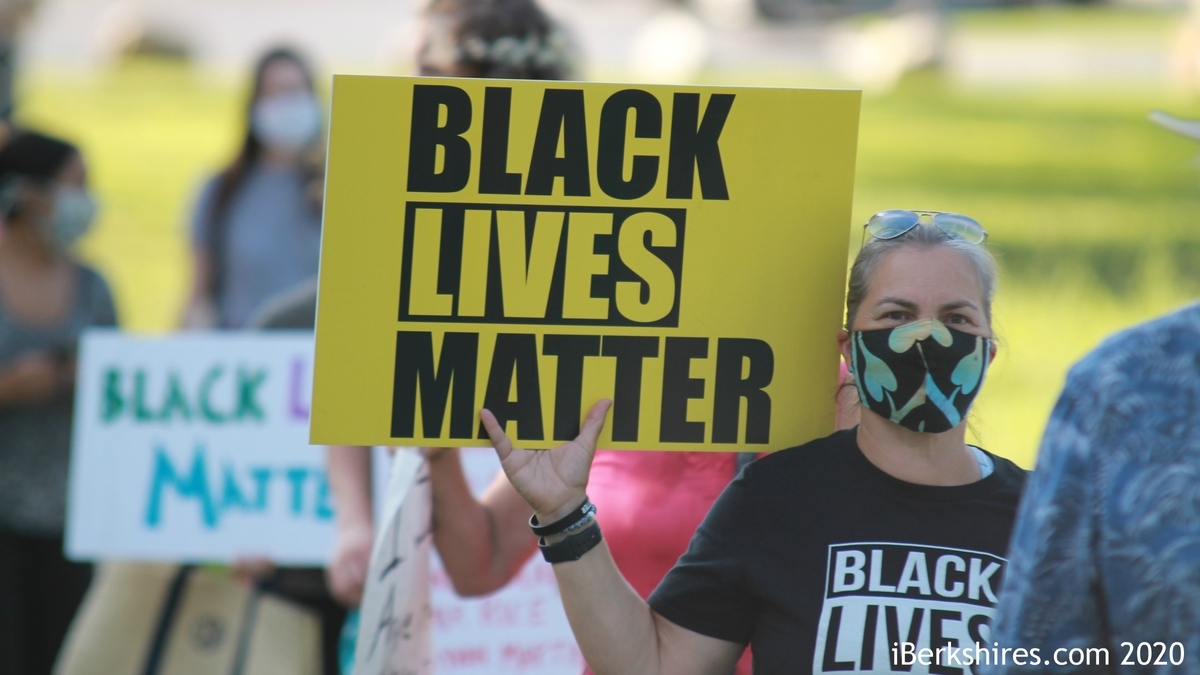
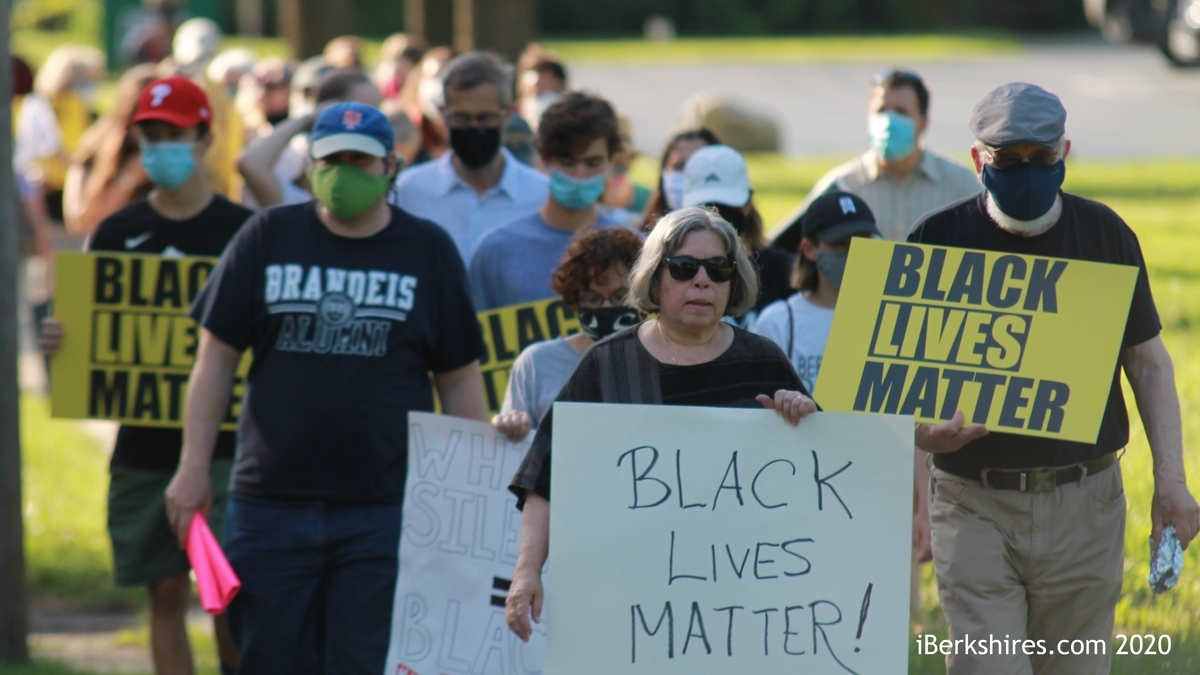
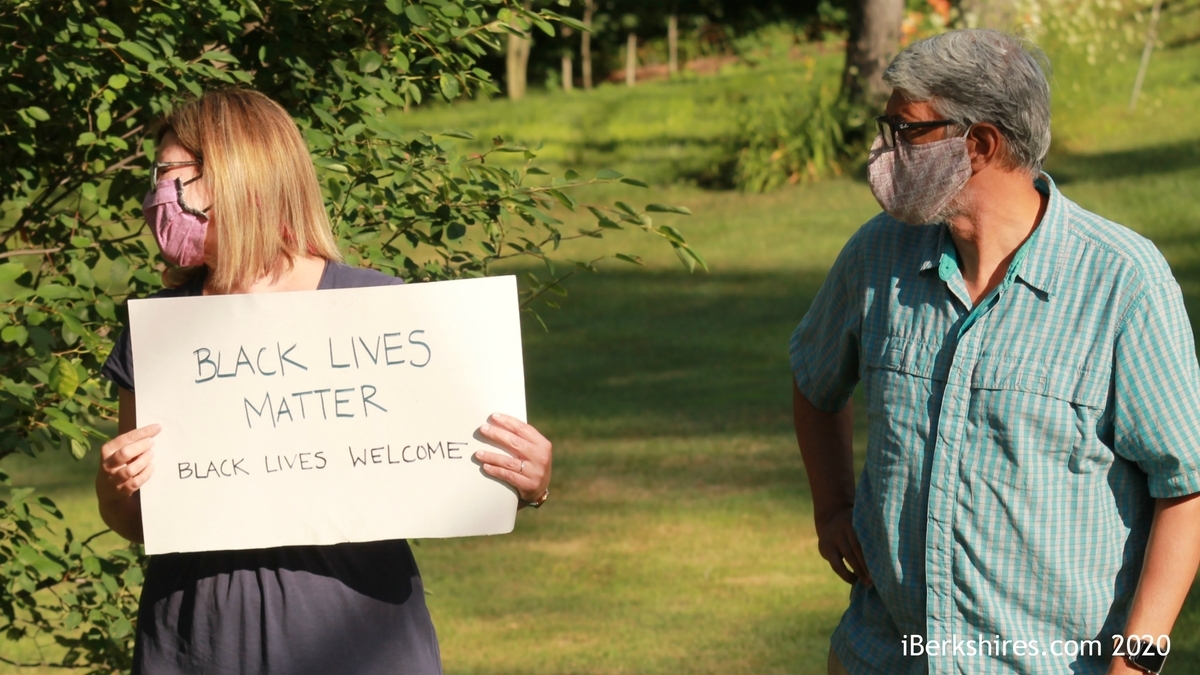
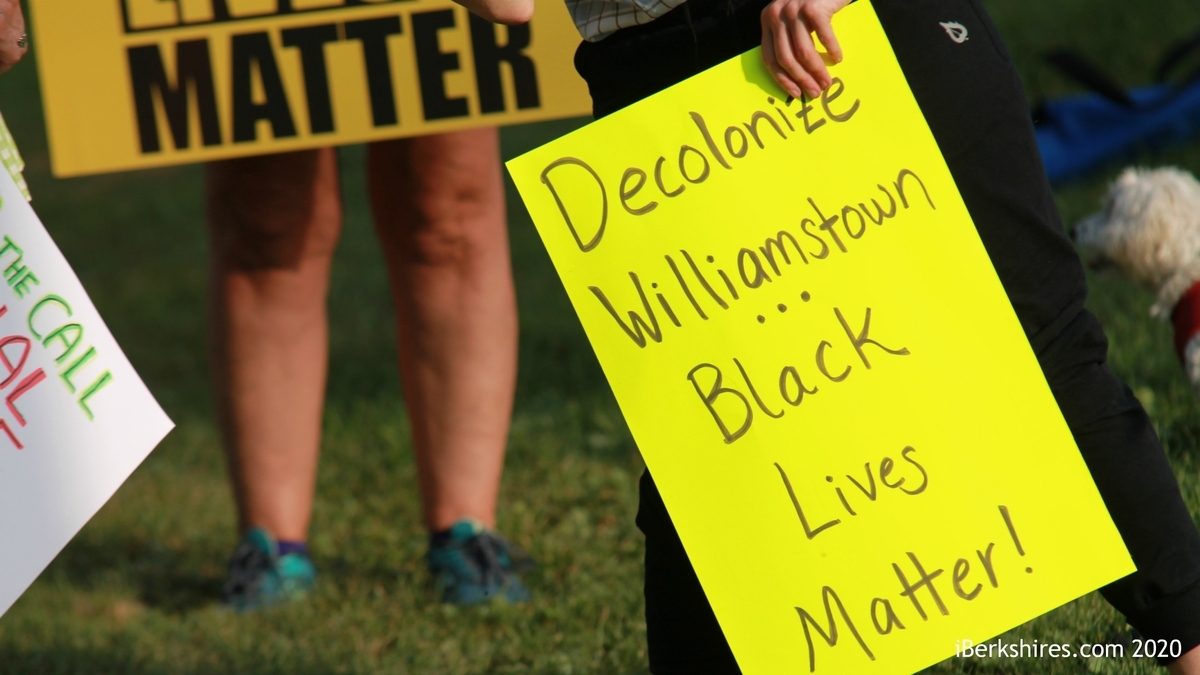
The weekly vigil for racial justice at Field Park concluded with a 1.3-mile walk up Main Street (Route 2) to the junction with Colonial Avenue.
There, activists and residents of the neighborhood — many protesters themselves — talked about how to deal with the hateful legacy of the exclusionary covenants that still accompany deeds to homes in the development known as Colonial Village.
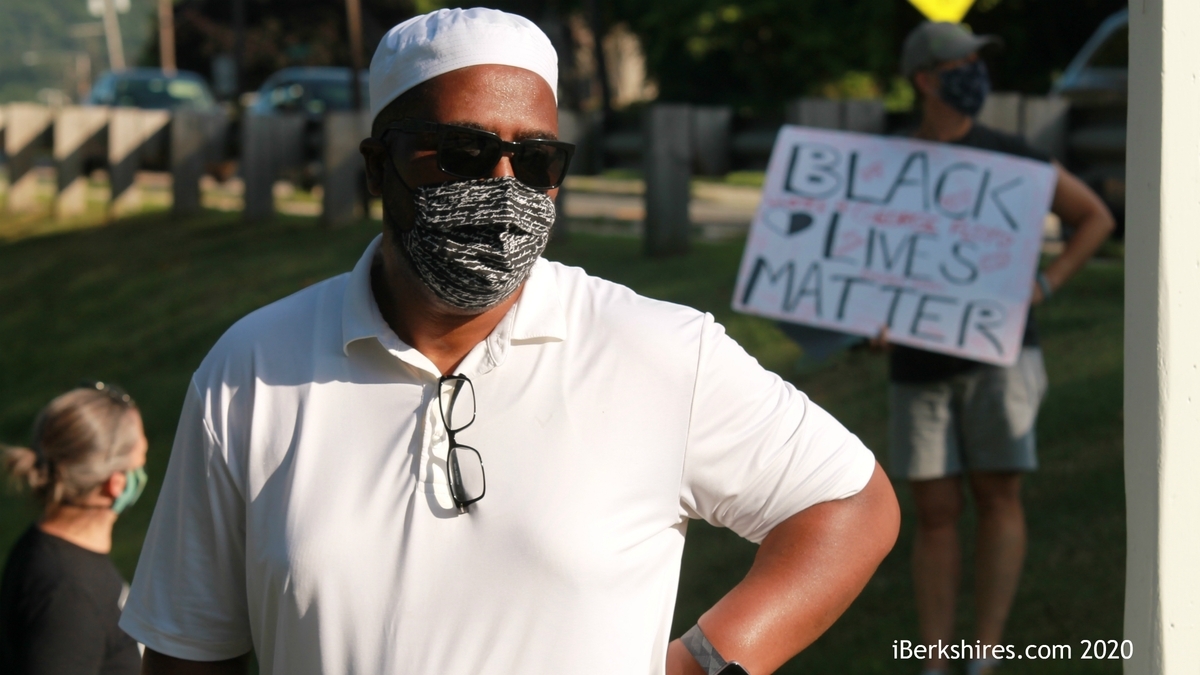
An emotional Bilal Ansari told the crowd that he was thinking about his great-grandfather and great-grandmother, who were buried just across the street in East Lawn Cemetery.
"Remember a time when people because of the color of my skin were not welcome here," said Ansari, who this week was appointed to a newly forming town committee on equity and inclusion.
"I'm channeling [my great-grandparents'] strength to be here, their strength, their silence when they couldn't speak up because. They were afraid."
This summer, the current residents of Colonial Village are speaking up about the vestigial covenants, which many if not most did not know about when they bought their homes.
"As a long-time resident — well, 25 years is not long for some — but as a Williamstown resident of this neighborhood and on behalf of my family, I want to thank Bilal for his act of sharing and bringing his experience to us," Tiku Majumder said. "Our family was shocked to learn of the presence of this racist language in the neighborhood covenant — regardless of its lack of legal basis — which we, and many of our neighbors, were unaware of until just two weeks ago.
"Since that day, we have been learning and listening, talking and beginning to take action. … While the aim of the original language targeted Black residents, we know that we and other families who presently live here also would have been excluded."
Kashia Pierprzak joined Majumder in welcoming the marchers to the neighborhood and talked about one concrete step the residents have taken.
"As a neighborhood, we are gathering and we are taking action to reckon with that history," Pierprzak said. "One of the steps that we wanted to share with you is something that we just learned last night. … On behalf of the neighborhood, we wrote five days ago to our Massachusetts legislators to consider filing legislation similar to legislation passed in Washington State that would allow a property owner to file a document that legally strikes the void and unenforceable provisions from the deed without erasing that history.
"John Barrett, our state representative, was quick to respond and do further legal research needed to propose legislation. Last night, he wrote to us to say that he would be filing that legislation this week."
Friday evening, Barrett confirmed that the bill is in the hopper, and he said he expects it will have a number next week.
The North Adams Democrat said he does not know if there will be time to pass the legislation in the busy session set to conclude on July 31, but he has every confidence that it will pass either this session or next when it comes to a vote.
"Smitty Pignatelli said he wants to sign onto it," Barrett said. "I mentioned it to him, and he said he'd like to be the first signer onto it. I'd fully expect the Berkshire delegation will join, but it should get a significant number of other signatures with it. ... We’re going to get it passed. It's just a question of whether we can get it done by July 31."
Barrett said his legislation would allow homeowners to easily change the antiquated language.
"What it basically says in layman's terms is it will allow people who have this language in their deed to petition the land court," Barrett said. "The land court may order removal of such language and strike the void provision from the record.
"It’s a very simple procedure. It shouldn't be expensive or anything."
Barrett said he expects the bill to draw interest from his colleagues in the more populous eastern end of the commonwealth.
Back in his district, demonstrators Friday were thinking about the covenants and other ways their racist attitudes were perpetuated, right down to the naming of the housing development itself.
Friday's festivities ended with neighborhood resident Martino Donati taking down the familiar white and purple sign marking the turnoff for the development and organizers replacing it with a Black Lives Matter sign.
Ansari first reminded his audience about the importance of language and symbolism and how perpetuating attitudes of colonialism continues a painful, exclusionary past.
"There are people who never got the opportunity to speak," he said. "And we are standing on unceded land of the Mahican peoples. They never got the opportunity to speak. Or they were spoken to, and their treaty was taken and not honored. I want to honor them.
"This has to go," he said, pointing to the Colonial Village sign. "I'm calling for a renaming from the bottom of my heart. I don't care what you name it. But name it something that represents you and not the ones who wrote that nasty deed that forbid people like me."
Tags: black lives matter, Land Court, racism,