Williamstown's Racial Equity Committee Discusses Core Principles
WILLIAMSTOWN, Mass. — The Diversity, Inclusion and Racial Equity Committee on Monday discussed a statement of principles to guide the group's work as it seeks to work for justice in the college town of 7,700.
Among those principles: a recognition of the current injustice.
"We are beginning from the assumption that, like every other community in the U.S., our town and its residents are impacted by racism," the fourth paragraph of a seven-paragraph draft document reads. "Our work is to discover if our town's institutions and rules (policies, laws and regulations) deliberately or inadvertently encode such inequalities. Our goal is not to assess blame, but to seek accountability where appropriate and change where needed."
Committee members Aruna D'Souza and Kerri Nicoll developed the draft. And although there was no formal vote to adopt the language on Monday, there appeared to be general agreement that the pair had captured the spirit of the committee.
The advisory committee to the town's Select Board first convened less than two months ago. Before it had a chance to develop a mission statement, the news of a federal lawsuit alleging racism and sexual misconduct in the Williamstown Police Department broke about two weeks after the DIRE Committee's first meeting.
"Thank you, Kerri and Aruna for putting out these guiding tenets," Gina Coleman said. "It's, quite frankly, long overdue. I think we got blindsided by this case, which really consumed us in a way that we did not expect when we came aboard on this committee.
"I think it's great that not only the community has a better understanding of what we're charged to do. But the members of this group, I think, there are certain facets of those tenets that have given a little more clarity as to how I can impact the functioning of this group and move it forward."
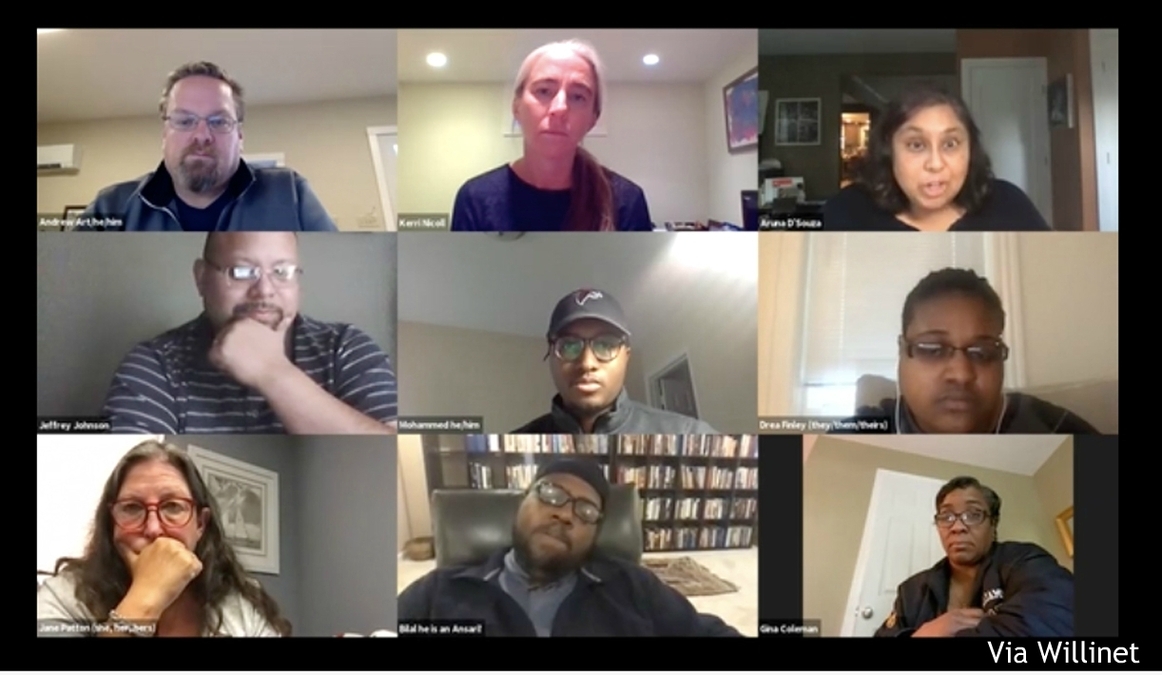
D'Souza presented the draft to the group, both by sharing a screen with the text and by reading it aloud. She also provided some further insight into the thinking behind the vision articulated on the page.
The fourth paragraph, the assumption that racism exists in town and impacts local residents is, "a really important thing to say," D'Souza said.
"I think a lot of discussions about racism start from the position of: You have to prove to people who feel included that other people don't feel included," D'Souza said. "We're starting from the position of saying, ‘We're part of this whole country. We know that there is a lot of structural racism and other forms of racism in this country. So we're going to start from the very reasonable assumption that it exists here, too. Adn we need to find out how it's encoded in the way our town operates."
Other general principles spelled out in the three-page document include a desire to hear all voices, including those who may disagree with the committee; an emphasis on transparency in the committee's process; a focus on gathering evidence; an imperative to recommend actions the town can take; and a recognition that some in the community may resist such changes.
"We recognize the ways in which this work might make people uncomfortable, because it will necessarily lead to change," the final paragraph reads. "We are open to talking about those fears and hesitations and welcome discussions of that sort in our public meetings. We urge everyone to think about the difference between fears that are based on statistical, historical and well-documented histories and current news of injustice and fears that are based on worries about lost social standing, embarrassment and shame or other emotional discomforts. We would like to avoid the latter, but, as a matter of ethics, mission and practicality, we must prioritize the former."
Jeffrey Johnson noted that the committee has heard a lot of strong testimony from members of the community over the last couple of months but put out a call to get more voices involved in the process, perhaps even some who might feel the discomfort alluded to in paragraph seven.
"I love our attendees, I love our committee," Johnson said. "The people I want to hear from are the people who don't attend. I see them with the negative comments. I want to put out something to, maybe, every committee member and every participant and attendee … bring somebody who has an opposing view to our conversation. Bring them to our group here.
"There's so much more that happens outside of this group, and … I'm not preaching to the choir. I think a lot of the people we're talking to get it and want change and want to do it the right way. But I think there are a lot of people who are, maybe, fearful to come to this group. Fearful to open up their eyes to something different than their experience."
Another core principle in the draft the committee considered on Monday: the conversation about inclusion generally needs to be grounded in a focus on the specific issue of systemic racism.
"The emphasis on race [in the committee's name] is not incidental; it will inform everything we do," the draft's second paragraph reads. "We strive to be intersectional in our approach — in other words, to recognize that addressing racial equity also means addressing issues of gender, sexual, class and other forms of marginalization and vice versa."
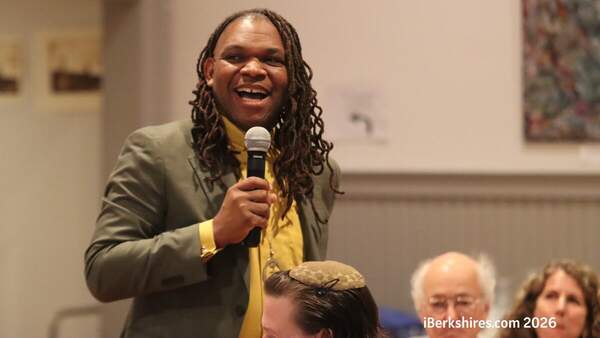
Although many of the panel's early meetings have, of necessity, focused on how dire the problems facing the town have been, Bilal Ansari offered an optimistic note toward the end of Monday's session.
A few weeks ago, he related a recent incident involving a Black colleague who was stopped by a police officer in town and asked if she lived in town. The incident, which smacked of the systemically racist practice of so-called "sundown towns," left Ansari's colleague shaken.
He said he ascertained the identity of the officer who conducted the traffic stop and had a chance to sit down with him at the Williamstown Police station.
"The officer was just on the job for six months, just got out of the academy," Ansari said. "I had a great conversation with this young man. … I encouraged him to continue his education and just had a meaningful talk about what that means when you ask that question because I don't think it was really understood — how that lands and how that feels. I left there feeling that he understood.
"Good things can happen. I think we can have positive encounters. But when there's a vacuum of trust with the leadership, this is why it takes morally courageous leaders to do the necessary. It's not what's wanted, but the necessary, in order to regain trust. A lot of healing can happen after we do a lot of listening and hear each other.
"But right now, it's a hard time. It's a hard breach."
Tags: DIRE,