North Adams Awarded Election Grant; OKs Power Purchase Agreement
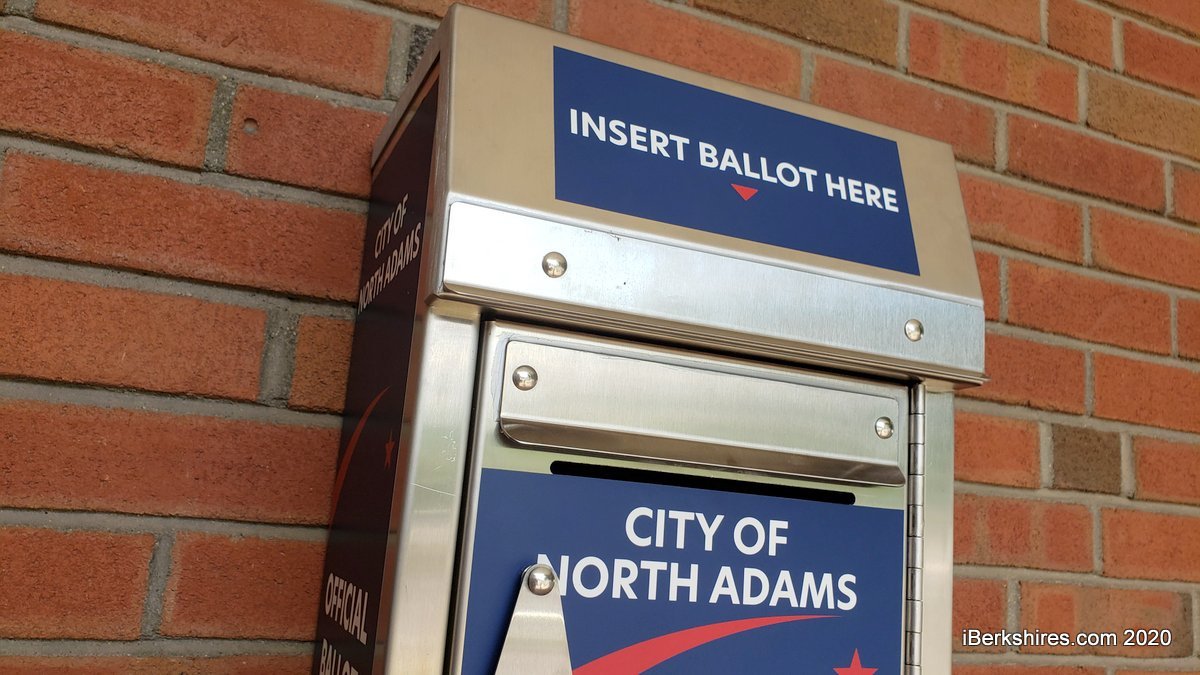
NORTH ADAMS, Mass. — The City Council on Tuesday accepted a $7,742 grant that will go toward ensuring the security and administration of the Nov. 3 election.
The grant is from the Center for Tech and Civic Life, a national nonprofit dedicated to increasing civic engagement and professional administration in elections. City Clerk Deborah Pedercini applied for the grant.
"Credit to the clerk who has been on the front lines of what has been a very busy already and challenging election season," said Mayor Thomas Bernard. "I believe these resources will help with the conduct of our election in the city of North Adams."
The money must be used for "the public purpose of planning and operationalizing safe and secure election administration in North Adams City in 2020." Among the potential uses are ballot drop boxes, personal protective equipment, rental or cleaning costs for polls, temporary staffing, absentee voting equipment and supplies, and administration equipment. The city will have to submit a report on how the funds were used.
The Nov. 3 election was also set with voting from 7 a.m. to 8 p.m. at St. Anthony's Parish Center for all wards. The last day to register to vote is Saturday, Oct. 24, from noon to 4 and 6 to 8 p.m. in the office of the city clerk. Early voting in person begins Saturday, Oct. 17, and ends Oct. 30. This can be done in the lobby at City Hall; hours are posted here.
Council President Paul Hopkins said the clerk had told him prior to the meeting that voting by mail has been "going well and steadily." Pedercini said about 2,500 mail-in ballots had been received.
The council also voted to authorize the mayor to enter into an updated community electrical aggregation plan with Colonial Power Group. The city has had an agreement with the power supplier for several years that allows residents to take advantage of group purchasing.
"The city's participated in the aggregation program for approximately six years," the mayor said. "The plan itself has been updated and needs to be accepted by the council before it can be submitted to the Department of Energy Resources for approval.
"The aspiration of an aggregation program is to basically bring together the buying power of communities to, ideally, bring a competitive range to ratepayers in the city."
Mark Cappadona, a principal with Colonial Power Group, said more than a hundred plants across the state have been added and that this version will update those changes.
He said the rate will be going down to $9.95 per kilowatt-hour in November compared to the National Grid rate of $12.388. He estimated the savings at around $12 a month for the average homeowner.
"I know that a lot of other towns that have done this, and obviously the rates you've given us are pretty good," said Councilor Lisa Blackmer, who was president when the first agreement was signed. "So, welcome back. Glad we're still working with you and I think this is a good idea. It gives our residents an opportunity to get a better rate."
Customers already purchasing through Colonial would continue to be serviced but those who had opted out would not have to do so again. However, Cappadona said those customers would be offered the option to sign up as company looks for new customers. On the other hand, those already enrolled can opt out at any time.
Colonial only sells the power; distribution is still through National Grid, which services lines and poles and charges for their use.
In other business:
The council confirmed the appointment of Michael Nuvallie of the Community Development Office to the Hoosac Water Quality District board. He replaces Michael Canales, the former administrative officer who is now the Stockbridge town administrator.
A communication on speed limits and safety in the Autumn Drive and Birchwood Terrace area submitted by Councilor Benjamin Lamb was postponed to the first meeting in November. Lamb, also a member of the Public Safety Committee, said a traffic study had been done but was not received until after the committee's last meeting.
"We'll be able to follow that up to at our next Public Safety meeting and I assume, as well, that the Traffic Commission will also be bringing that in for discussion and that was sort of the next step in their process," he said.
The council approved an addition to its rules of order that requires councilors to participate in a diversity training program during each two-year term in office and during the first three months of that term. The recommendation was made by the Inclusion Diversity, Equity and Access Committee created earlier this year. Lamb, the chairman, said the training is under development and will be informed in part from responses to a survey sent to the council and mayor.
The council had already approved the concept of training as it was part of the charge in setting up the IDEA Committee, he pointed out, but the committee has found there are few best practices when it comes to municipal training.
"We are essentially developing the wheel as we go. We're using some of the past contacts that we have and some of the resources that we have at our fingertips to develop this," Lamb said. "I will say that there will be part of this that has to be in real time. And that's very much so because of some of the conversations that need to happen around this work. And that's stuff it can't just happen by reading something or watching a video, it's just not realistic."
Councilors asked if there were consequences for not participating and Lamb said there was not. However, he noted that those who participated would be identified at the April meeting, and the public could make its own decisions on accountability.
Tags: power agreement, voting,