BMC Therapy Dog Program Offers Benefits to Patients
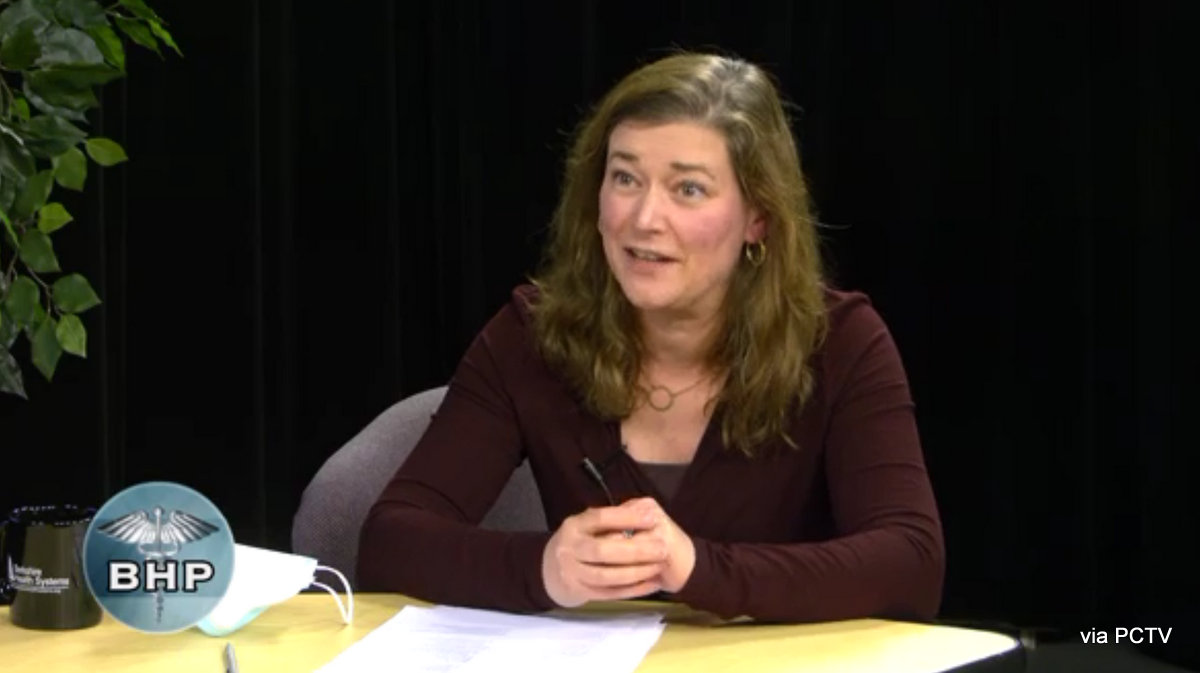
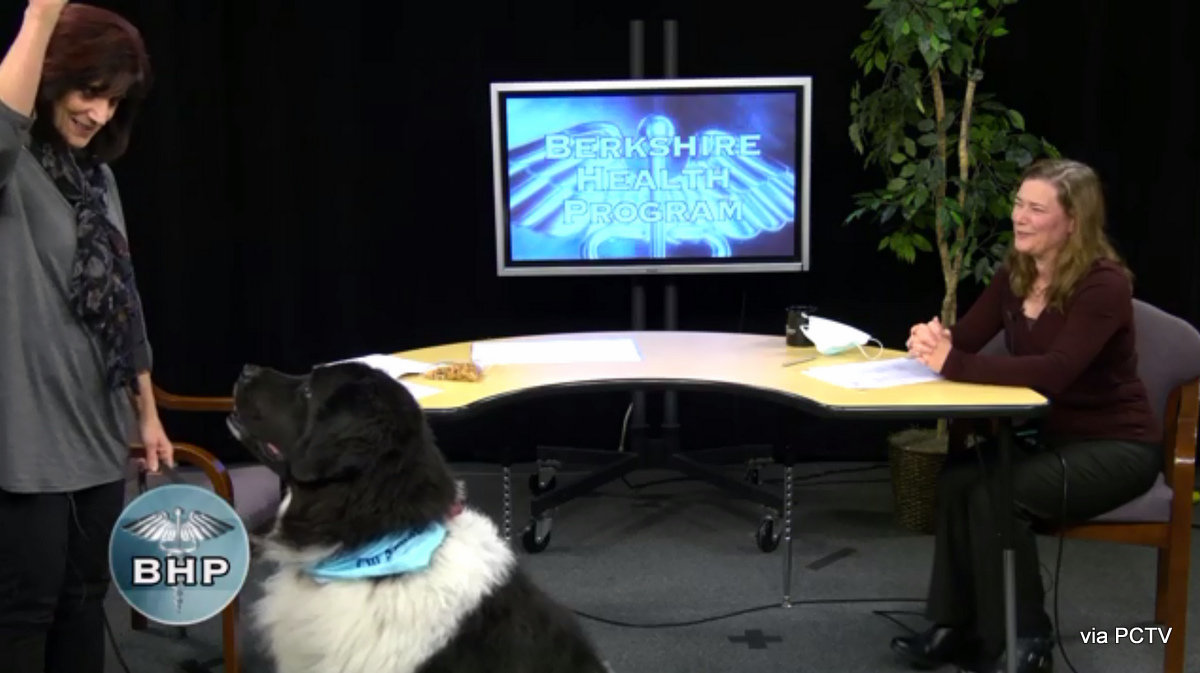
Dr. Rebecca Caine, an internist at BMC, is the new host of the recently relaunched 'Berkshire Health Program.'
Dog owner Dr. Rebecca Caine believes that having a canine pal, or any pet, is good for both physical and mental health.
"There are a lot of benefits to the patients in the hospital and in other settings to spend time with animals," Caine said on a recent episode of Berkshire Health System's "Berkshire Health Program" on Pittsfield Community Television.
Caine was discussing the health benefits of therapy animals with Terry Cormier, who started Berkshire Medical Center's certified pet therapy program, Caring Companions, in 2003.
Cormier, an administrative assistant in BMC's Surgical Services, also works with the Berkshire Humane Society for the SafePet Program with BMC, which provides pet foster care for patients without other resources.
She was inspired to start the Caring Companions Pet Therapy Program at BMC after a similar organization came to the hospital with therapy dogs.
At the time, Cormier didn't think that BMC would allow dogs, so she joined forces with another employee to contact organizations and hospitals to find out how they adopted pet therapy programs. Her year-old Newfoundland passed an assessment to become the program's first therapy dog.
Eventually, after a few bumps in the road and some success, more pups were brought in.
Cormier did a study with a BMC nurse who took the vitals of a patient before and after the patient interacted with a therapy dog. Patients introduced to the furry friend experienced lower blood pressure and seemed much more relaxed.
She emphasized that these programs only work with people who like dogs and are only given to patients who want to have a visit.
"There are people in the world that, I don't understand why, but they don't care for dogs," Cormier said.
From a scientific perspective, there is a biochemical effect that releases hormones that promote a sense of calmness people get from petting an animal.
One of her therapy dogs assisted a patient with a full-blown panic attack; when a nurse told the patient to pet the dog and feel how soft the fur is, the patient was able to calm down enough to breath at a steady pace.
Caine said she has suggested to patients that they welcome a dog into the family to improve daily exercise, as a big part of having a pup is taking them on walks and playing, and has discussed the idea with colleagues of having patients track the exercise they're getting with their four-legged friend.
The training process to become a therapy dog starts with a test for basic obedience, such as sit, stay, come, and lay down. Cormier said dogs cannot be aggressive and, more importantly, has to be able to interact with others.
Dogs with a good disposition and who are outgoing and confident make great therapy dogs, she said.
Therapy dogs don't have the legal rights that service dogs have, such as the ability to go in any facilities with their owners because they are assisting them. The level of training that service dogs go through is also much more intense and aligned with the needs of their owners.
Emotional support animals differ from therapy dogs because they help one person deal with stress, anxiety, or depression and don't interact with other people. Emotional support animals don't have the rights that service dogs do either.
Cormier said the handler of a therapy dog needs to be trained as well. They attend workshops on training that also cover topics such as insurance information, because each therapy dog has an insurance policy through the agency that trains and evaluates them.
Handlers also need to have the insight to know when a therapy dog is showing signs of stress so they can be removed from a situation. Additionally, they need to know themselves well enough to not go into situations that stress them out because a therapy dog will read off the handler and become anxious.
Handlers always have to advocate for their dogs, Cormier said.
BMC's therapy dog program has two-thirds failure rate which is high, but Cormier said the reason for that is because they have the best dogs in the facility and they make sure that handlers are the best as well.
There is an orientation done before the pups even step foot, or paw, into the hospital and they do a couple of preliminary visits to make sure the dog and handler are comfortable.
Cormier noted that it is important for therapy dogs to have a marker of when they are not longer a pet, but are working. This can be a vest, a bandana, or any other physical item that the dog wears when working.
Throughout the whole segment, Cormier's Newfoundland Sebastian lay comfortably at her feet in silence. Sebastian has been in this program for six years.
Sebastian likes visiting Berkshire County Kids' Place because he loves children, she said, and she gives lectures on how to handle and care for dogs.
Sebastian and the children play music chairs without the chairs and they race. Cormier joked that he is slow and loses at all of the games, but the children sometimes let him win so he can feel good about himself.
"It shows that animals teach people compassion," she said. "As well as the other way around."
Cormier also shared a story about a Newfoundland named Lily, who she said had a great sense of people's emotions and made her an excellent therapy dog.
Lily was visiting the psychiatric ward at BMC when a young woman came over and asked Cormier if she could teach Lily how to say "I love you." Eventually, every time the young woman held a treat up Lily barked three times to say "I love you."
Cormier and Lily left day and Cormier forgot about it.
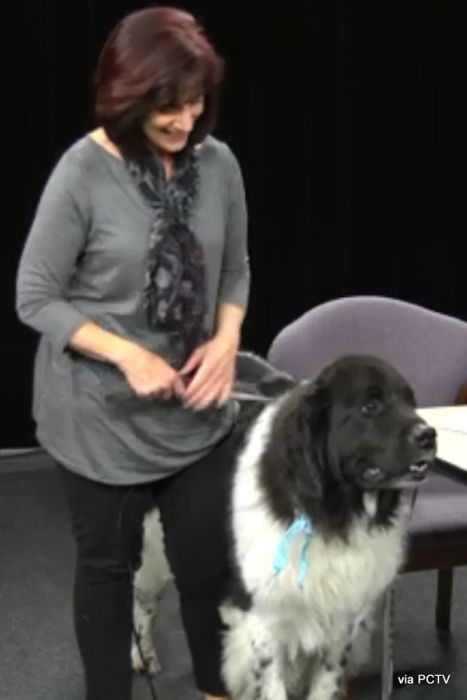
Cormier and Sebastian.
Cormier apologized for Lily's behavior and the woman told her that it's OK because she knows the dog and she's also pregnant. Cormier reassured her that she has a three black therapy dogs and she must be mistaken, but then the woman said, "Lily I love you," and Lily barked three times, Cormier said.
The program has a pet therapy telephone line where inquires can be made. Patients can also ask a nurse to contact the program and Cormier will send out an email to all working dogs and ask if they can pay a visit.
This program is patient-directed because some people have allergies and fears of animals, so the visit needs to be initiated by the patient.
"You can have such a connection because the dog won't judge you," Caine said. "The dog doesn't have a opinion about you they're just there to make a friend and it's really lovely."
The therapy dog program is now on hold because of the COVID-19 pandemic but Cormier said anyone considering having their pet become a therapy dog should contact Lisa Corbett of the Berkshire Humane Society for information on classes.
For more information program, contact Cormier at 413-447-2114, Ext. 3657
Tags: BHS, therapy dogs,