Hotels, Meals Tax in Williamstown Shows Impact of Pandemic
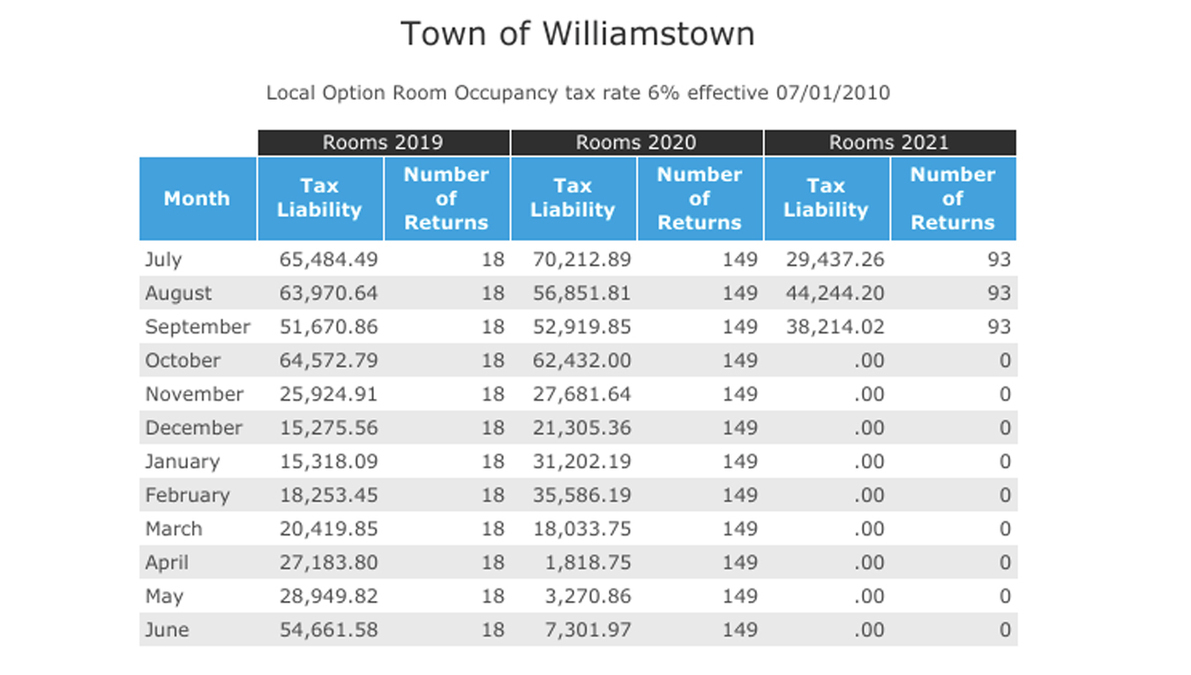
WILLIAMSTOWN, Mass. — Numbers from the Massachusetts Department of Revenue indicate the town's lodging industry lost 57 percent of its business from April through September compared with 2019.
Town Manager Jason Hoch reported those statistics to the Select Board on Monday night to demonstrate how much the local economy has been impacted by the COVID-19 pandemic.
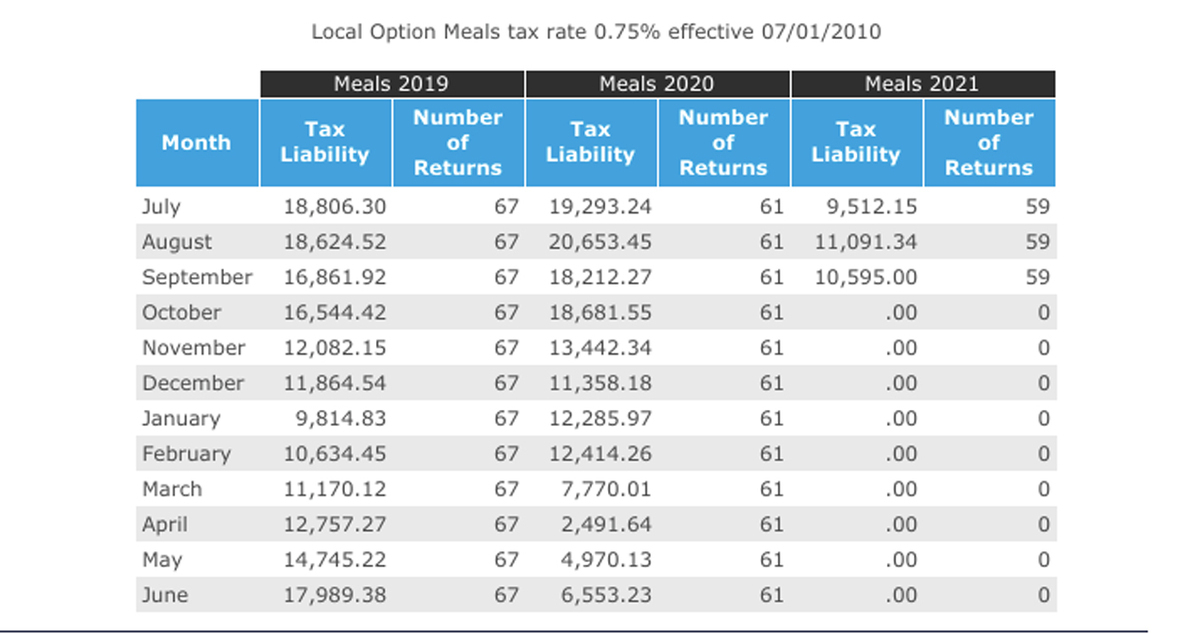
The numbers come from the DOR's report of local lodging establishments' liability under the rooms and meals tax. Although the commonwealth has given businesses the "small relief" of being able to defer those tax payments, the amount they owe still shows up on the books, Hoch said.
In the half year that began after the pandemic started to impact Massachusetts' economy, Williamstown's hotels, motels and short-term renters collected receipts that translated to a combined tax bill of $124,287.06.
For the same period in 2019, the tax revenue was $290,779.75.
"When I first started looking at it, I did so in the context of what I do, as part of my job," Hoch said, referring to the impact to the town's revenue and how that would affect budgeting. "My systemic frame was, 'Those numbers are down, but they're not as down as I budgeted them.'
"Then, as I thought about it, I realized that's not the right measure. There are real people with stories behind all those numbers. My own sense of relief became very much, 'This is a real demonstration of how this is rippling out across the economy.' "
Meals tax liability has fallen off to roughly the same degree, 56 percent, in the same time period. And both follow the same pattern, with more pronounced declines from April through July and a slight recovery starting in late summer.
For the rooms tax, the drop in April through July was 77 percent compared with the same four months in 2019. In August and September, combined, the drop was a less steep but still very significant 25 percent.
The rooms tax numbers from the last quarter of fiscal year 2020 (calendar year April-June 2020) are even more pronounced because they came at a time when tax revenues should have been going up. FY20 was the first year the state started reporting numbers on the 6 percent rooms tax for both traditional hotels and short-term rentals, i.e. residents who market their homes through services like Airbnb.
And, in fact, the first nine months of FY20 (July 2019-March 2020), rooms tax revenues were up by 10 percent as 131 "new businesses" entered the market.
"We talk about the impact on our visible business community, but know for everyone who runs a business like that, that is an income property," Hoch said of the Airbnb proprietors. "There are plenty of people for whom the occasional room rental here or there allows them to take a nicer vacation or, in some cases, stay in the house that is theirs because they get enough revenue from Airbnb to cover the heating bill in the winter months.
"There are a lot of stories behind these numbers and a lot of people feeling this in perhaps ways we haven't seen."
The sobering news on the local economy came in the board's last meeting before Thursday's Thanksgiving holiday, and even before Hoch laid out the DOR stats, Select Board member Hugh Daley used the platform to make an appeal to consumers to shop local.
"To the degree possible, as you consider your holiday plans, to the degree you're able to shop local and use curbside pickup -- we're all in this together," Daley said. "I took a walk up and down Spring Street a week ago checking in with each of the businesses. These are some of the hardiest souls on the planet. They're going to work to keep themselves going. So, as a community, if we can support them, let's do that.
"And that's not just Spring Street, that's any local business. If you're out at Colonial Plaza or anywhere in town, help these people if you can. …We'll all get through this together, but it's going to be a long slog."
In other business on Monday, the board promoted the commonwealth's guidelines for a safe Thanksgiving and thanked those residents who abide by them, heard a presentation about the Mohawk Trail Entrepreneur Challenge sponsored by Lever Inc., and the Mohawk Trails Woodlands Partnership and drew more criticism from residents over the town's handling of the Williamstown Police Department.
The board also appointed Roslyn Broch to be the new signatory on Alcoholic Beverages Control Commission actions by the panel. Broch is taking over at Town Hall for retiring Assistant to the Town Manager Deb Turnbull.
Turnbull is slated to leave her post in early December, Select Board Chair Jane Patton said.
"She came to Town Hall in 2011," Patton said. "Her probably most significant project, and there's a long list of which to choose, was her work with the folks at the Spruces [Mobile Home Park] and working hard to help everyone be relocated and helping with all the administration work and bureaucracy those folks had to go through.
"There's been more than once, especially when this work really began in 2013, when I would chat with her, and it was really hard. I think she's really proud of that work, and she should be. … Deb, you are loved and valued and appreciated probably more than you know because we probably didn't do a good job telling you."
Tags: fiscal 2021, meals tax, rooms taxes,