Williamstown Nonprofit Seeks CPA Funds for Agricultural Restriction
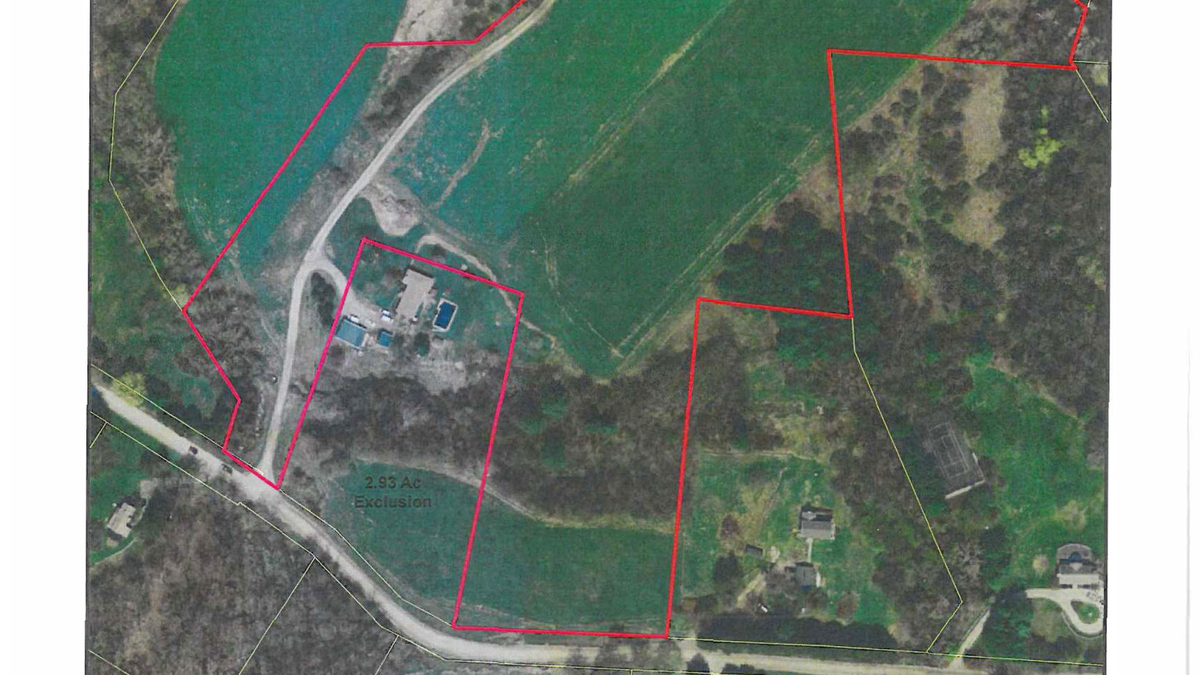
WILLIAMSTOWN, Mass. — The Williamstown Rural Lands Foundation plans to ask the town for Community Preservation Act funds to support an Agricultural Preservation Restriction for a property on Green River Road.
WRLF Executive Director David McGowan was before the Agricultural Commission last week to ask that body for a letter of support for the application he plans to bring to the Community Preservation Committee next month.
Rural Lands is working with the owners of Fairfield Dairy Farm to secure an APR from the Massachusetts Department of Agriculture for "approximately 20 acres" McGowan told the commission, which voted unanimously to support the application.
"It's surrounded by APR land that Fairfield Dairy Farm had previously put into an APR," Ag Commission Chair Sarah Gardner said in describing the parcel under consideration. "What's different about this land is it's kind of the missing piece of the puzzle. It's between other APR land."
The APR program "offers to pay farmland owners the difference between the 'fair market value' and the 'agricultural value' of their farms in exchange for a permanent deed restriction which prevents any use of the property that will negatively impact its future agricultural viability," according to the MDAR website.
The program requires a local match added to the state contribution. In Williamstown's case, the local match would be a minimum of 10 percent, McGowan said.
Gardner told her colleagues that the commonwealth believes the soil on the Galusha family's farm is especially worth protecting.
"In my conversation with MDAR, I learned it normally pays $10,000 per acre for agricultural land, but in this instance they doubled that because they believe it's important," Gardner said. "The soils are important agricultural soils, and they think it's an important piece of the overall farm, which is the biggest farm in Williamstown."
McGowan confirmed that the state agency agreed to raise its normal cap of $10,000. But he noted that even at the higher cap of $20,000, along with the local contribution, the farm would be selling its land for less than it could get on the market.
"Williamstown qualifies for a 10 percent match … but even if the town put in 20 percent, there would still be a gap," McGowan said.
Gardner said the Galusha family is willing to make a sacrifice to ensure that the rich soil, currently used for forage, stays in agriculture.
"Either way, the seller is taking a financial hit," Gardner said. "They want the farmland to be preserved. I really think of it as a community service, in a way. It's looking toward the future, and it's in the common good.
"[APRs are] about preserving the resource for the future. It's not about any particular farm or any farmer. It's preserving the soil resource. They'll only do APRs on prime ag soil. That is why MDAR is willing to spend so much money on this."
McGowan declined to say what the land was appraised at or how much WRLF will be seeking from CPA funds. But based on the rough numbers he gave -- 20 acres, $20,000 per acre from the commonwealth and a 10 percent local match -- the application for town funds would be about $40,000.
The Community Preservation Committee is the gatekeeper which reviews applications for CPA funds and makes recommendations to town meeting for approval in the spring. McGowan said he plans to take advantage of one of the committee's pre-application meetings, which potential applicants can schedule on Dec. 10, 11 or 14, to discuss the APR project.
According to the Community Preservation Act, funds can be used for certain purposes: community housing, historic preservation and open space and recreation. Rural Lands' APR proposal would fall under the open space provision of the act.
The CPC expects the town to have about $324,000 to fund projects in the fiscal 2022 cycle (town meeting May 2021). One of the committee's regular applicants, the town's Affordable Housing Trust, already has expressed an intention to apply for $175,000 in new funding.
Tags: agricultural restriction, CPA,