Pittsfield Curriculum Panel OKs 'Aspiring Educator' Course

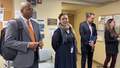
Vice Principal Brendan Sheran introduces to the subcommittee.
In its first meeting since October 2019, the curriculum subcommittee on Wednesday unanimously approved a new course for high school Seniors and Juniors titled "Aspiring Educator Foundations."
"Remembering when I was young and being an aspiring educator I had no clear picture of what that meant in high school," interim Superintendent Joseph Curtis said. "So to be able to experience what an educator does and the responsibilities and such in high school I think is phenomenal for our students to have the opportunity to do so."
Created by Pittsfield High School's English Language Arts teacher Kristen Negrini, the course aims to help inspire new educators to join the field while giving them early skills in developing their own philosophy on education.
PHS students have been piloting the course this year as an independent study. The course will officially be on the curriculum for the next school year and will then hopefully be replicated at Taconic High School.
"This course is really a great addition to our many courses and elective offerings here at Pittsfield High," Vice Principal Brendan Sheran said.
The purpose of Aspiring Educator Foundations is to support the development of a diverse pool of educators in the Berkshires and beyond, provide coursework and options for students that support their interests and the needs of the local economy, connect students to next steps after high school and expose more of them to the possibilities and nuances of the American education system.
"We know that our faculties at our schools in the Berkshires are overwhelmingly white educators and we have many wonderful educators," Sheran added. "But we are trying to inspire new generations of students from all backgrounds to join the field and the profession."
This introductory course provides an overview of the social, philosophical, and historical foundations for education and the implications for its role in society today. It also examines the purpose and role of public education, the diverse populations with whom teachers work, educational goals and access, and the impact of curriculum, technology, and school organization on the classroom and the profession.
Because the course is introductory, it does not require prerequisites.
Activities are designed to provide opportunities for students to learn through observation, research, assessment, and evaluation as well as written and oral communication.
"I really ask students to step out of the student at times and into a teacher mindset as they examine those different elements of the course," Negrini said.
There are ten course objectives outlined, some of which have been built in collaboration between Nergrini and her students. She feels it is important for her students to have a say in building course objectives and outcomes they would like to see at the end of the school year.
The objectives include exploring the concepts of bias, privilege, and equity and evaluating how to create an environment and a curriculum that is inclusive, identifying major controversies in contemporary education, and diving into strategies for special education and English language learners.
There has been a lot of dynamic conversation with the pilot students around the topics of bias, privilege, and equity, Negrini said.
The group has been doing work with cultural proficiency coach Shirley Edgerton and about five Williams College students to develop a curriculum on voter suppression.
Students will go through six units of the course throughout the school year beginning with the philosophies of education so that they can start to form opinions and values in terms of what their beliefs around education are and ending with an individual research project on a chosen topic from the curriculum.
The course will include formative and summative assessments, field experience with a reflection paper each semester, and a Performance Task that takes everything learned in the year and developing their own educational philosophy statement.
The subcommittee was overall enthusiastic about exposing high school students to another career option. Chairwoman Katherine Yon commended Negrini for the course being "very comprehensive."
"I really think this is a fantastic opportunity," committee member Dennis Powell said. "I think it's pretty exciting giving students an opportunity, and even if they don't go into teaching it will help them as they navigate through other aspects in their life and what they eventually will want to do. My hope is that it will encourage them to go into teaching."
Tags: curriculum,