Williamstown Interim Town Manager Finalist 'Inclined' to Stay in Current Post
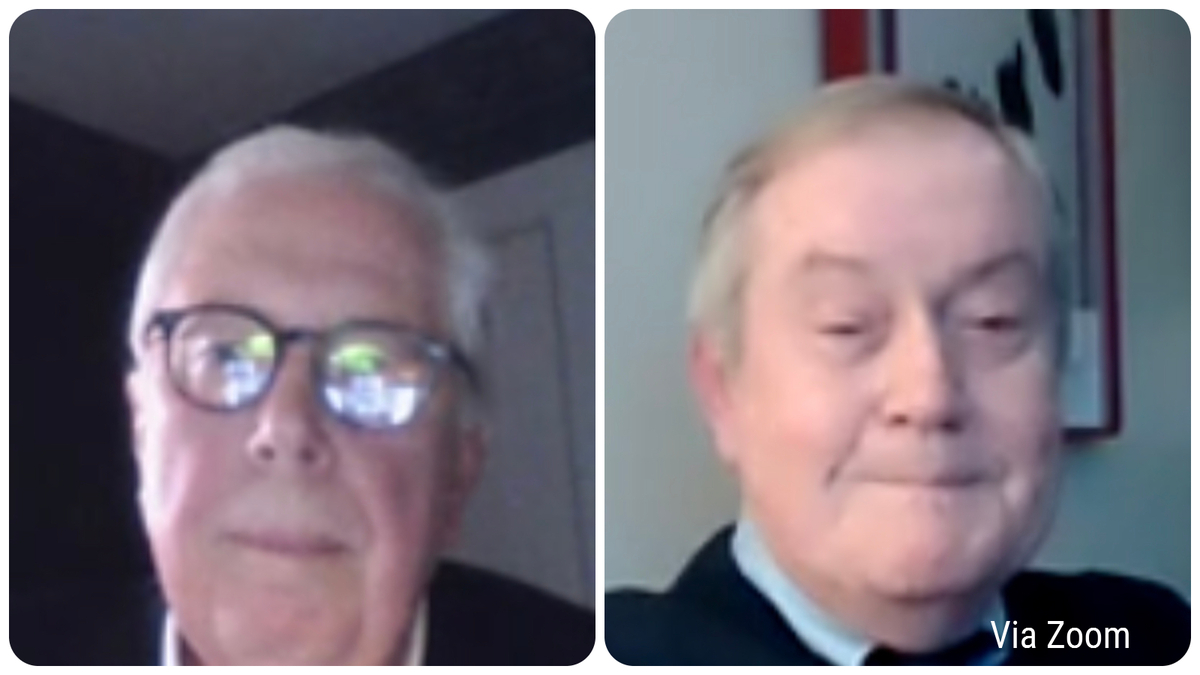
WILLIAMSTOWN, Mass. — A half hour into his interview with the Select Board on Thursday night, interim town manager candidate Robert T. Markel told the town it may want to go with the other guy.
Markel told the board that the reason his interview needed to be rescheduled from Monday to Thursday was that he was in an extended meeting with his current employers, the select board in Hampden.
“They decided to offer me a contract to run through June 30, 2022,” Markel said. “I don’t have that contract. I’ve been thinking in my own situation all day what makes sense for me and what may make the best sense for the town.
“I understand you have another candidate who can probably provide full-time work. At best, I could do part-time work, 20 hours. It may be in your interest to take the other candidate if you’re satisfied with that person. Because unless I resign in Hampden, I’m not able to function full-time. … My inclination would be to sign a contract with Hampden. If the other candidate is satisfactory to the board, that may be your best decision.
“If not, and you still need someone for 20 hours, let me know. I can probably be helpful.”
On Monday, the board interviewed Charles Blanchard, who has served as the town manager in the Western Massachusetts town of Palmer and the town administrator in the Worcester County town of Paxton.
Toward the end of that interview, Blanchard offered praise for Markel and an offer to serve if the board offered Blanchard the position.
“I know Bob Markel, he’s a great manager,” Blanchard said. “I think whoever you choose is going to be able to do a good job to help you get through this. Believe me, as I mentioned before, you will get through this.
“I think from what I’ve seen, the community is a good community. It’s strong. And I think that you’re providing the kind of leadership you should to get through this. Good luck with the whole thing. If I can serve you, I’d certainly be happy to do that.”
The Select Board is looking for an interim town manager to take over when Jason Hoch departs town hall at the end of this month. On Thursday, Andrew Hogeland said the board is hoping to have a permanent town manager in place within four to six months.
But the interim is needed to handle the day-to-day management of town government, and whoever is appointed to the short-term position will be entering a town where many residents have deep distrust and fear about town government and, in particular, its police department.
The Select Board members asked both candidates to talk about how they would approach a community facing those kinds of challenges.
“I’ve watched your community listening sessions, and I’ve watched some of the listening sessions for the [Diversity, Inclusion and Racial Equity Committee], and I think that’s a really good idea,” Blanchard said. “One of the problems always seems to be when people stake out positions on any controversial issue, it’s very difficult, I’ve found, to get them to move away from what they thought of initially.”
Blanchard cited an experience from his time in Palmer, where the town was faced with a highly contentious casino proposal. He said the town stood to gain upward of $20 million in revenue in a community that paid $15 million in property taxes, but one of the chief reasons the proposal was narrowly defeated was that some residents were misinformed about the threat of gridlock from increased traffic.
“I guess my point is it’s hard once people make their decision on controversial things to get them to move away from it,” Blanchard said. “I really think that your listening sessions have the potential to do that.”
Blanchard also was asked how he would manage town employees operating in an environment where members of the public are distrustful of local government.
“I did sense in the interview we had with two of the [Williamstown employees], you could sense that one of the problem is it starts with a few people and, all of a sudden, it becomes an entire department that is under a cloud and then it’s the whole town government that is under a cloud,” Blanchard said. “It may not be fair, but it is understandable when people get that impression.
“You just have to work with people, reinforce them, encourage them that they are doing the right thing. Get good news out there with what is happening positively and let people know that in the midst of all this, we recognize they’re still getting their jobs done, they’re still doing the things they should do, they’re still meeting the public’s needs.”
Blanchard described his management style as “inclusive.”
“Generally, what I’ve found is that department heads usually know about their jobs, whether it’s the police chief, the DPW head, the town accountant,” he said. “They’re professionals. They know their job, particularly in a community like Williamstown that’s so well run.
“My style is to let them do the job, certainly provide any support I can provide and make sure the things we’re working on are in line with the goals and priorities set forward by the Board of Selectmen.”
Markel stressed the importance of honesty in town government as a key to developing trust and changing minds.
“If you’re really trying to convince people, you can’t just talk about the advantages of your position,” he said. “You have to be frank about the possible downside and argue that, on balance, it makes sense for the community.
“Unfortunately, in most of the communities I’ve worked … there is a portion of the community that is disengaged. They will engage when you take steps that they feel are threatening or where they don’t have enough information. You have to go out of your way to get information to them.”
Markel, the former mayor of Springfield (1992-96) who has served as an interim manager in six different communities, agreed with Blanchard that the elected Select Board sets the broad policy.
“Ipswich had arguably the strongest town manager form of government in the state,” he said, referring to the town he led from 2005-12. “I had all the high cards. But I’d go to the selectmen and say, ‘Tell me what you want me to do. Lay out some goals for me.’ I know you’re the policy makers and I’m the manager, but it seemed to me to make a lot of sense to always work together.”
If the Williamstown Select Board decides to go with Blanchard, it will be hiring a manager who has decades of experience on the other side of the table. He served on the select board in his hometown of Sturbridge from 1987-94 and again from 1996-2005.
“One of the things I’ve always said about being a town administrator or a town manager is it’s the easiest job in the world if you have good people you’re working for and you’re working with in your department heads and staff,” Blanchard said. “If they know their jobs and enjoy your jobs and you have a good, communicative relationship with the board of selectmen, it really doesn’t get any better than that.”