Vermont Fish & Wildlife: Pollinators in Peril
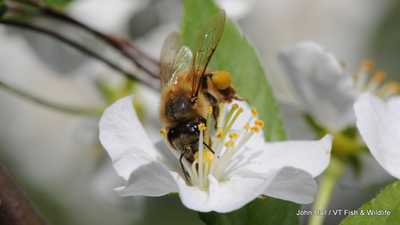 |
| Vermont's pollinators remain in peril and with so many wild plants and commercial food products dependent on bees and other insects, the time to act is now. |
MONTPELIER, Vt. — Many of Vermont's pollinator species are in peril, and the Vermont Fish and Wildlife Department would like to share a few simple suggestions to greatly benefit our essential pollinator species.
"The majority of our flowering plants need pollinators in order to produce seeds," said Vermont Fish and Wildlife Department zoologist Mark Ferguson. "Vermont is home to hundreds of species of pollinators from bees to butterflies to beetles and other bugs that play a vital role in pollinating our flowers, trees and food crops. These insects are responsible for pollinating 60 to 80 percent of Vermont's wild plants and play a critical role in the propagation of fruits and vegetables in gardens, wild berry patches, commercial berry farms, and apple orchards."
But many pollinator species in Vermont are in trouble. Habitat loss, invasive species, single-crop farming, disease, and pesticides are a few of the threats affecting populations of these insects across our state. Vermont's native bees, including more than 300 unique species and three that are threatened or endangered, are among our pollinators being impacted the most.
A recent examination of our 17 different bumble bees compared recent observations with historical collections and concluded that several species have drastically declined or disappeared from Vermont, including the rusty-patched bumble bee.
To better understand not only the number and diversity of our native bee species, but also their distribution and population trends, the department and partners are conducting a three-year study of Vermont bees. Vermont Fish and Wildlife is working closely with the Vermont Center for Ecological Studies and is inviting any members of the public interested in contributing to this data collection to send their bee observations to iNaturalist.
Vermonters can also help conserve our native bees and other pollinators with a few simple household considerations:
- Provide a variety of vibrant flowers and native plants to attract pollinators to your yard and garden.
- Learn to live with wildflowers and weeds growing in your yard and fields. Pollinators prefer a variety in their habitat, even if it looks untidy to humans.
- Keep an eye out for bare patches of lawn where ground-nesting bees may make their home.
- Use pesticide alternatives such as pollinator-friendly barriers to keep unwanted pests off your plants.
- Avoid using insecticides (especially those that contain neonicotinoids such as imidacloprid, thiamethoxam, clothianidin).
- Reduce the amount of property that is mowed, mow less often, and consider leaving fields un-mowed until October when most pollinators have finished their pollinating activities.
- Meadows that are narrow in shape or less than 10 acres in size are not suitable to provide habitat for grassland birds, but they can be extremely valuable pollinator habitat. Consider leaving these small fields, and also large fields managed as grassland bird nesting habitat that are not needed for hay harvest in August or September, un-mowed until October when most pollinators have finished their pollinating activities.
You can also ensure the viability of Vermont's pollinators by contributing to Vermont Fish and Wildlife's habitat conservation projects though the Vermont Habitat Stamp program.
To learn more about Vermont's pollinators and additional ways to help, visit the website here or contact Mark.Ferguson@vermont.gov.
Tags: bees, pollinator-friendly, wildlife,