Q&A: Williamstown's Ziemba Acknowledges Mistakes, Tries to Move Forward
WILLIAMSTOWN, Mass. — One year ago today, it is a fair guess that most Williamstown residents had never heard of Police Sgt. Scott McGowan, or, if they had, they'd forgotten the name.
All that changed on Aug. 12, when McGowan's attorney released to the public a federal lawsuit he had filed against the town's police chief, town manager and the town as a whole.
The specific issue in the lawsuit was whether McGowan was the victim of retaliation against a whistleblower when he was passed over for promotion to lieutenant.
What captured the attention of the community were the disturbing tales of misconduct on which McGowan claims to have blown the whistle over the course of about 10 years.
Eventually, in December, the lawsuit was dropped after the then chief of police announced he was leaving the town's service.
What never disappeared were the allegations raised in the lawsuit — including a WPD officer harassing a female resident in her home and lying about it to the state police, the chief participating in inappropriate sexual behavior at the station, an officer for years keeping a photo of Adolph Hitler in his locker and a dispatcher using the "n word" in the presence of a Black Williams College student visiting the station.
Eventually, the lawsuit's fallout led to the departure of the town manager, in addition to the police chief, and a town-funded investigation into the allegations that continues to this day. Those allegations continue to be principal talking points in any town discussion about police accountability and structural racism.
As the anniversary of the lawsuit arrives on Thursday, iBerkshires.com asked three people at the center of those discussions — the interim police chief, the chair of the Select Board throughout most of the last year and a civic leader who has served on the town's Diversity, Inclusion and Racial Equity Committee and who, professionally, is Williams College's assistant vice president for campus engagement and vice president for institutional diversity, equity and inclusion — to share their thoughts about the lawsuit's impact and the current state of the town.
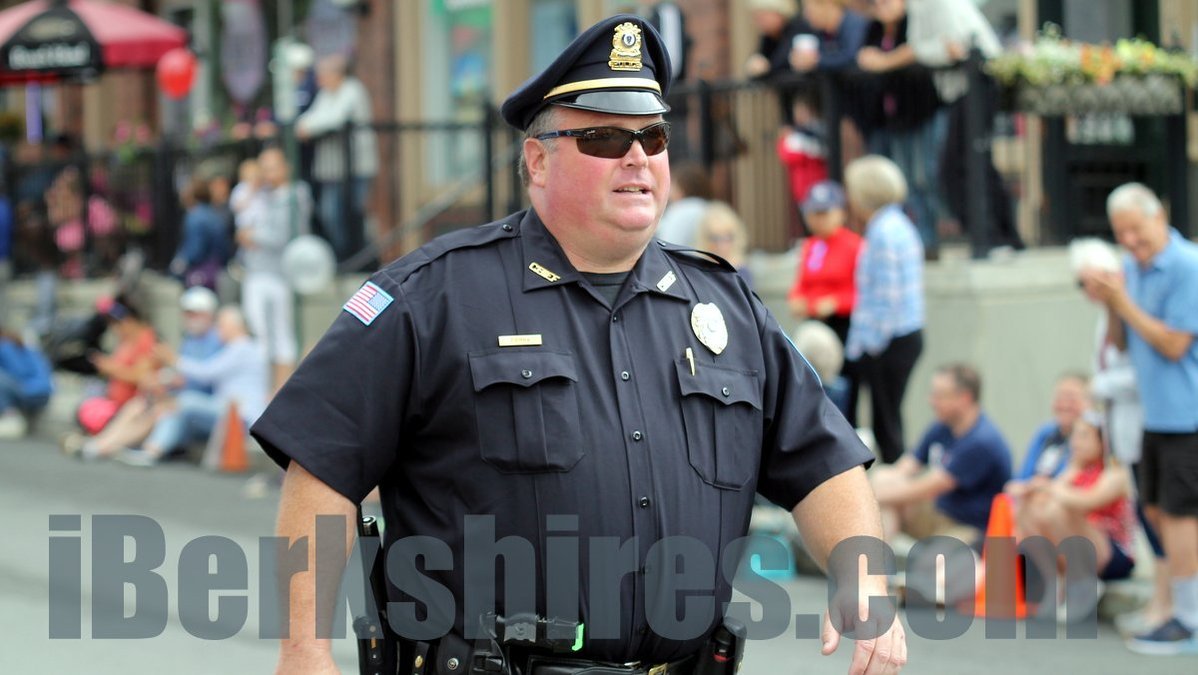
In this article, interim Chief Mike Ziemba offers his insights.
Question: It is no secret that the lawsuit and the criticism that the Police Department has faced since its release have had an impact on the officers. How is the morale of your department today?
Ziemba: There's been ups and downs as far as morale goes. It's hard because you can't paint everyone with the same broad brush. We're making significant changes and improvements as far as the revamp of our policies. We're close to having our own standalone web page. We have the [Department of Justice] project with its first meeting next week. All this is in an effort at transparency and forward facingness, while admitting to mistakes and problems in the past.
Certainly, there are things I can address and fix and certain things I can't go back in time and change. We need to prove ourselves to the community and look at the improvements and things we're doing to move past this and move forward.
It's not a matter of if changes in policing will occur. It's, can you keep up with them because they happen all the time.
Q: Have the conversations in the community over the past year about policing been productive, on the whole?
Ziemba: I think so. I think the more one-on-one meetings and also group meetings and any attempts at communication we're making is all progress. If we can show the community we're acknowledging the issues, I think it's all good.
Anyone who has issues with the department, I encourage them to email or call. I've had a lot of good conversations and made a lot of progress
I definitely think we're in a better place than we were.
Q: How much of your time is spent on those one-on-one or group conversations as you describe them?
Ziemba: I would say at least half, maybe three-quarters. There are a lot of administrative tasks with the [interim chief] job as far as budgeting and scheduling and payroll and grants. But a lot of it is putting your money where your mouth is and having those meetings.
You can't get people's feelings and all that from texts and Zooms. It's nice to be one-on-one. We're starting to bridge that gap. And it's going to take time to get back to a place where everyone is happy with where we're at.
Q: I want to make sure I heard you correctly. Are you saying half of your week is spent in that kind of outreach?
Ziemba: It depends on how you slice it. But I spend a lot of my time having meetings and responding to citizens — whether positively or negatively. That's a lot of the job of the chief, to be the face of the department and handle that stuff and answer those questions.
I also cover patrol shifts and have a lot of time in the office. I would say at least half of my time [is spent on engagement], but I want to be open and available and transparent and people be able to ask things and get an answer.
Q: It felt like, even in the aftermath of George Floyd's murder in May, the public conversation locally was more about the national issue of policing in America and less focused specifically on the WPD. Is that a fair assessment?
Ziemba: If there was concern about the department, it wasn't mentioned and talked about. I think the combination of the national movement and the lawsuit kind of brought to light a lot of the issues and complaints. That's kind of when everything started for us. It was one of those things where if we don't hear input from the community, we don't know that there are concerns and are complaints.
We are part of the community, and we need to be responsive to those concerns and change things we can change and address issues we can address.
Q: I know that continuing training is part of the job for a law enforcement officer, but how much of that training in the last year have you been able to get for your officers specific to some of the concerns around diversity and equity?
Ziemba: There are programs out there, and thankfully, there is more access and easier access to those types of programs. A lot of it is built in already in our required training through the Massachusetts Criminal Justice Training Council. And we are making additional room in the budget for extra training.
I myself have been training a lot on that stuff.
The issues surrounding bias have been regular topics in our in-service training. It's obviously ever evolving and more at the forefront now. We're seeing a lot of programs on de-escalation training and techniques. Obviously, with everything going on nationally, they're expanding on those topics.
Laws change, practices change, and changing our policy and practices is really one of the only ways to see that through. It's not easy. It's a big challenge. But I'm up to it.
Q: You mentioned a project with the Department of Justice. Can you tell me a little more about that?
Ziemba: The DOJ offers a program called Strengthening Police and Community Partnerships. They come into towns where there are issues of trust and animosity surrounding local law enforcement, and they offer to train and facilitate. They set up meetings with, at first, roughly a dozen members of the community. They're the planning committee. That expands to a broader group to have conversations about what they think the police department is doing right and where we could make changes, and we discuss those: What is the ability to change within the law and what smaller things can we do in each town that are town-specific. The police department is involved in that. We'll have a representative on the committee.
There is no timeline for that. It could last a year or two years. It's all up to how much progress we've made and how many things we can handle.
Q: So this is not a town body that would be subject to the Open Meeting Law. Who serves on it?
Ziemba: We want to have representatives from a cross section of the community: the schools, town government, town committees, vocal critics of the police and vocal supporters. We want to bring a bunch of people to the table. That group will choose the broader group that participates in the conversations.
I don't think it's limited in terms of subject matter. It gives us an opportunity to say, 'This is why we do certain things,' and gives us an opportunity to hear from other people about whether there's a service they want us to provide or provide differently. If we can do that legally, we're open to that.
One big one on the radar is mental health issues. We want the support from mental health professionals and clinicians. Right now, we share one with North Adams and Adams who works, I think, Monday through Friday from 9 to 5. In a perfect world, we'd add many clinicians to that so we had round the clock support. They're qualified to make determinations on whether someone needs to see a doctor. We're not trained like they are, so sometimes we err on the side of caution and require someone to see a doctor, but clinicians can make those decisions in the field.
I see that as one of the big changes coming up, and I welcome it.
These are the kinds of conversations I've had with many people over the last year. People don't know we are open to help from the outside, but we are. There's always room for change and improvement. We are changing. It's a continual process.
This is the first in series of three articles reflecting on how the lawsuit last year affected the community. Select Board member Jane Patton's Q&A can be found here and former DIRE committee member Bilal Ansari's here.
Tags: lawsuit, williamstown police,