Summer Street Residents Make Case to Williamstown Planning Board
WILLIAMSTOWN, Mass. — Neighbors of a proposed subdivision off Summer Street last week asked the Planning Board to take a critical look at the project, which the residents say is out of scale to the neighborhood.
Northern Berkshire Habitat for Humanity was at Town Hall last Tuesday to present to the planners a preliminary plan to build five houses on a 1.75 acre lot currently owned by town's Affordable Housing Trust.
The subdivision includes the construction of a road from Summer Street onto the property to provide access to five new building lots of about a quarter-acre apiece.
Several residents addressed the board from the floor of the meeting to share their objections to the proposed subdivision.
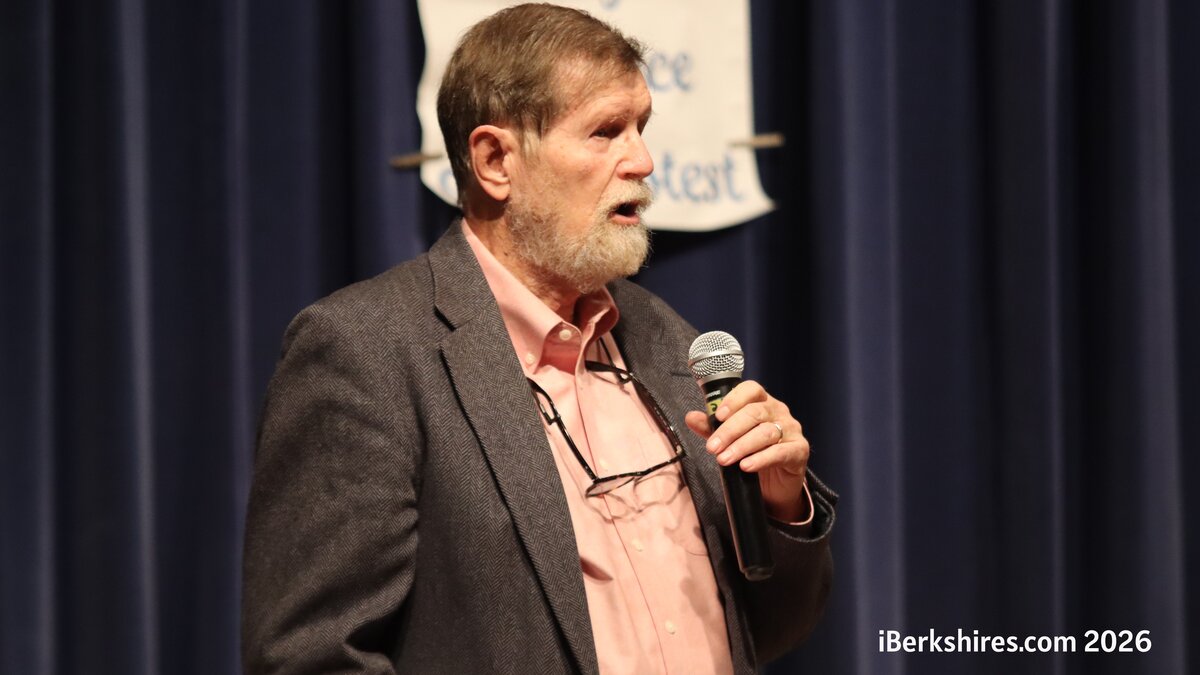
"I support the mission of Habitat," Summer Street resident Christopher Bolton told the board. "There's been a lot of concern in the neighborhood. We had a neighborhood meeting [Monday] night, and about half the houses were represented.
"I'm impressed with the generosity of my neighbors wanting to contribute to help with the housing crisis in the town and enthusiastic about a Habitat house on that property or maybe two or even three, if that's the plan. … What I've heard is a lot of concern in the neighborhood about the scale of the development, that in a very small neighborhood of 23 houses, five houses, close together on a plot like this will change the character of the neighborhood dramatically."
Last week's presentation from NBHFH was just the beginning of a process that ultimately would include a definitive subdivision plan for an up or down vote from the board.
Town Planner Andrew Groff explained that the preliminary plan submission was meant to initiate a dialogue between the planners and the prospective developer about what sort of issues might come up in the final submission process.
The planners have about a month and a half to vote for or against the preliminary plan at the end of that dialogue. Either way, a full hearing and consideration of the subdivision plan would be needed before any shovels went in the ground.
Bolton last week offered a few questions for the Planning Board to consider about issues that he argued were within the board's jurisdiction: whether the local non-profit has the resources to see the project through to completion, "in a way that reflects best practices and longevity;" whether Habitat has the resources to maintain the new road until it is accepted by the town, as the organization hopes; will the town ever take the step of accepting the road, and how long will Habitat be forced to maintain the infrastructure; and whether the town stormwater system has the capacity to take on the increased impervious coverage in what is currently a vacant lot.
Northern Berkshire Habitat for Humanity President Keith Davis addressed many of Bolton's questions by telling the board that he, engineer Charlie LaBatt of Guntlow and Associates and Groff will sit down in the next few weeks with Department of Public Works Director to discuss plans for the road and make sure it was up to town standards. Clough earlier this year raised concerns about an established private road seeking town acceptance — a request ultimately withdrawn by the Sweet Farm Road Homeowners Association.
Davis told the Planning Board that he hoped to be able to bring to town meeting a request to accept the planned road onto the Summer Street lot as soon as May 2025 — near the start of what is expected to be a five-year buildout for the five volunteer-built homes on the parcel.
The April 9 presentation from Northern Berkshire Habitat began with an appearance from LaBatt, a civil engineer working on the project.
He walked the planners through a handful of waivers that the non-profit will be seeking from strict compliance with the town's subdivision bylaw and discussed some of the stormwater management plans for the property.
Since the parcel includes a small wetland jurisdictional to the Conservation Commission, Habitat also will be before that body with a Notice of Intent if it continues to pursue the development. But drainage also is an issue for the Planning Board.
"The lot is currently improved with some drainage," LaBatt told the board. "The site and topography … would allow sheet runoff off the road. And the topography of the site allows flow in the northwest direction, where we propose to do our stormwater management — some retention/detention of stormwater before it goes into the municipal system.
"Currently, the undeveloped parcel flows in that direction."
One of the waivers from the subdivision bylaw, which LaBatt characterized as "a little outdated," is relief from the code's requirement for curbing on streets in a subdivision. Besides the facts that uncurbed roads are common in town and that curbing tends to make roads feel narrower unless additional pavement is added on each side of the road, curbing would impede the overland flow of stormwater into swales, LaBatt said.
In answer to a public comment about current drainage issues on the site, LaBatt later elaborated on the preliminary design.
"We'll be designing kind of a detention/retention pond with an overflow, essentially," he said. "The overflow would pipe to the drainage system that's in the roadway. We can also install an underdrain under the rain garden that goes to that as well. So we can still use the rain garden to filter the runoff, to clean it, but underdrain it and send it into that system to try not to exacerbate the groundwater table in that area if so desired.
"That's not uncommon when we're in C/D type soils anyway, because there's really not that much [water] going in there, so we often, so we don't have a full pond all the time, we underdrain them so we can still let them filter — recognizing that, sure, we'd love to have recharge, but sometimes it's not as practical."
Later, Summer Street resident Myles Evans indicated that the stormwater management plan for the proposed development is too aspirational.
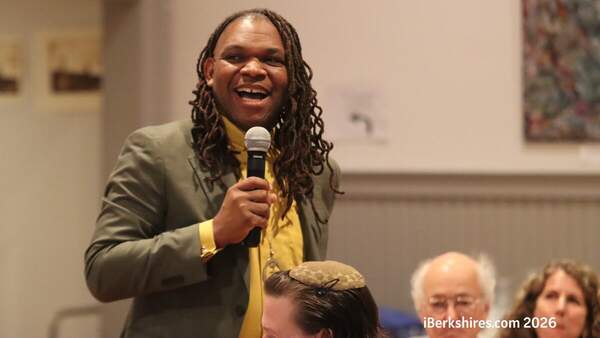
"I hear a lot of good intentions, which is great," Evans said. "But given the drainage crisis we're already dealing with on that street, it seems like something where, 'This is what we intend to happen …, 'This is what we hope will happen …' is not very reassuring to the people who live on the street now.
"Again, I'm happy to put a house there or two houses there. I'm just a little confused as to why there has to be this many houses on this piece of land,"
In reply, Davis stressed that the stormwater management plan is still in the design phase — as is the entire project, which is why Habitat is engaging in the preliminary review with the Planning Board.
"I have full faith that we can engineer this," Davis said. "It's not a hope. It's a plan. It's just that it's not a complete plan yet. This is a preliminary plan. Hopefully, we can work out — and yes, I use the word 'hopefully' — all these bugs. If we can't work out all the bugs and we have to reduce the number of houses in order to do it, that adds to the cost of each house. Take the road and divide its cost by five, four, three or, as one person just suggested, two, and put it to the cost of each house."
Davis explained that given the lot's shape, it only has frontage on Summer Street sufficient for one residential structure under the zoning bylaw. However, if the road is constructed — at an estimated cost of $120,000, Habitat can build up to five new 1,200-square-foot homes that meet the dimensional requirements of the bylaw for frontage, lot size and setbacks.
"We sell these as affordable homes with deed restrictions," Davis said. "These meet the needs of people who make 30 to 60 percent of the area median income in Williamstown. We price the mortgage so their mortgage, insurance and property taxes won't exceed 30 percent of their income. The difference between what we get out of the sale of the house and what it costs to build it, we have to make in fund-raising, grants the Affordable Housing Trust … Somehow, we have to cover it. We don't get back as much as it costs to build each house."
A couple of residents encouraged the Planning Board to support the subdivision plan as submitted.
"Land is precious in town," Anne Skinner said. "There aren't a lot of places where we can build houses in town. We know we need to build houses. I'm assuming engineers know how to deal with things like drainage. If the engineering for drainage problems can be solved, I think we should build as many houses as we can, simply because we need them."
Summer Street resident Kendra Isbell challenged that notion.
"We fully support Habitat, but I wonder if you were the ones sitting across the street from the construction project, would you be up at the microphone making the same comment about, 'Yes, let's put this subdivision of five houses in a neighborhood that only has 23 houses to begin with?' " Isbell asked.
"This is an entirely different look for the neighborhood. We support th emission of having more housing, but to say, 'Let's put five houses right on this parcel of land with these giant old trees and all the drainage problems and traffic coming and out of there,' again, I think if you were living on the street and in all the houses surrounding that, I wonder if you would be up here saying the same exact thing."
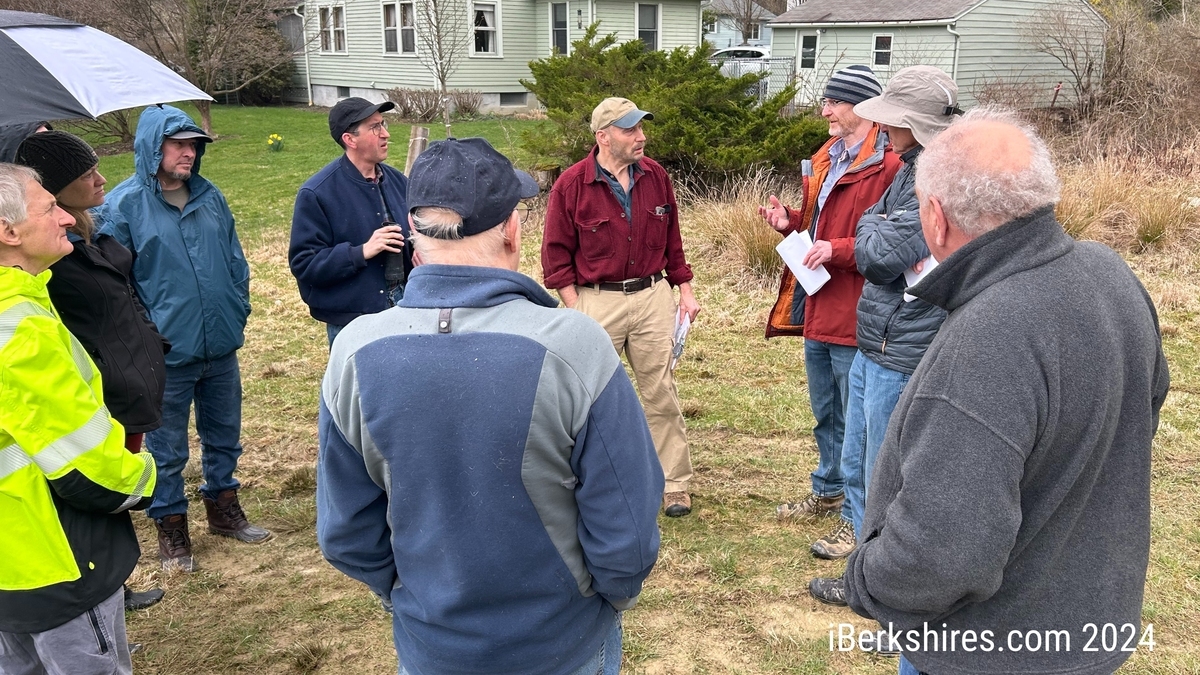
The Planning Board after Tuesday's preliminary meeting scheduled a site visit for Saturday morning.
Tags: affordable housing, habitat for humanity, Planning Board,