Pittsfield Board of Health Wants to Reconsider Mosquito Spray Opt Out
PITTSFIELD, Mass. — The Board of Health is pushing back against the City Council's April decision to vote to opt out of the city's mosquito spraying program.
They have asked that the panel reconsiders its vote and will state their case at the next Public Health and Safety subcommittee meeting on Sept. 9.
At the very least, the board would like to be able to finish off the season with mosquito spraying after an onslaught of the insects caused by heavy rainfall.
Berkshire County Mosquito Control Project, which the city contracts with, reportedly got an influx of calls from residents in the flood plain complaining about the increased mosquito population after significant rain and minor flooding in July.
"Early in July, we had some significant rain and we had some very minor flooding in mid-July, so I contacted [Director of Public Health Gina Armstrong,] and explained that we saw some flood species in our surveillance traps, I think it was July 26 and I said, the major problem is on its way because the river flooding issue we were aware of," spray project Superintendent Chris Horton said to the board last week.
"So, if we had the ability to go forward with the spray, I would have recommended it at that time and targeted it for one week, warm conditions, basically we're talking about one week time from first stage larva to adult mosquito, so we could have targeted an adult response to the date of emergence."
"The river went back in on the 23rd and we got a flood of calls on Aug. 2, we had a flood of calls from these neighborhoods within the flood plain, complaining about a plague of mosquitoes."
There are three communities in Pittsfield that are especially affected by mosquitos because of their geographical location. These areas are in the flood plain where mosquitos deposit eggs and where the river flows over.
The target areas include southeastern Pittsfield along Elm Street and Willaims Street to Dalton Division Road and East Street, from Fred Garner Park along the Housatonic River to the city sewage treatment plant, and in the center of the city near Waconah Park.
Horton revealed that there are currently no cases of West Nile virus in Pittsfield but there was one in the town of Richmond as of Aug. 12.
In late April, the council voted to opt out of the adulticide mosquito spraying portion. Ward 7 Councilor Anthony Maffuccio had submitted a petition prompting the vote, citing "recent studies showing that mosquito spraying is not supported by science and is bad for the environment and bad for humans."
The board said there was no evidence submitted with the petition's claim of spraying being harmful and will ask the Public Health and Safety subcommittee to make a decision based on facts.
The Board of Health has overseen the project since 2012.
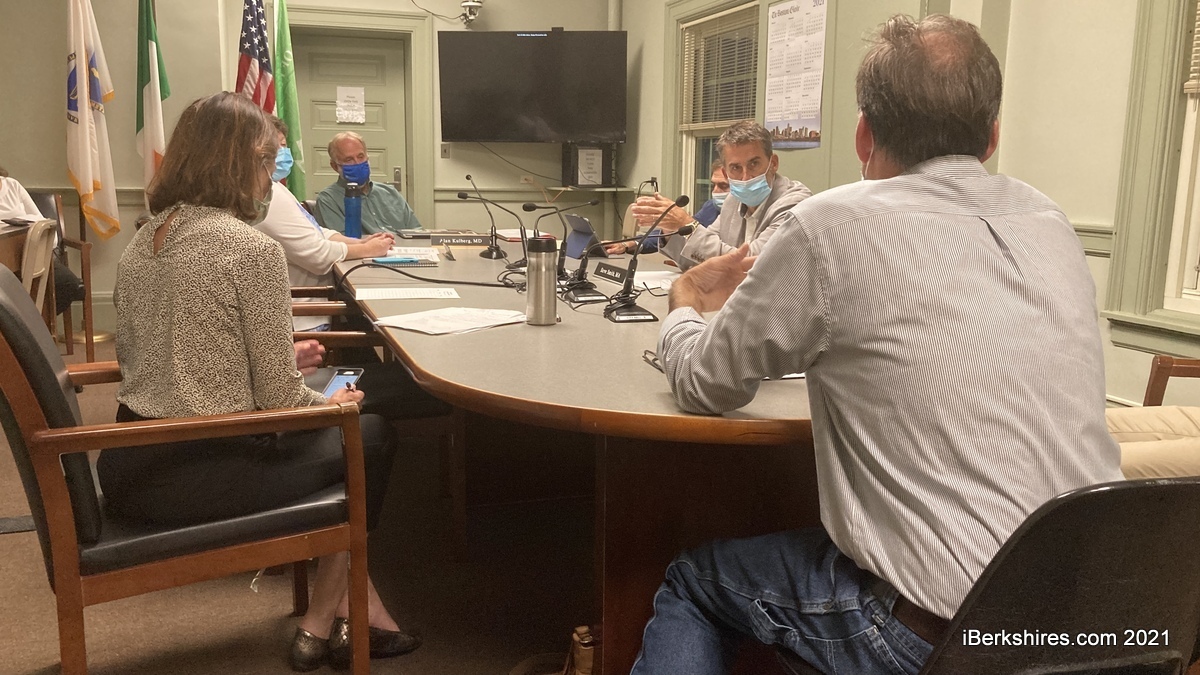
"We should strenuously insist that the decision from the Public Health and Safety Committee, which is then been being referred to the city council, in general, should be evidence-based," board Chairman Dr. Alan Kulberg said.
"At this point, the City Council has shut down the spraying of the adulticide spraying based upon unsubstantiated claims, as if to add insult to injury, they have doubled down and are now asking to shut down the mosquito control program completely."
The board also speculated that shutting down the citywide program would be privatizing public health because it would suggest that only people who can afford mosquito spraying would have to hire a private contractor to do so.
Horton added that a private firm would likely not be taking all of the precautions that his program would take as a state organization.
"We have a lot of best management practices that we follow as a state organization to mitigate impacts on non-targets," he said. "We do everything between dusk and dawn to eliminate the risk of damaging pollinators, we use specific products that have a very short half-life in the environment, and we are using basically specific products with EPA labeling that proves efficacy and safety for people in the environment."
Horton believes that Maffuccio's petition was influenced by a statewide movement happening around the time it was submitted. Communities across the state were rising against an emergency legislation filed in 2020 that gave the state reclamation board, which is the program's oversight authority, the ability to perform either proactive mosquito control or emergency health response mosquito control in other areas of the state.
When that was proposed, some thought it was an overreach by the government and in the final legislation is an option for communities to opt out of the state program for aerial spraying during a public health emergency.
An alternate plan for mosquito control was required by opting-out communities by May 15.
"I think people in many communities didn't realize that that didn't apply to them, it didn't apply to Pittsfield because we were already part of the local mosquito control program," Armstrong said. "I think that was a factor in why the City Council wanted to take a vote in the deadline, but it really didn't apply and unfortunately we weren't in attendance [when] that meeting occurred."
Tags: mosquito spraying,