Free Webinar on Oak Trees in New England Set Saturday
 |
ADAMS, Mass. — The Mohawk Trail Woodlands Partnership is hosting a free webinar with two local experts on oak trees and their place within the local ecology.
"Oaks in New England Forests: Keystone Trees for Biodiversity and Resiliency" will be held Saturday, Dec. 11, from 10 to 11:30 a.m. over the Zoom platform. To register, email Lisa Hayden at lhayden@newenglandforestry.org to request the Zoom link and dial-in information.
Desiree L. Narango, a postdoctoral fellow and ecologist at the University of Massachusetts at Amherst, will discuss her research on the importance of oaks to wildlife habitat, while Logan Johnson, Northeast Region coordinator of the Forest Stewards Guild, will present resources to support woodland owners and managers in improving the resiliency of oaks in our landscape.
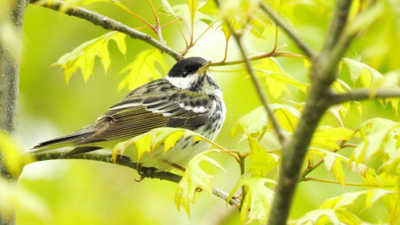
Seventy percent of the forests of southern New England are dominated by oaks. This forest type is facing pressures that compromise its long-term health and ability to regenerate. Oaks are champions of carbon sequestration, soil stabilization, and watershed management, producing enormous root systems, and sustaining a crucial and complex web of wildlife above ground. Native oak trees host more than 500 species of moths and butterflies. Acorns and leaves feed many creatures, and oak canopy and fallen oak leaves provide shelter for still others. Oak leaf litter can help suppress invasive species, and filters rainwater to cut back on runoff, improving groundwater quality.
Narango is studying how land management and global change affect songbirds, bees, butterflies, moths and other wildlife. Her conservation research takes place in forests of all types; from naturally regenerating and preserved forests to ecosystems significantly altered by people, such as urban street trees, residential yards, and agroforestry. Narango's ultimate goal is to help land managers and communities implement effective and efficient action to support both biodiversity and people in a rapidly changing world. She is currently a David H. Smith Conservation Research Fellow working with ecologists at UMass-Amherst, and USDA Forest Service Northern Research Station. Read about her research here.
In the second half of the program, Johnson will speak about the Forest Stewards Guild's work focused on education, training and resources to support landowners and managers in increasing resiliency in southern New England's oak forests. Current threats include heavy deer browsing, and defoliation from Lymantria dispar (also known as gypsy moth) and other pests, while trends of seasonal drought and climate change pressures compound other disturbance factors. Widespread canopy mortality impacts wildlife species that depend on oaks for food and habitat, as well as cause safety hazards in residential neighborhoods or on roadsides, and deal a financial blow to private woodland owners. Given the ecological importance of oak species in this region's forests, all land management approaches stand to gain by integrating measures to promote the long-term resilience of this forest type. Visit the Forest Stewards Guild web site or the Oak Resiliency page here.
The Mohawk Trail Woodlands Partnership, founded in 2013, seeks to bring financial and technical resources to a 21-town rural region in northwestern Massachusetts focused on forest conservation, use of sustainable management on private lands, increased natural resource-based economic development and improved fiscal stability of the municipalities.
Tags: trees,