Clark Art Offering Free Admission in January
 |
WILLIAMSTOWN, Mass. — The Clark Art Institute will offer free admission for all visitors for the month of January 2022.
"We believe that the ability to see and appreciate art is fundamental to enhancing and understanding the human experience. As a means of encouraging people to make time in their lives to enjoy the power of art, we have decided to offer free admission throughout the month of January," said Olivier Meslay, Hardymon Director of the Clark. "We continually hear from people that the chance to walk our trails or visit our galleries has been particularly meaningful over the last two years and has helped to provide a source of respite and relaxation. As a way of saying 'thank you' to those who have visited, and as a way of saying ‘welcome' to new visitors, we are pushing the doors of the museum wide open and hope people will visit often to tour our galleries and special exhibitions."
The free admission program is made possible through the support of Clark Trustees Andreas and Diane Halvorsen.
In addition to its full permanent collection, the Clark has three special exhibitions on view in January. Visitors can explore "Competing Currents: 20th-Century Japanese Prints" in the Clark's Eugene V. Thaw Gallery for Works on Paper through January 30, 2022 and "Hue & Cry: French Printmaking" and the "Debate over Colors" in the Clark Center galleries.
In addition, January visitors will be the first to see "Tomm El-Saieh: Imaginary City," the latest installment of the Clark's presentation of contemporary art in public spaces, opening on Jan. 29. The year-long exhibition is on view in multiple locations in the Clark Center and Manton Research Center.
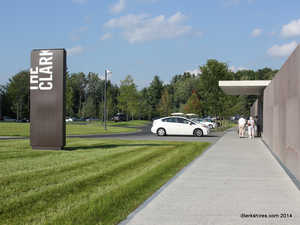
The Clark's grounds, which are always open free of charge, provide miles of walking trails. In January, the Clark's Project Snowshoe program offers visitors the opportunity to borrow free snowshoes to explore the campus in winter. Snowshoes are available in adult and child sizes on a first-come, first-served basis.
While admission to the galleries is free to all visitors throughout the month, advance registration is strongly recommended. Proof of COVID-19 vaccination is required for all visitors over the age of 12 and facemasks are required for all visitors over the age of 5. Visit clarkart.edu to register and for details on current health and safety protocols.
Tags: Clark Art,