Local Feral Cat Program Merges with Berkshire Humane Society
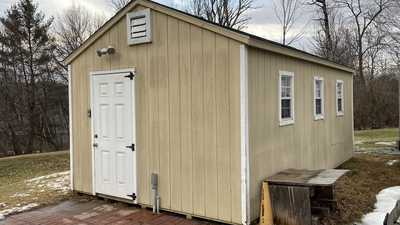 |
| The "Catty Shack" behind Berkshire Humane Society houses feral cats awaiting or recovering from spay or neuter. |
PITTSFIELD, Mass. — Two animal welfare nonprofits have officially joined forces to best serve local felines.
A volunteer organization that aids feral cats of Berkshire County, Animal DREAMS, is now a part of Berkshire Humane Society (BHS) for shared administrative processes and streamlined operations.
Animal DREAMS is now called the Community Cat Program and continues to be led by Executive Director Stacey Carver. The organizations stressed that it will be business as usual for the cats, as the merge only affects behind-the-scenes work.
For about seven years, the program has both partnered with BHS and lived in the shelter after vacating its former location on North Street.
Carver said this will take the bookkeeping off of herself so she can put more time into the furry friends. The program will continue to focus on trapping, neutering, and returning feral cats (also known as TNR) and the shelter staff will continue to focus on adopting out friendly strays.
"The years we've already collaborated have been great," she said. "So I think now that we're officially sort of one entity, I only see it just getting better and better for the cats of our county."
The merge will also help gain more exposure for other activities such as the Working Cat Program that places cats who are not suitable for home life into barns, warehouses, and other places or businesses for rodent control.
Animal DREAMS was founded in 2001 to care for and promote the acceptance of feral cats in the county. To Carver's knowledge, it was the first local program to focus on feral cats.
Typically, a feral cat is one who is considered not adoptable. They are terrified of humans and not able to acclimate to domestic life because they were raised in the wild.
"I compare them to a squirrel or a raccoon, they've never had dependence on a human so they don't know that it's okay to trust a human, they're basically like a wild animal," Carver explained.
The program used to do canvassing of neighborhoods to identify cat colonies but now essentially relies on calls to find them. Because Animal DREAMS has become well known, they get tips on a regular basis from residents or existing caretakers who are concerned about a cat or kitten.
Trappings are done by Carver's team and concerned citizens who are walked through the process with an educational tutorial and a handout. During the active season, she has about 12 volunteers.
Because they are located in BHS, it is convenient to place some cats right into the shelter or reunite them with their families, if possible
Stray kittens usually have a greater chance of being able to socialize and be placed into homes. Since collaborating with the shelter, Animals DREAMS' foster kitten program has expanded.
"And that's the other great thing about our collaboration is oftentimes, people who don't know about us, or might just not know better, will trap a feral cat not understanding that truly, feral adult cats do not come around. Like if they're born feral, it's very low, low probability that they would ever warm up to being adoptable type domestic cat," Carver said.
"So sometimes people just say 'oh, it's a cat, it needs to go to the shelter,' will trap it, bring them shelter, but then here's basically a wild animal stuck in a shelter that's freaking out. Their health will start to decline, either because they're hurting themselves by not eating or self-mutilation, obsessive licking, things like that. Or they become aggressive towards people, because they're like, 'Why am I stuck in this cage? And you're trying to touch me?' So through our collaboration, we've been able to help with that."
In 2014, the two organizations partnered to obtain a TNR grant. That same year, a "Catty Shack" was installed on the BHS property to temporarily house feral cats as they wait for or recover from spay or neuter surgeries. Animal DREAMS was also given a desk in the administrative office.
Because of low overhead costs, Carver said that the program has been able to put almost all of its generous donations to the cats' medical needs and costs. Because of this, they have decided to keep a separate bank account, and donations intended for Animal DREAMS go straight to TNR through the Community Cat program.
Both entities are excited about the merge. In a press release, Executive Director of Berkshire Humane Society John Perreault said it is a "natural culmination of a great relationship between two like-minded organizations and the ultimate beneficiaries of it are our feline friends."
Carver anticipates the change having a positive impact as well.
"Working together and having such success working together, it's really going to just keep saving more and more cats' lives," She said.
Tags: Berkshire Humane Society, cats,