Downtown Pittsfield Among New TDI Districts in Gateway Cities
PITTSFIELD, Mass. — Downtown Pittsfield is among the slate of 12 new Transformative Development Initiative (TDI) districts in Gateway Cities throughout the Commonwealth announced by the Baker-Polito administration earlier this month.
TDI, a MassDevelopment initiative, concentrates economic development activities, resources, and investments within designated neighborhood areas, known as "TDI districts," for a term of two to four years. TDI districts are mixed-use with a commercial component, compact – with a five-minute walking radius or less – and are defined by a walkable, dense physical environment.
The TDI districts receive enhanced and customized technical assistance, real estate services, and additional capacity to implement district plans. All districts will be awarded TDI fellows – MassDevelopment employees who will provide on-the-ground economic development expertise and collaborative leadership in these cities – and will have access to a range of tools to help accelerate development, including technical assistance, grants to support local market development and arts and cultural infrastructure, collaborative workshops, resources, events, and more.
Downtown Pittsfield's TDI designation comes in the wake of the previous Tyler Street TDI, which was first enacted in 2015 and marked the city's first TDI designation. Mayor Linda Tyer said Tyler Street's inclusion in the program was highly beneficial and demonstrated successful outcomes during its activation.
"Thanks to the remarkable success of Tyler Street, a partnership has been formed to create a flourishing TDI district in our downtown. This effort has aligned Downtown Pittsfield, Inc., businesses, property owners, developers, residents, social service agencies, and our regional transit authority," Tyer said. "With the ongoing relationships previously developed over the past two decades with these groups and the energy behind the recent development of the downtown Pittsfield Local Rapid Recovery Plan, this partnership is ready to hit the ground running to support Pittsfield's new TDI district."
City Planner C.J. Hoss said the work will have a targeted focus.
"The first part of the effort will be developing a specific plan of focus over the next several years. Thankfully, we have done a good amount of work through the recent creation of the Downtown Creative District (zoning) to channel future development and uses downtown, and a wide range of specific activities were developed through Downtown Pittsfield Inc. as part of the recent Local Rapid Recovery Plan, he said. Moving forward, the partnership recognizes the need to work towards enhancing the status of downtown as a destination for those living in Pittsfield, the Berkshires, and beyond, while also creating equitable opportunities for living, working, and owning a business downtown."
Hoss said he expects the city will have its fellow later in the year.
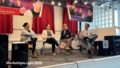
Lt. Gov. Karyn Polito, Housing and Economic Development Secretary Mike Kennealy, and MassDevelopment President and CEO Dan Rivera joined New Bedford Mayor Jon Mitchell and members of the New Bedford legislative delegation to make the announcement at Hatch Street
Studios in New Bedford on Feb. 15.
The announcement represents a $23.7 million investment in Gateway Cities over three years – an investment that more than doubles the size of the program, which currently operates TDI districts in five Gateway Cities.
Other new TDI district communities include the following: Attleboro, Barnstable (Hyannis), Holyoke, Lawrence, Lowell, Lynn, New Bedford, Revere, Springfield, Taunton, and Worcester. There will also be an extension of an existing district in Fall River.
Defined by the Massachusetts General Laws, Gateway Cities are small-to-midsized cities in Massachusetts (population of between 35,000 and 250,000) that anchor regional economies around the state, with below state average household incomes and educational attainment rates.
The Legislature defines 26 Gateway Cities in Massachusetts, including Attleboro, Barnstable, Brockton, Chelsea, Chicopee, Everett, Fall River, Fitchburg, Haverhill, Holyoke, Lawrence, Leominster, Lowell, Lynn, Malden, Methuen, New Bedford, Peabody, Pittsfield, Quincy, Revere, Salem, Springfield, Taunton, Westfield, and Worcester.
Tags: community development,