North Berkshire 'Hub' Seeks to Help Those at High Risk
NORTH ADAMS, Mass. — Three dozen people representing numerous agencies and organizations sit down every Tuesday morning to determine if there is a crisis they can avert.
They bring forward anonymous stories about families or individuals and the situations they may be in and determine together if there is a need for immediate intervention. If they decide there is an "acute elevated risk," a team forms to find those individuals the help they may need.
"It's built around who's going to interact with somebody in this acute elevated risk," said Northern Berkshire Community Coalition Executive Director Amber Besaw in a recent interview. "It's got to be somebody who is getting brought forward that is in danger of being harmed or harming themselves or harming someone else."
The Northern Berkshire Hub began meeting this past January and has identified eight individuals who meet the risk assessment; so far, six have accepted help. One refused and another could not be found.
"We had more people say yes to the help than we had people tell us to take a walk, which I think we were surprised at. A lot of us thought we'd have a lot of people right up front saying like mind your own business, get out of my life, why are you talking about me," she said. "That hasn't happened. Most people have been very receptive to the help."
The situations have ranged from children as young as 6 and adults as old as 76. They can involve chronic substance abuse, mental health and behavioral issues, homelessness, incarceration, and other factors.
"We've had 60-65 year old white male, veteran, homeless or at risk of homelessness due to substance use, and some of those issues," Besaw told a breakfast gathering for NBCC on Wednesday. "We've had issues with extreme aggressive behavior for children between the age of like 7 and 10. I mean, it's kind of all over."
The Hub grew out of conversations from a community justice forum the coalition held several years ago.
"We know that overdose has been a concern in our community, and that traditional systems, while available, somehow weren't connecting and these people might be 'falling through the cracks,'" Besaw said. "And so how do we have this like community case management or community awareness?"
Marisa Hebble, a manager with the state Trial Courts' Massachusetts Community Justice Project, had been facilitating some of the workshops and connected the coalition with Dan Cortez, a community specialist with the Chelsea Police Department-led hub that is considered a model for the state.
The Chelsea program, in turn, is fashioned on Public Safety Canada's Centre of Responsibility (Hub and COR) designed to identify systemic issues, improve community safety, work collaboratively, and interpret findings for communities and decision makers and first inspired by a similar program in Glasgow, Scotland.
That effort is being replicated in North County with NBCC as the facilitator and the Berkshire County Sheriff's Office as the backbone. Besaw said she had approached Sheriff Thomas Bowler about interest in the project and he was able to use a substance disorder and addiction earmark in the state budget to pay for training late last year. Pittsfield was also working on developing a hub and became a co-planner of the training, with the sheriff's office the connector for the two tables.
"We've included all of our North Berkshire communities and additionally, we've wrapped in Lanesborough," Besaw said, noting the town sends its students to Mount Greylock Regional in Williamstown (which has also brought in Hancock and New Ashford.) "In fact, they've already brought three situations forward in the time that they've been with us."
The members of the North County "table" include a wide range of organizations — from schools to housing authorities to councils on aging to state agencies to emergency medical services.
Local police and the sheriff's office have been a particularly good resources, she said. There had been concerns that the some of the folks they were looking to help would want to avoid police but instead officers have engendered a lot of trust in the community.
"These folks were incarcerated, they're living in the jail. But they've built such strong connections with our local sheriff's department ... that they're actually the best people really to go out [and reach people]," Besaw said. "Even with our local police department, we've found that our local officers have said like, well, we know that person. We see them all the time, we interact with them. They trust us. ... I don't think that's the prevailing message that we get."
Confidentially is paramount when the case is first brought forward. No names are used and individuals are described in general terms of age ranges, their current situation, and why the presenter believes they may be in danger or a danger to themselves or others. A unanimous consensus must be reached by the table that this person is at an "acute elevated risk" before their identity is revealed.
Once the determination is made to go forward, a smaller team is formed of those who may know the person and the appropriate agency or organizations best likely to help.
"That team gets to decide who among us has the best relationship, knows this person maybe the best or has the most positive experience with this person," Besaw said. "So it may not be the police officer. It might be the crisis clinician who corresponds with our police officers. If it's a student at school, and I have Tom Simon from North Adams Public Schools and Stephanie Mirante, the school resource officer, they might not know who Tom is, but they know Stephanie because they see her in the hallways."
An unintended benefit to the table is that bringing together so many representatives offers a chance to network and to connect resources to those cases that don't rise to the acute level.
"People are networking and problem solving in an effort to keep people from coming to the table and having those experiences that put them at an elevated risk," Besaw said.
It also provides for the ability to catch up on "closed cases" in case any problems arise because the teams are right there.
"They have their own meeting and catch up and problem solve something and plan for what's gonna happen next," she said. "It's not elevated risk anymore. But because you're in the room, you'll have access to other people in the community instead of having to make six phone calls trying to track somebody down."
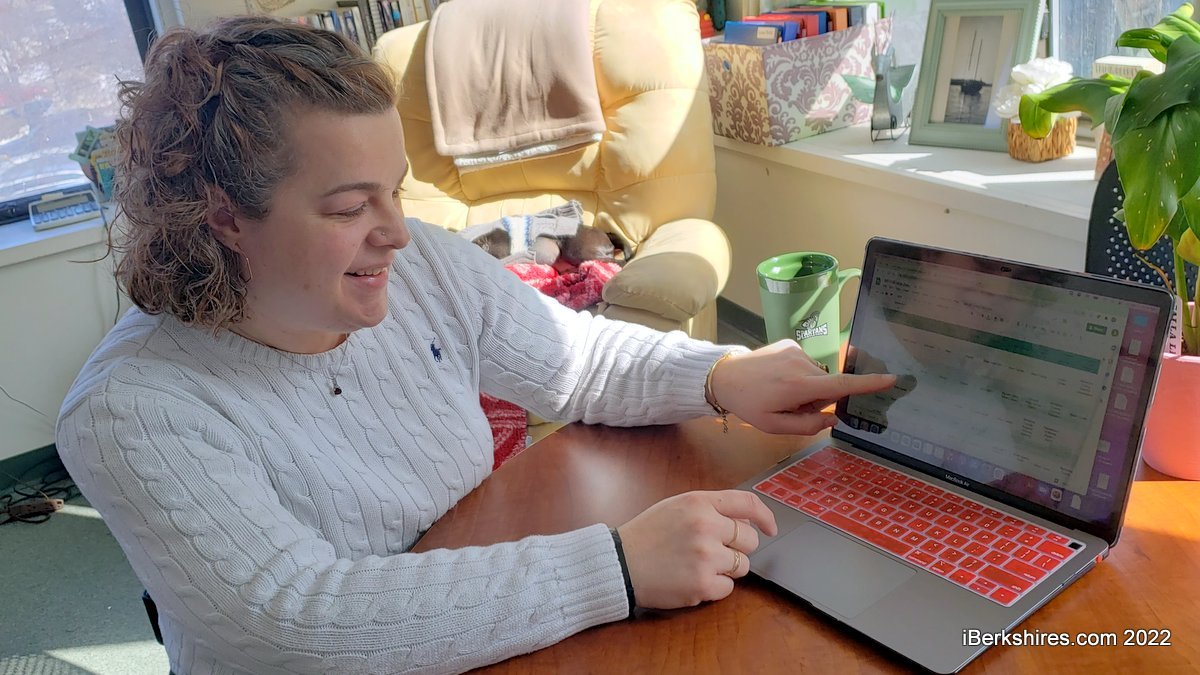
Cases are being tracked on a shared spreadsheet by number and are considered "closed" once the individual enters a program or services. This will allow the table to create such data as the types of situations, the services provided, and its success rate, and for participating agencies to use for grant applications.
Besaw said startup money is needed for training but continuing the work shouldn't cost communities anything because people are essentially doing what they already do.
"We don't have to look for grants. It's really relationship based, like do we have a good relationship? Are you willing to come to the table and then everything is also equally owned," she said. "So even though the coalition is sort of the facilitator, we don't own anything, this belongs to the entire table."
There are memorandums of understanding with each agency and each person is required to sign a nondisclosure agreement. Those agreeing to accept services also sign a waiver so their information can be shared with the appropriate organizations, but their identities are kept confidential outside that circle.
The case may be closed for the table but the work doesn't stop — it becomes part of the case management for the service providers involved.
"I think one of the things in communities is that those who experience chronic challenges often fall into the background right, they're not seen," Besaw said. "A lot of time people will say I know that person ...
"I'm like you don't know him. You've seen him but you don't know him. He's walked around this community for a very long time sort of unseen by most people or just noticed. This actually helps our community members who are struggling know the community says not only do we see you, but we want to help you because we don't want you to be living in our community feeling unsafe, living unsafe, or experiencing something that could cause you harm or someone else harm."
Partners in the Northern Berkshire Hub include: Northern Berkshire Community Coalition, Berkshire County Sheriff's Office, town of Adams, Adams Council on Aging, Adams Police Department, Berkshire County Regional Housing Authority, Berkshire Health Systems, Berkshire County Adult & Juvenile Probation departments, Brien Center, 18 Degrees, Elizabeth Freeman Center, Hoosac Valley Regional School District, Lanesborough Police Department, Louison House, Mount Greylock Regional School, city of North Adams, North Adams Council on Aging, North Adams Police Department, North Adams Public Schools, Northern Berkshire District Court, Pittsield Community Justice Program, state Department of Children and Families, state Department of Mental Health, state Department of Youth Services, town of Williamstown, Williamstown Council on Aging and Williamstown Police Department.
Tags: NBCC,