image description
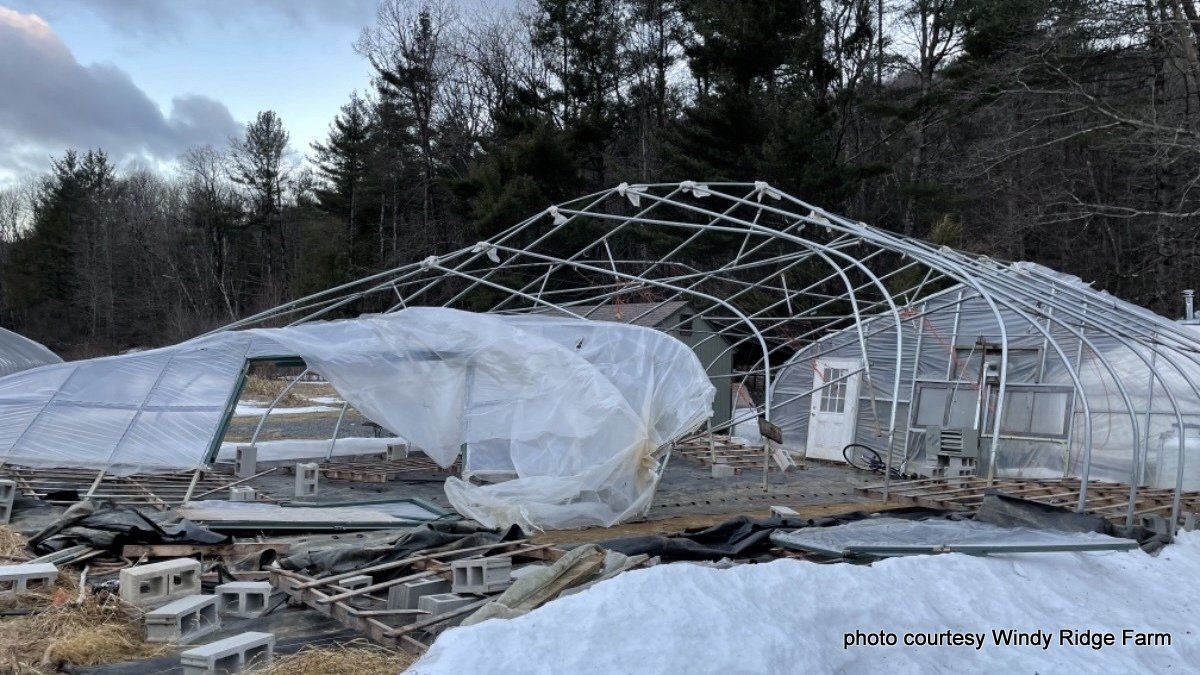
A severe windstorm on March 8 took out a greenhouse at Windy Ridge Farm. The family farm has been able to raise more than $20,000 to replace it.

Community Rallies to Replace Windy Ridge Farm's Greenhouse
By Brittany PolitoiBerkshires Staff
Print Story | Email Story

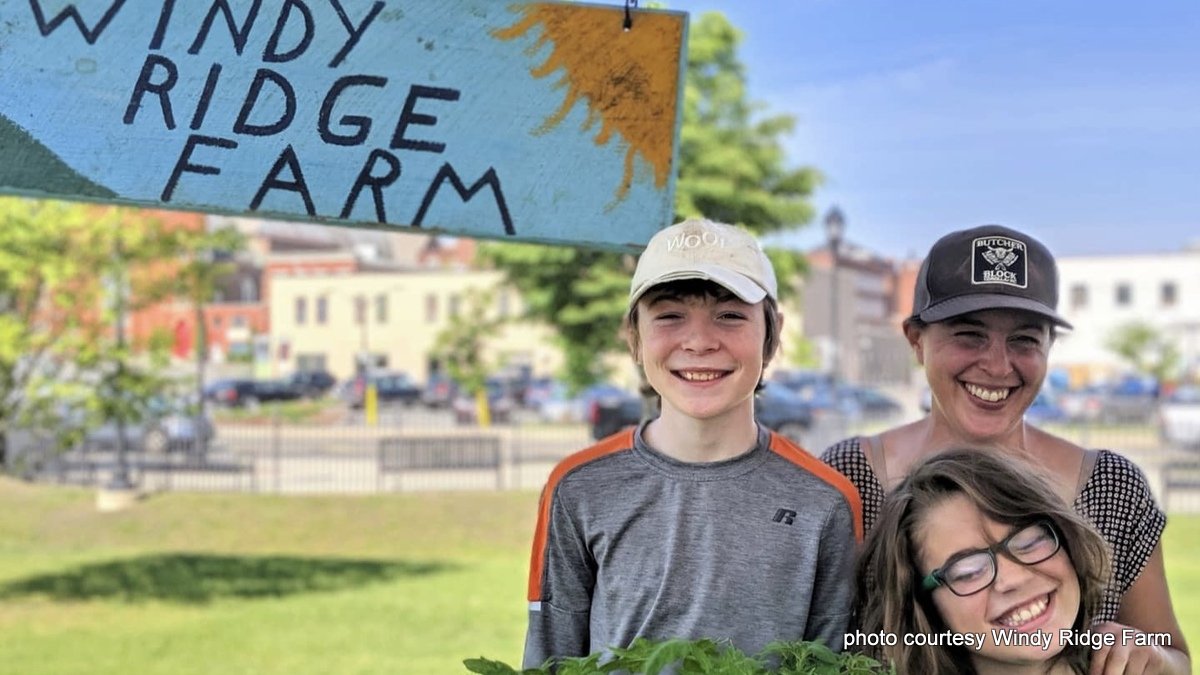
Windy Ridge had been a regular vendor at the Pittsfield farmers' market and donates produce to Christian Center and Berkshire dream Center. 

HAWLEY, Mass. — The community has stepped up to help Windy Ridge Farm after an early March windstorm destroyed its greenhouse — more than $20,000 was raised in just a matter of weeks.

"Our community absolutely showed up for us, which was just a really incredible feeling," owner and founder Julia Lemieux said.

"We've been farming in the same area and at the same farmers' markets for about 13 years so I consider a lot of our customers our friends at this point because they've been buying plants from us for over a decade. So it was really touching to see like how quickly everybody just got behind it."

The family farm is a longtime vendor at the Downtown Pittsfield Farmer's market and Lemieux has managed a community garden program in Pittsfield that serves two of the lowest income neighborhoods in the city since 2014.

On March 8, a severe windstorm demolished a secondary greenhouse that is usually a heated home for Lemieux's organic plants. She said this happened during a critical time of the year because it is before the farm's selling season.

Replacing the greenhouse is estimated to cost about $14,000 and labor to rebuild is around $7,000  Hesitating at first, the farm owner created a GoFundMe and raised about $14,000 in just one day. 

"That was really helpful and it's just taking the financial stress off of the whole situation," she said.

"Like most farms, our cash flow is very tight this time of year because we've already purchased all of our seeds and our soil and raw materials, we've already bought everything but we haven't sold anything yet, so this is a time of year when our farm accounts are very, very lean, so it was definitely not something that we could cover on our own financially."

Included in the donations was a $1,000 match from Berkshire Agricultural Ventures. The fundraiser is almost at its goal of $21,000 at just over $20,500.


The new greenhouse will be built by Rimol Greenhouse Co. out of New Hampshire and Lemieux estimates that the structure will be up by the end of the week.  

Friends from Mass Food Delivery/Mycoterra Farm helped her pick up the parts to avoid waiting for them to be delivered by a freight company and many people have offered their labor for cleaning up and rebuilding.

Lemieux said the success of the fundraiser has allowed the farm to get a sturdier greenhouse to protect against future storms.

"The original greenhouse that we had put up 11 years ago that was destroyed, we had purchased it used and this is a new structure and it's stronger, it's going to have extra wind bracing," Lemieux said.

"And so it's really going to be like an improved structure at the end of the day."

Windy Ridge Farm has been in operation since 2009 offering organic plants and produce.  

The farm has donated extra produce to The Christian Center and the Berkshire Dream Center in Pittsfield as well as accepting WIC and senior coupons at the farmers market to increase accessibility for fresh produce.

Lemieux has extended her wholehearted thanks to the community for supporting her family's livelihood in the face of a difficult time.


Tags: donations,   farming,   

If you would like to contribute information on this article, contact us at info@iberkshires.com.

Berkshire Towns Can Tap State Seasonal Communities Resources

BOSTON — Governor Maura Healey announced that 18 additional municipalities across Massachusetts have been designated as Seasonal Communities, opening up new tools, support and grant funding to help them manage seasonal housing pressures. 
 
Created as part of the historic Affordable Homes Act signed into law by Governor Healey in 2024, the Seasonal Communities designation was designed to recognize Massachusetts communities that experience substantial variation in seasonal employment and to create distinctive tools to address their unique housing needs. The law also established the Seasonal Communities Advisory Council (SCAC).  
 
The Affordable Homes Act identified several communities to automatically receive the designation, including:   
  • All municipalities in the counties of Dukes and Nantucket;   
  • All municipalities with over 35 percent seasonal housing units in Barnstable County; and   
  • All municipalities with more than 40 percent seasonal housing units in Berkshire County. 
  •  
To identify additional communities, the Executive Office of Housing and Livable Communities (HLC) reviewed available data, specifically focusing on cities and towns with high levels of short-term rentals and a high share of second- or vacation homes.
 
In Berkshire County, Egremont, Great Barrington, Lee, Lenox, New Marlborough, Richmond, Sandisfield, Sheffield, West Stockbridge and Williamstown have been designated. 
 
"Our seasonal communities are a vital part of Massachusetts' cultural and economic fabric, but they're also home to essential workers, families, seniors, and longtime residents who deserve a place to live year-round," said Governor Healey. "That's why we're committed to supporting these communities with innovative solutions like the Seasonal Communities designation to meet their unique needs, and I'm thrilled that we're offering this opportunity to 18 additional communities across the state. Everyone who calls these places home should be able to live, work and grow here, no matter the season." 
 
As with the statutorily identified communities, acceptance of the designation for municipalities is voluntary and requires a local legislative vote. HLC will open an application for newly eligible communities that haven't accepted the Seasonal Communities designation to request consideration. 
 
The Affordable Homes Act created several new tools for communities who accept the Seasonal Communities designation to be able to:  
  • Acquire deed restrictions to create or preserve year-round housing 
  • Develop housing with a preference for municipal workers, so that our public safety personnel, teachers, public works and town hall workers have a place to live 
  • Establish a Year-Round Housing Trust Fund to create and preserve affordable and attainable housing for year-round residents 
  • Create year-round housing for artists 
  • Allow seasonal communities to develop a comprehensive housing needs assessment 
  • Permit tiny homes to be built and used as year-round housing 
  • Permit year-round, attainable residential development on undersized lots 
  • Increase the property tax exemption for homes that are the owners' primary residence 
 
View Full Story

More Pittsfield Stories