BHS continues to enhance services for the LGBTQ+ community
Print Story | Email Story
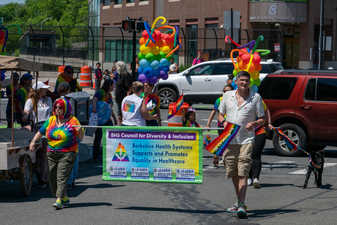
Determined to further tear down any real or perceived barriers to fully inclusive, equitable healthcare to thousands of lesbian, gay, bisexual, transgender, queer and/or questioning and other members of the community in the Berkshires, Berkshire Health Systems (BHS) the county's leading healthcare system is continuing to explore new ways to better serve the unique needs of patients who identify as LGBTQ+.
 
In fact, Berkshire Medical Center and Fairview Hospital, the two hospitals under the BHS umbrella, already have received national recognition for their efforts. They are among only 251 healthcare providers across the U.S. that this year earned "top performer" designation from the Human Rights Campaign Foundation's 2022 Healthcare Equality Index, the nation's foremost benchmarking survey of healthcare facilities on policies and practices dedicated to the equitable treatment and inclusion of their LGBTQ+ patients, visitors and employees.
 
"There has been this ongoing stigma for decades, especially since the 80s, where so many assumptions are made about you as a person, putting you into a category where you just don't belong," said John Dowling, a physician assistant in BMC's endocrinology department who co-chairs the LGBTQ+ Health Collaborative, a consortium of BHS and other providers in the region. Dowling, who self-identifies as gay, explained, "When I was in school, we were just put into the category of people who might get HIV sometime." 
 
What that did, he said, was scare millions of LGBTQ+ patients away from seeking care they desperately needed.
 
Services and programs throughout the BHS network are working to continue improving the LGBTQ+ experience. A particular focus has been made on the areas of primary care, endocrinology, obstetrics and gynecology, urology, plastic surgery, psychiatry, substance use disorder, gastroenterology, infectious disease, radiology, laboratory and the hospital's specialty pharmacy.
 
In Dowling's own area of expertise, endocrinology, he and his colleagues continue to ramp up services for one of the most challenged and misunderstood sub-communities within LGBTQ+ – transgender patients. The department is highly versed in gender medicine and specializes in hormone therapy, a vital resource for patients who once had to travel out of the area for such treatments.
 
BHS is also planning to offer internal education that will include information emphasizing the importance of not making assumptions about a patient or anyone else simply because of their self- expressed sexual orientation or gender identity. Staff can learn about gender-diverse populations, the different types of pronouns they use to identify themselves and the unique medical needs each patient presents.
 
By enhancing training for providers and augmenting services specifically for LGBTQ+ patients, BHS seeks to become a model for how health organizations everywhere can close the access gap for a community of people that historically has been marginalized and underserved.

Tags: BHS,   BMC,   
If you would like to contribute information on this article, contact us at info@iberkshires.com.

Social Service Organizations Highlight Challenges, Successes at Poverty Talk

By Brittany PolitoiBerkshires Staff

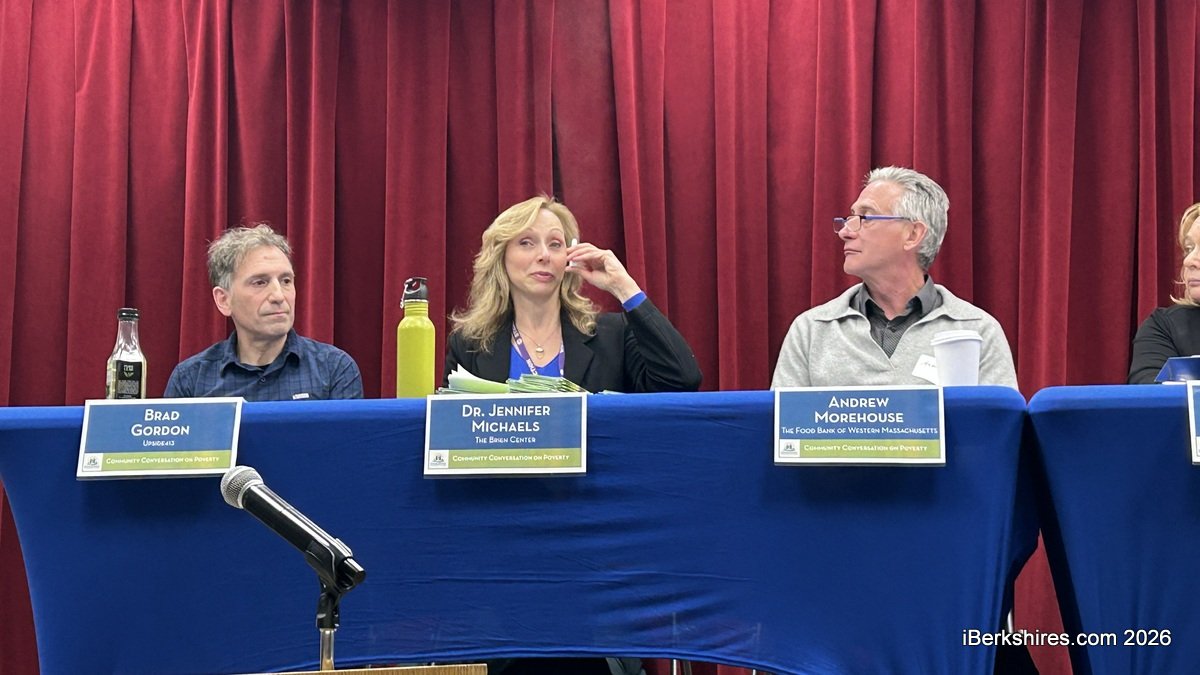
Dr. Jennifer Michaels of the Brien Center demonstrates how to use Narcan. Easy access to the drug has cut overdose deaths in the county by nearly half. 

PITTSFIELD, Mass. — Recent actions at the federal level are making it harder for people to climb out of poverty.

Brad Gordon, executive director of Upside413, said he felt like he was doing a disservice by not recognizing national challenges and how they draw a direct line from choices being made by the Trump administration and the challenges the United States is facing. 

"They more generally impact people's ability to work their way out of poverty, and that's really, that's really the overarching dynamic," he said. 

"Poverty is incredibly corrosive, and it impacts all the topics that we'll talk about today." 

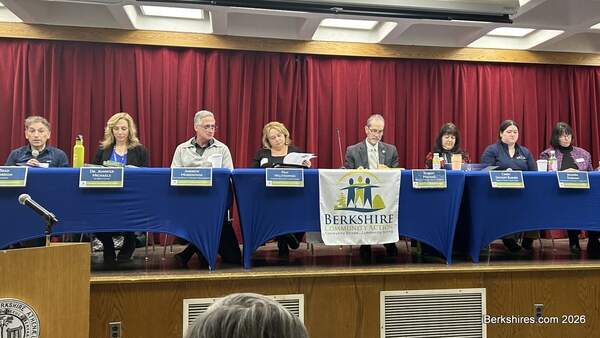
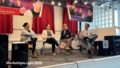
His comments came during a conversation on poverty hosted by Berkshire Community Action Council. Eight local service agency leaders detailed how they are supporting people during the current housing and affordability crisis, and the Berkshire state delegation spoke to their own efforts.

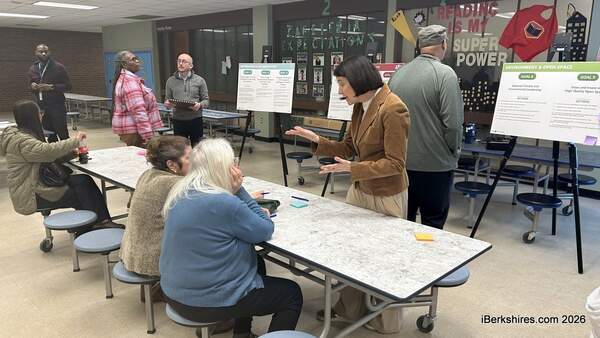
The event held on March 27 at the Berkshire Athenaeum included a working lunch and encouraged public feedback. 

"All of this information that we're going to gather today from both you and the panelists is going to drive our next three-year strategic plan," explained Deborah Leonczyk, BCAC's executive director. 

The conversation ranged from health care and housing production to financial literacy and child care.  Participating agencies included Upside 413, The Brien Center, The Food Bank of Western Massachusetts, MassHire Berkshire Career Center, Berkshire Regional Transit Authority, Greylock Federal Credit Union, Massachusetts College of Liberal Arts, and Child Care of the Berkshires. 

The federal choices Gordon spoke about included allocating $140 billion for the U.S. Immigration and Customs Enforcement, investing $38 billion to convert warehouses into detention centers, cutting $1 trillion from Medicaid over 10 years, a proposed 50 percent increase in the defense budget, and cutting federal funding for supportive housing programs. 

Gordon pointed to past comments about how the region can't build its way out of the housing crisis because of money. He withdrew that statement, explaining, "You know what? That's bullshit, actually."

"I'm going to be honest with you, that is absolute bullshit. I have just observed over the last year or so how we're spending our money and the amount of money that we're spending on the federal side, and I'm no longer saying in good conscience that we can't build our way out of this," he said. 

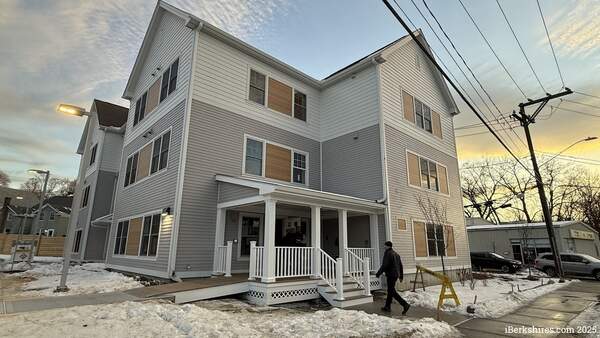
Upside 413 provided a "Housing Demand in Western Massachusetts" report that was done in collaboration with the University of Massachusetts at Amherst's Donahue Institute of Economic and Public Policy Research. It states that around 23,400 units are needed to meet current housing demand in Western Mass; 1,900 in Berkshire County in 2025. 

View Full Story

More Pittsfield Stories