Adams' Annual Town Meeting Approves Sale of Former Community Center
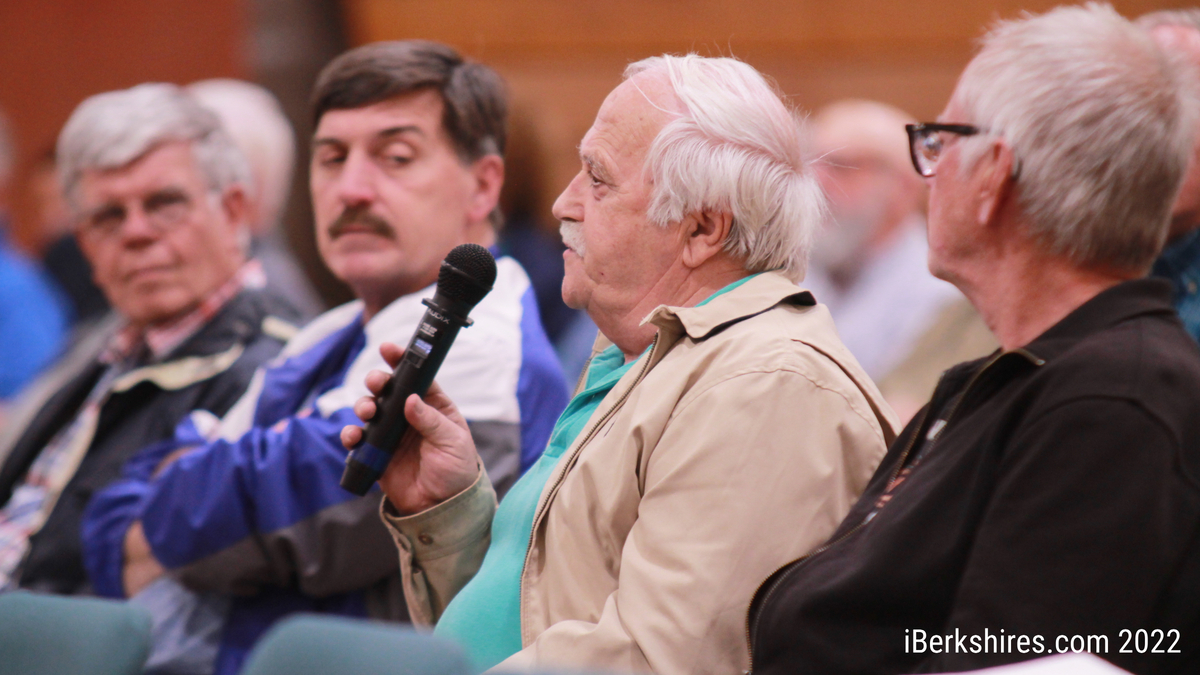
Adams Town Meeting Member Craig Corrigan asks a question during Tuesday's meeting. Eighty-six of the 150 town meeting members attended, passing all articles on the warrant.
The meeting OK'd all the articles on the warrant, mostly without discussion.
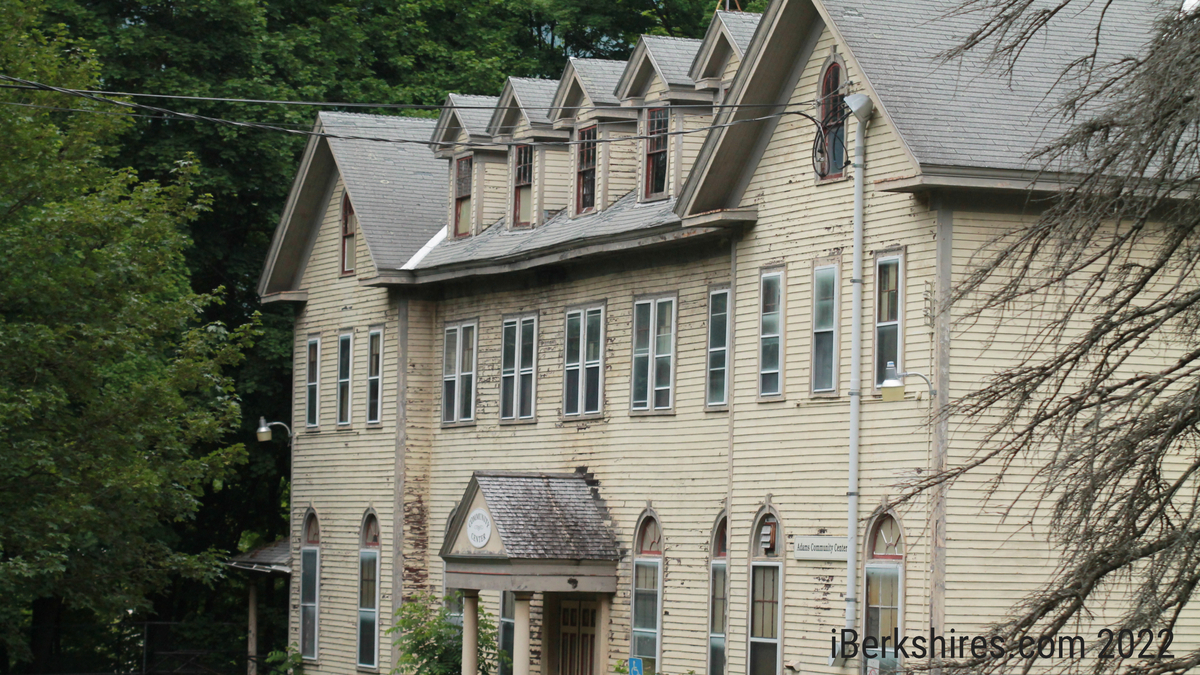
But members asked for further discussion on four items, including Article 25, which ratified a $25,000 deal negotiated by the Board of Selectmen to sell the former community center and about 5.7 acres of land at 20 East St. to CMV Construction Services.
Meeting Member Judith Taylor of Howland Avenue questioned the sale price.
"I have a problem with only asking $25,000 for it," Taylor said. "The property is obviously valued at a lot more than that. Can I have an explanation?"
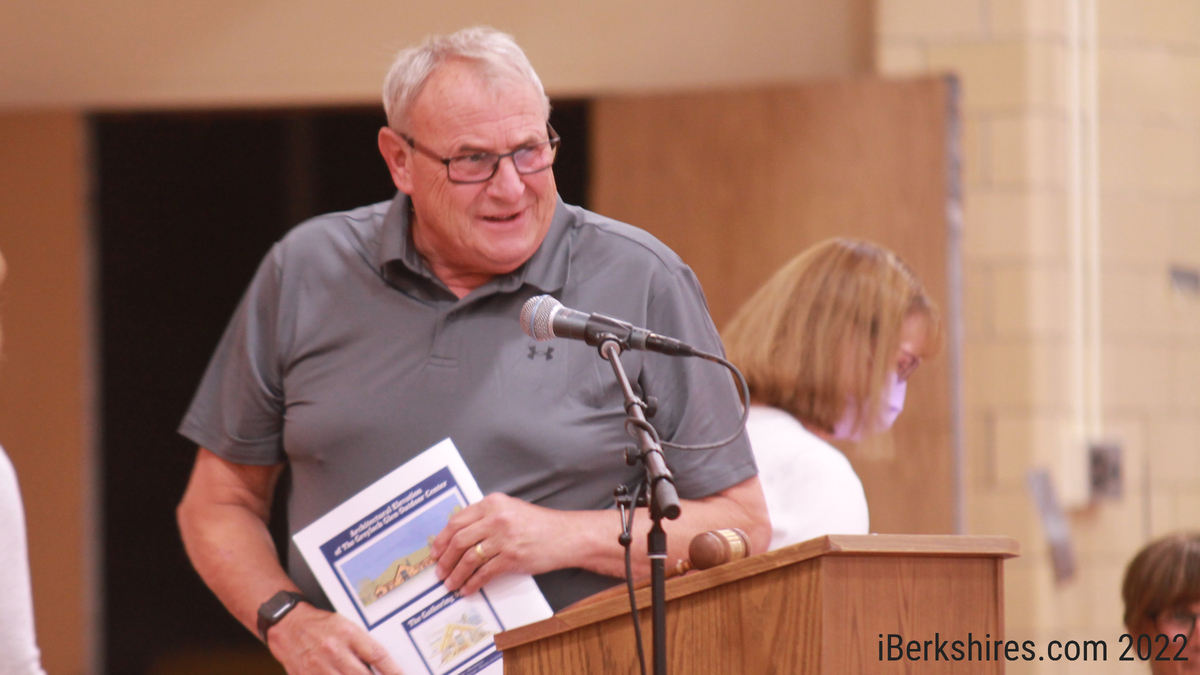
Board of Selectman Chair John Duval said the property, which is assessed at $350,000, has not generated interest from prospective buyers over the last decade until CMV came along.
"As long as I've been on the board, 11 years, I believe, at this point … the Board of Selectman has gone out with [requests for proposals] on at least three different occasions.
"The one response over the last 11 years was from the former youth center, which, when you think about it, that's really the Adams taxpayers. That interest faded when the Youth Center moved to Cheshire."
Duval said he agreed that a more than 5-acre property close to the center of town is attractive, but he said the board was encouraged that CMV's plan will provide more than 25 units of housing and preserve the historic structure that used to serve as a community center.
"They have a project that would keep the building," Duval said. "Most of us, as a board, thought we wouldn't be able to see that. They are going to renovate the current building. They're going to invest a lot of money in keeping that historical building and use that as apartments."
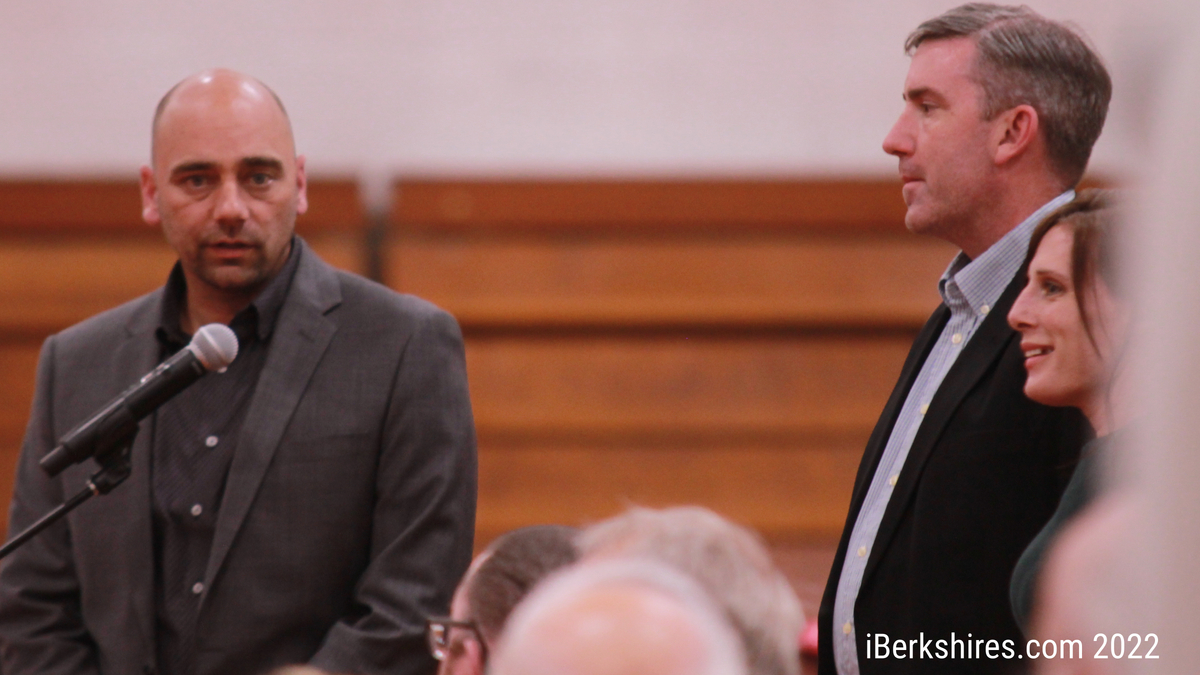
Robert Hinton, Kristen Hinton and Eric Wohlleber of CMV appeared before the meeting to take questions about the project.
"Our vision is luxury, high-end units," Robert Hinton said. "There will be eight units in Phase 1. Phase 2 is a ways out, but we would like to get upward of 20 additional units in Phase 2."
Phase 1 refers to the renovation of the current building. Phase 2 would involve new construction on the 5.7-acre property.
Hinton said that 20 percent of the units would be classified as affordable housing, assuming the developer is able to secure low-income housing tax credits from the commonwealth.
"Those units will be built the same as the other units," he said.
Article 25, titled "Land Disposition," passed with a smattering of "nos" in a voice vote that Moderator Myra Wilk declared a "clear majority."
Eighty-six out of a possible 150 members attended the meeting. Under Adams' representative town meeting form of government, residents vote for meeting members by precinct.
The members in attendance in the former Adams Memorial Middle School gymnasium generated just one question about the biggest-ticket article on the agenda, the town's operating budget of about $9.3 million for fiscal year 2023.
Taylor questioned a more than twofold increase in the line item for the former middle school itself, which cost taxpayers $57,300 in the fiscal year that ends June 30 but has a projected cost of $117,300 in FY23.
Town Administrator Jay Green explained that the town still covers heating for the former school, which is under contract to a different developer to create residential and commercial units.
Last winter, the building was heated to 55 degrees, the bare minimum required to preserve the structure, Green said. During renovation, it will be heated to code.
"The temporary boiler that is set up now to heat the classroom wing will go away," Green told the meeting. "It's possible [the cost] will drop. We need to get in here and use it for a full year, and that will pinpoint what the costs will be."
Article 5, the omnibus operating budget, was approved unanimously, as were the town's capital plan and assessment to the Hoosac Valley Regional School District, a $6.3 million expense that is up 2.6 percent from FY22.
In addition to the operating budget and community center sale, the only articles "held" by members for additional discussion were Article 4 and Article 23.
Article 23 established an enterprise fund for the town's sewer services.
Green told the meeting that without an enterprise fund, the town would be ineligible for state funding to repair the wastewater treatment plant.
Taylor asked whether creating an enterprise fund means that it is inevitable the town will implement a user fee for sewage.
Green said it's possible, but noted that the overwhelming majority of towns in the commonwealth that have public sewer systems fund them through user fees rather than through taxation, as Adams does.
He said the current system accounts for about $2.40 of the town's property tax rate – costs that would shift to a user fee if and when the town decides to implement one.
Article 23 passed with just one "no" vote from the 86 members in attendance.
Joseph Nowak of the Board of Selectman requested a hold on Article 4, which sets the stipends for elected officers.
Nowak said he had a problem with a decision in 2020 to trim the board members' stipend from $900 to $300.
"It is time consuming to serve in elected office," Nowak said. "We're having a hard time getting people to get on boards. A little bit of a stipend could help some of that."
Nowak did not offer an amendment to the article but said he just wanted to make the point. The article passed without an objection from the meeting members.
Tags: town meeting 2022,